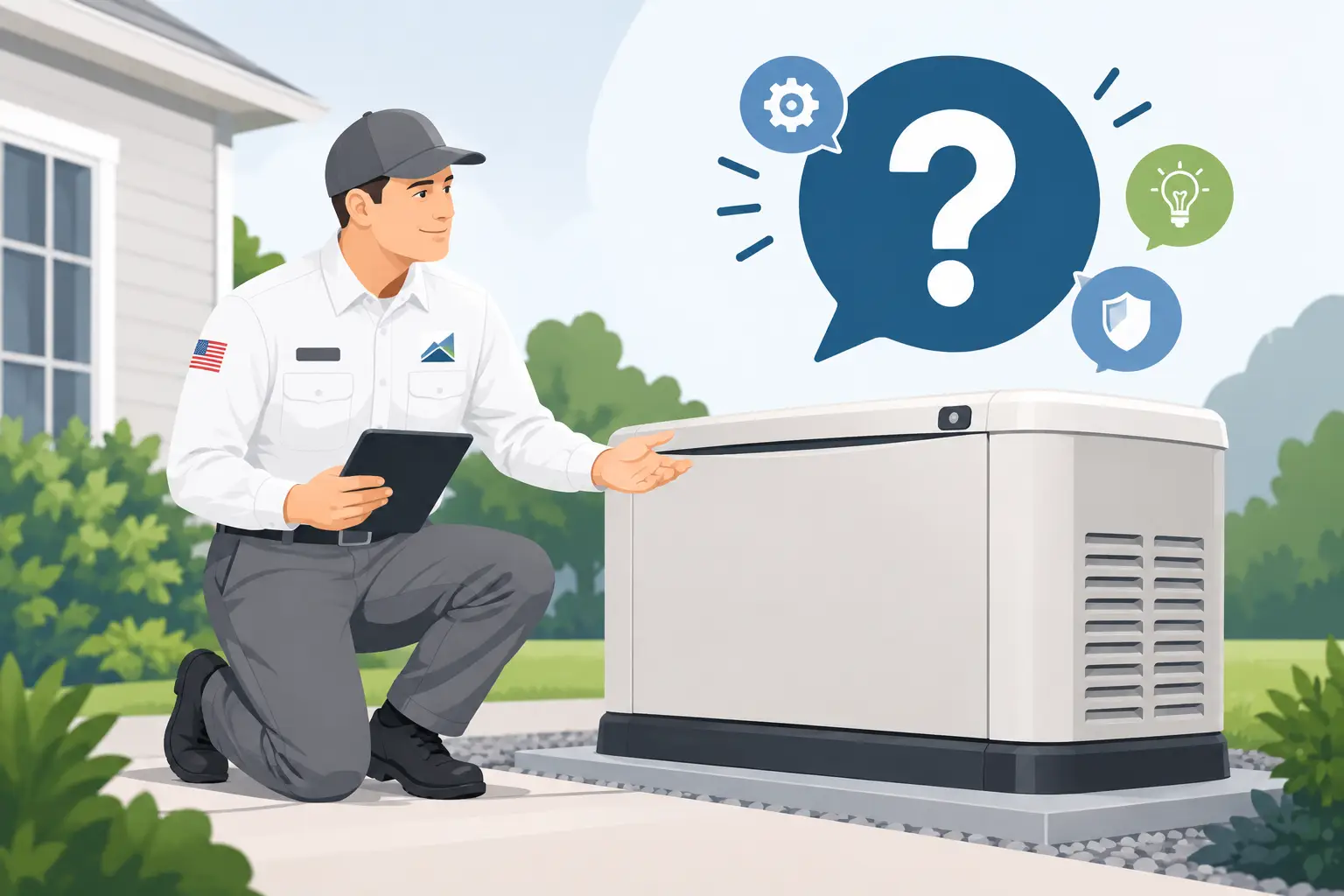
A generator can be the difference between waiting out an outage in the dark and keeping your refrigerator, medical equipment, lights, and essential systems running. But a generator is also tied directly to your home’s electrical system, fuel supply, and safety devices. That is why homeowners often have frequently asked generator questions before deciding whether a standby system is right for their property.
For Southern Utah homeowners, the right answer depends on the home, the equipment you want protected, and how you plan to use backup power. Here are the questions our residential electricians hear most often.
Frequently Asked Generator Questions From Homeowners
What is the difference between a portable and standby generator?
A portable generator is a temporary unit that must be positioned outdoors, fueled manually, and connected safely during an outage. It can power selected appliances or circuits, depending on its capacity and the connection method. It may be a practical choice for limited, short-term backup needs, but it requires hands-on setup every time the power goes out.
A standby generator is permanently installed outside the home and connected to an approved fuel source and transfer equipment. When utility power fails, it can start automatically and supply power to selected circuits or, in some cases, much of the home. Once utility power returns, it transfers the home back and shuts down.
The best option is not always the largest one. A homeowner who wants to keep a refrigerator, a few lights, internet equipment, and selected outlets running has different needs than a household that wants air conditioning, well equipment, a pool system, or the full home operating during an outage.
Can I connect a generator directly to an outlet?
No. Connecting a generator to a household outlet, sometimes called backfeeding, is dangerous and should never be attempted. It can energize electrical lines outside your home, putting utility workers, neighbors, and your own household at risk. It can also damage appliances and electrical equipment when power is restored.
A generator needs an approved way to isolate your home from the utility supply. That typically involves properly installed transfer equipment and a dedicated connection point. This is not a weekend DIY project. A licensed electrician should evaluate the panel, determine what circuits can be safely backed up, and install the equipment according to applicable electrical requirements.
What is a transfer switch, and why do I need one?
A transfer switch is the safety device that changes your home’s power source from the utility to the generator and back again. Its job is simple but critical: it prevents generator power and utility power from feeding the system at the same time.
Some setups use a manual transfer switch, which requires you to switch selected circuits when an outage occurs. Automatic transfer equipment senses the utility failure and starts the standby generator without you needing to be home or awake to do it.
The right setup depends on whether your priority is basic emergency power or automatic whole-home convenience. During a service visit, an electrician can explain the options clearly and identify which circuits make sense to include.
How do I know what size generator my home needs?
Generator sizing is based on electrical load, not simply square footage. The calculation starts with the equipment you want to run during an outage, then accounts for the power needed to start motors and compressors. Air conditioners, refrigerators, pumps, freezers, and certain heating equipment can require significantly more power when they first turn on.
An accurate assessment looks at your electrical panel, major appliances, existing load, and backup priorities. It also considers whether you want the generator to run essential circuits only or support a broader part of the home.
Choosing too small a generator can lead to overloaded circuits, nuisance shutdowns, or the need to constantly decide what stays off. Choosing more capacity than you need can add unnecessary installation complexity. A professional assessment helps avoid both problems.
Will a standby generator run my air conditioner?
It may, but it depends on the generator capacity, the size and condition of the air conditioning system, and what else you expect to run at the same time. In Southern Utah, cooling is often a major priority during an outage, particularly during extreme summer heat. That makes proper load planning especially valuable.
A qualified electrician can help determine whether the system should support one air conditioner, selected cooling equipment, or essential circuits without central cooling. The goal is dependable performance, not a setup that works only when every other major load is turned off.
How long can a generator run during an outage?
A standby generator can run as long as its fuel source remains available and the system is operating properly. The practical limit may depend on fuel supply, maintenance condition, weather, and the electrical load placed on the unit.
Portable generators have a different limitation: they need periodic refueling. Refueling must be done only after the generator has been shut down and allowed to cool, following the manufacturer’s instructions. Never refuel a hot generator, and never operate one in a garage, carport, crawlspace, or other enclosed or partially enclosed area.
Generator Safety Questions That Need Clear Answers
Where should a generator be installed or operated?
Portable generators must always operate outdoors in a well-ventilated location, positioned away from doors, windows, vents, and areas where exhaust could enter the home. Carbon monoxide is odorless and can become deadly quickly. Every home with a generator should also have working carbon monoxide alarms and smoke detectors.
A standby generator should be installed in an approved exterior location with required clearance from the home, openings, and other site features. Placement is not just about convenience or appearance. It affects ventilation, service access, noise, fuel connections, and electrical safety.
If you are planning a standby generator in St. George, Hurricane, Cedar City, or nearby communities, site conditions can vary. A professional evaluation helps identify a location that supports safe operation and code-compliant installation.
Do I need permits for a generator installation?
Many permanent generator installations require permits and inspections because they involve electrical work and may involve fuel connections, site placement requirements, or other local rules. Requirements vary by jurisdiction and by the scope of the project.
Skipping this step can create safety issues and cause problems later when selling or insuring the home. A professional residential electrical team can identify the electrical work involved and help ensure the installation is handled correctly from the start.
Can a generator damage my electronics?
A correctly installed generator system is designed to provide stable backup power, but the quality of installation and the condition of your electrical system matter. Sensitive electronics can also be affected by power interruptions and surges when utility power fails or returns.
Whole-home surge protection can be worth discussing as part of a generator project, especially if you have computers, smart home devices, newer appliances, or entertainment equipment. It does not replace proper generator installation, but it adds another layer of protection for the home’s electrical system.
Maintenance Questions About Standby Generators
How often does a standby generator need service?
Standby generators need regular maintenance even when they rarely run during an outage. They typically perform scheduled exercise cycles, and those cycles help confirm the unit can start. However, an exercise cycle is not the same as a complete maintenance visit.
Service needs vary by unit, usage, environment, and manufacturer requirements. In general, maintenance may include checking electrical connections, battery condition, fluid levels, filters, controls, transfer equipment, and overall operation. A unit that sits unused for years without service may fail at the exact moment it is needed.
Keep the area around the generator clear of debris, stored items, landscaping overgrowth, and anything that could restrict airflow or access. If you notice warning lights, unusual noise, repeated failed starts, or a transfer switch that does not operate as expected, schedule service promptly.
What happens if the generator will not start?
The cause could be as simple as a weak battery or as involved as a control, fuel, transfer, or wiring issue. Avoid repeatedly trying to force the system to run or opening electrical components you are not trained to service. A generator combines electricity, moving equipment, and fuel, so guessing can turn a repair into a bigger safety concern.
A licensed electrician can diagnose the electrical side of the system, including the transfer equipment, connections, backed-up circuits, and controls. If the issue is related to the generator itself, the technician can help identify the next appropriate step.
When It Is Time to Call an Electrician
Call for professional help before installation if you are unsure what needs backup power, whether your panel has adequate capacity, or where the generator should be located. Call promptly after installation if you see burning smells, damaged wiring, frequent breaker trips, unreliable transfer operation, corrosion, water intrusion, or signs that a generator connection was added improperly.
Service Right Electric approaches generator work the same way we approach every residential electrical project: inspect the system, explain the findings, and complete the work safely. You should understand what your backup system will power, how it will operate, and what to do when an outage occurs.
The most useful generator is not the one with the biggest label. It is the one installed for your home’s real needs, maintained before an emergency, and connected in a way that keeps your family and your electrical system safe.


0 Comments