
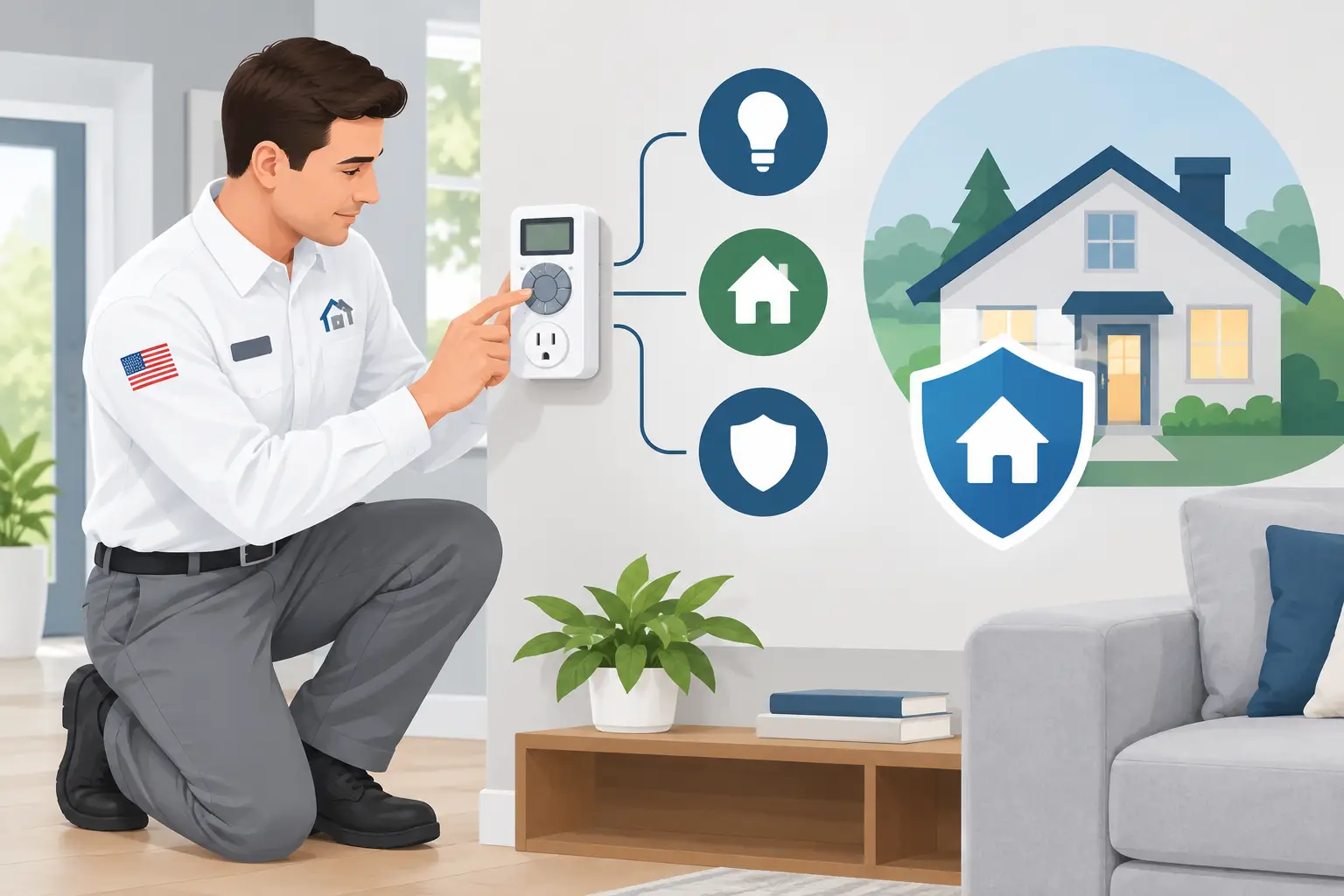
A programable timer can make a home feel more secure and more convenient without requiring you to remember every switch. It can turn porch lights on before you arrive, shut off a bathroom fan after enough run time, or keep landscape lighting on a dependable schedule. But the right timer depends on what it controls, how the circuit is wired, and whether the existing electrical box can support the device safely.
For homeowners in Southern Utah, timers are especially useful for outdoor lighting, vacation routines, heat-producing appliances, and rooms where lights or fans are often left running. The goal is not simply automation. It is reliable control that works the way your household does.
What a Programable Timer Can Control
A programmable timer replaces or works alongside a standard switch, outlet, or electrical control. Once set, it follows a schedule or countdown instead of relying on someone to turn equipment on and off manually.
The simplest use is lighting. A timer can operate front-entry lights, backyard lighting, garage lights, or interior lamps connected to a timer-controlled receptacle. Scheduled lighting can make it easier to come home after dark and can give an occupied appearance when you are away.
Timers are also common for bathroom exhaust fans. Rather than leaving a fan running for hours after a shower, a countdown control lets it run long enough to clear moisture and then shut off automatically. This can help reduce unnecessary runtime while making the routine easier for everyone in the home.
Other applications require more careful planning. Pool equipment, hot tubs, electric heaters, and high-demand appliances may need controls specifically rated for the voltage and electrical load involved. A standard wall timer is not automatically appropriate for every circuit. If the equipment has dedicated wiring or draws significant power, have a licensed electrician assess the installation before adding a control.
Choose the Timer Based on the Job
Not all timers work the same way. The best choice comes down to whether you need a fixed schedule, a short countdown, or control that changes with daylight.
Scheduled timers for daily routines
A scheduled timer turns equipment on and off at preset times. This is a practical choice for porch lights, landscape lights, and other items that should follow the same daily pattern. Some models allow different schedules for weekdays and weekends, which can help if your family has a changing routine.
Keep in mind that a timer set for a fixed clock time does not automatically account for seasonal changes in daylight. It may need occasional adjustment, particularly when the days get shorter or longer.
Countdown timers for fans and temporary use
A countdown timer runs for a selected period, then turns itself off. These controls work well for bathroom fans, laundry-room lights, closets, and similar areas where equipment only needs to operate temporarily.
For a bathroom fan, the run time should be long enough to help remove humid air but not so long that the fan runs all day. The right setting depends on the room size, how often it is used, and whether the fan is vented correctly to the exterior.
Daylight-responsive controls
Some timers use local sunrise and sunset times, while others use a light sensor. These can be useful for exterior lighting because they respond more naturally to changing daylight. A light sensor needs proper placement, though. If it is blocked by a porch roof, affected by a nearby fixture, or exposed to inconsistent light, the system may turn on or off at the wrong time.
Wiring Details Matter More Than They Seem
A timer may look like a simple switch replacement, but many installations are not simple. Modern electronic timers often need a neutral wire to power their internal display and scheduling functions. Older homes may have switch boxes without a neutral conductor available.
A switch location may also control a light from two or more places. For example, a hallway or stairway light may have switches at both ends. These multi-location circuits require a compatible timer and proper wiring. Installing a standard single-pole timer in the wrong configuration can lead to flickering, nonworking switches, or damage to the control.
Box space is another issue. Some timers are larger than standard switches, and crowded electrical boxes leave little room for additional wiring. Forcing a device into an overloaded box can damage conductors or create a poor connection. A professional can determine whether the box, wiring method, and device are compatible before installation begins.
Do Not Guess at Electrical Ratings
Every timer has an electrical rating. That rating tells you what type of load it can safely control, such as incandescent lighting, LED lighting, motors, or resistive heat. Matching the timer to the load is essential.
LED fixtures deserve special attention. They use less energy than older bulbs, but certain controls may have a minimum load requirement or may not be designed for the electrical characteristics of a particular LED setup. The result can be flickering, delayed shutoff, humming, or a timer that does not hold its schedule correctly.
Motors also behave differently from lighting. A bathroom fan, attic fan, or ventilation system can draw more power when starting than when running. The timer must be rated for motor loads, not merely for a similar wattage of lights. For appliances with heating elements or dedicated circuits, the wrong control can overheat or fail.
If a timer feels warm, makes unusual sounds, trips a breaker, causes flickering, or stops responding, stop using it and arrange an electrical inspection. Those are not problems to solve by repeatedly resetting the breaker or replacing the device with another random model.
Smart Features Are Helpful, but Reliability Comes First
Some programmable controls can be adjusted from a phone or integrated with other home devices. That can be convenient when schedules change or when you are traveling. However, more features do not always mean a better fit.
A basic hardwired timer may be the better option when you want a clear, dependable control that anyone in the household can use. It continues following its schedule without depending on a phone, app updates, or internet service. For exterior lighting or a bathroom fan, straightforward controls are often exactly what a home needs.
If you choose a smart option, think about how the switch will work when guests, children, or future homeowners use it. Manual operation should still be clear. A good installation should make the home easier to live in, not create another device that only one person understands.
When to Call a Licensed Electrician
Replacing a plug-in timer for a lamp is generally straightforward. Replacing a hardwired wall switch is different. Even when the task appears small, the electrical conditions behind the wall can be unknown until the box is opened.
Call a professional if the timer will control a dedicated circuit, a motor, outdoor equipment, a heat-producing appliance, a multi-location switch, or anything near water. The same applies if you see damaged insulation, aluminum wiring, signs of overheating, loose outlets, or a breaker that trips. Those conditions call for diagnosis, not a quick switch swap.
A licensed residential electrician can identify the circuit, confirm the load requirements, inspect the available wiring, and install a properly rated control. At Service Right Electric, the process is simple: call, diagnose, and fix. You get a clear explanation of what the timer can safely control before work begins.
A Small Upgrade That Should Feel Effortless
The best timer installation disappears into your routine. The porch light is on when evening arrives. The bathroom fan shuts off after it has done its job. You leave town without wondering whether every exterior light was left on.
If your home needs a timer that is safer, easier to use, or compatible with existing wiring, let a qualified electrician make sure the control works correctly from day one.




0 Comments