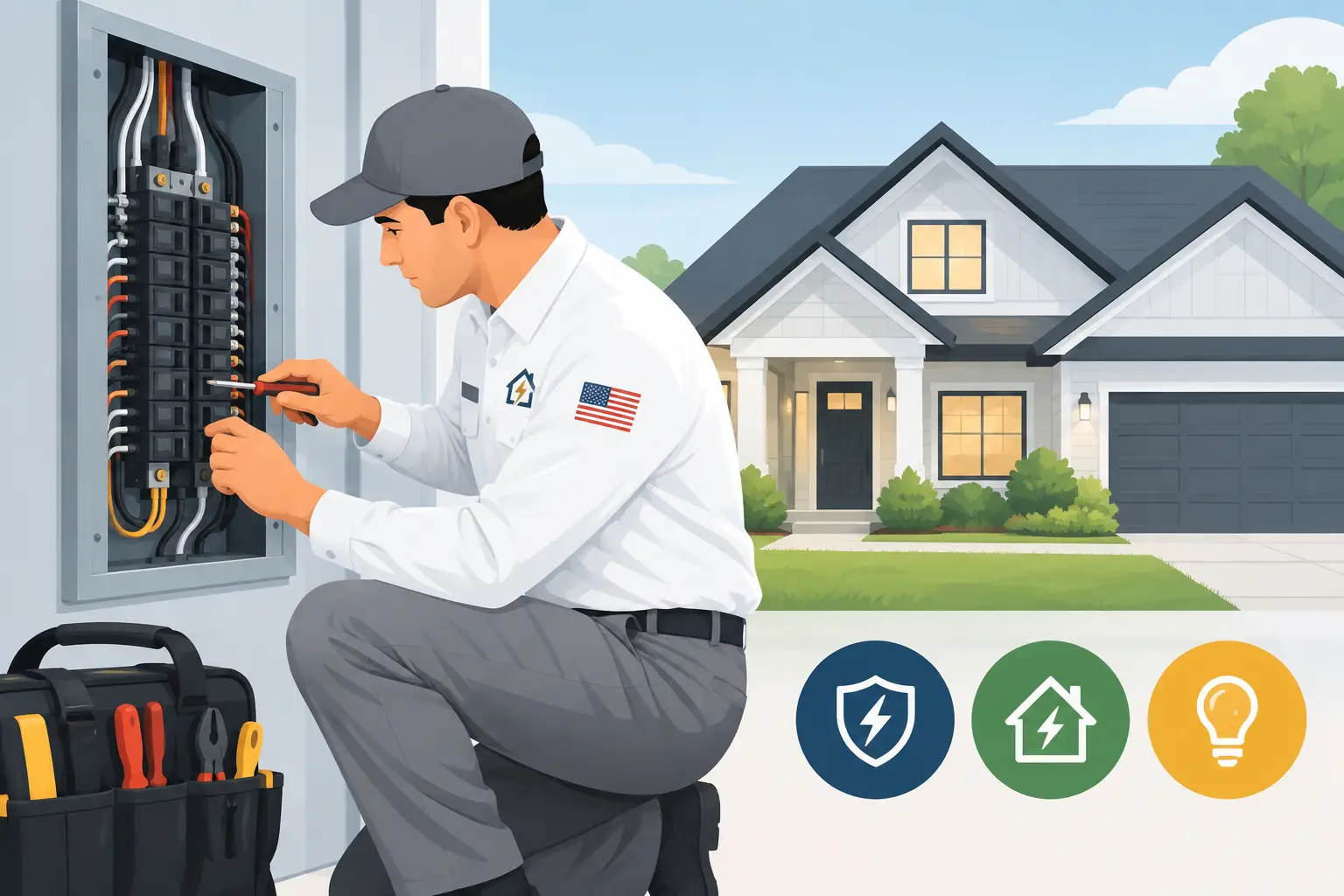
A light that flickers when the air conditioner starts, an outlet that feels warm, or a breaker that keeps tripping may seem like small annoyances. They can also be early warnings that your home’s electrical system needs attention. This residential wiring guide helps Southern Utah homeowners understand what their wiring does, what warning signs deserve a prompt call, and which upgrades are best left to a licensed electrician.
Home wiring is largely hidden behind walls, ceilings, and insulation. That makes electrical problems easy to overlook until they interrupt daily life or create a safety concern. The good news is that a professional diagnosis can identify the cause, explain the options clearly, and get the repair or upgrade completed correctly.
What Residential Wiring Does Behind Your Walls
Your electrical system carries power from the service equipment and breaker panel to the circuits that run your lights, outlets, appliances, heating and cooling equipment, and modern conveniences. Each circuit is designed to supply a particular load safely. When the system is properly installed and maintained, you should have reliable power without hot outlets, recurring breaker trips, buzzing switches, or dimming lights.
A typical home has general-purpose circuits for everyday outlets and lighting, plus dedicated circuits for equipment that draws more power. Kitchen appliances, laundry equipment, heating and cooling components, electric vehicle chargers, hot tubs, and similar additions may need their own correctly sized circuit. The right setup depends on the equipment, the home’s existing electrical capacity, and current safety requirements.
Wiring is not simply a matter of getting electricity from point A to point B. Wire size, circuit protection, grounding, connections, enclosure ratings, and placement all matter. One weak connection or overloaded circuit can affect performance and, in some cases, create heat where it should not be.
Residential Wiring Guide: Signs You Should Not Ignore
Some electrical issues are obvious, such as a dead outlet. Others show up as intermittent problems that homeowners learn to work around. If something electrical changes in your home, it is worth paying attention to the pattern.
A breaker that trips once after a clear overload may be doing its job. A breaker that trips repeatedly, however, needs professional evaluation. Resetting it again and again can mask a problem such as an overloaded circuit, damaged wiring, a failing appliance, or a loose connection.
Warm or discolored outlets and switches also deserve quick attention. So do crackling sounds, burning odors, sparking, shocks from fixtures or appliances, and lights that dim or brighten unexpectedly. Turn off power to the affected area if you can do so safely, avoid using the device or circuit, and arrange for a licensed electrician to inspect it.
Older homes can have additional concerns. Electrical systems that were adequate decades ago may not match how a family uses power now. More chargers, screens, kitchen equipment, home-office devices, and high-demand appliances can place steady pressure on circuits that were never designed for that load.
Why Breakers Trip and Outlets Stop Working
Breakers are safety devices. They shut off power when current exceeds safe limits or when they detect certain fault conditions. While a tripped breaker is frustrating, it is better than wiring overheating inside a wall.
Overloads are common when too many high-demand items share one circuit. A space heater, hair tool, microwave, or portable appliance can push a busy circuit beyond its limit. The long-term answer may be changing how equipment is used, but it may also be a new dedicated circuit if the demand is permanent.
A failed outlet can be caused by a tripped safety device elsewhere, a loose connection, damage within the outlet, or a problem on the circuit. Because outlets can be connected in sequence, the one that stops working is not always where the problem began. This is where professional troubleshooting saves time and prevents guesswork.
Do not replace a breaker with a larger one to stop tripping. Do not bypass safety devices, and do not assume that a breaker reset means the issue is solved. Those shortcuts can allow wiring to carry more current than it was designed to handle.
When a Wiring Upgrade Makes Sense
An electrical upgrade is not always about a repair. It can be the practical step that makes a home more comfortable, useful, and ready for future needs. The best time to consider wiring changes is often before walls are closed during a remodel, before a new high-demand appliance arrives, or when repeated problems show a circuit is already at its limit.
Adding Dedicated Circuits
Dedicated circuits give major equipment a reliable electrical path without competing with other household loads. They are often needed for new appliances, garage equipment, electric vehicle charging, hot tubs, and other power-intensive additions. A licensed electrician can evaluate the required circuit, the distance from the panel, and whether the existing service can support the new demand.
Updating Outlets, Switches, and Lighting
Modern outlets and lighting can improve both safety and convenience. In areas exposed to moisture, such as kitchens, bathrooms, garages, laundry areas, and exterior locations, the appropriate protective devices are especially important. Outdoor fixtures and receptacles also need to be selected and installed for their environment.
Lighting projects can reveal wiring issues that were previously hidden. A new ceiling fan, recessed lighting layout, or exterior security light may require more than swapping a fixture. The existing box must be properly supported, the wiring must be suitable, and the circuit must have available capacity.
Preparing for Whole-Home Power Needs
Panel upgrades, surge protection, standby power equipment, and new circuits can work together, but they are not one-size-fits-all projects. A homeowner considering an EV charger may also be thinking about a future hot tub or generator. Discussing those plans during the initial evaluation helps an electrician recommend a solution that fits the home rather than a quick fix that may need to be redone later.
Why Electrical Work Is Not a Weekend DIY Project
Replacing a visible device can look simple, but the condition of the wiring behind it may not be simple at all. Homes can have altered circuits, improper connections, previous repairs, hidden damage, or mislabeled panels. Turning off the wrong breaker, selecting the wrong device, or making an insecure connection can create a serious hazard.
Licensed residential electricians use diagnostic equipment and established safety practices to trace the actual cause of a problem. They also know when a project needs additional protection, a dedicated circuit, panel work, or a permit and inspection. That level of planning matters because electrical work has to perform safely long after the service visit is finished.
Professional service should also be straightforward. You deserve to know what the technician found, what your options are, and what work is recommended before repairs begin. At Service Right Electric, the process is simple: call, diagnose, and fix. The goal is not just to restore power, but to leave you confident that the work was completed correctly.
Simple Habits That Support Electrical Safety
Homeowners do not need to work on live wiring to take good care of an electrical system. Avoid overloading extension cords and power strips, particularly with high-wattage appliances. Keep cords out from under rugs and away from pinched locations. Test smoke alarms regularly and replace batteries or units according to their instructions.
It also helps to notice changes. A newly buzzing dimmer, an outlet that no longer holds a plug securely, or lights that flicker in one room can provide useful clues before a larger failure occurs. Make a note of when the problem happens and what is running at the time. That information helps a technician diagnose the issue efficiently.
If your home has experienced water intrusion, rodent damage, storm damage, or a major remodeling project, consider an electrical inspection. Conditions that affect walls, attics, crawl spaces, or exterior equipment can affect wiring and connections too.
A safe electrical system should fade into the background of family life: lights work, appliances run, and circuits stay protected. If yours is sending warning signs or struggling to support a planned upgrade, a qualified residential electrician can help you move forward with a clear answer and a safer home.



0 Comments