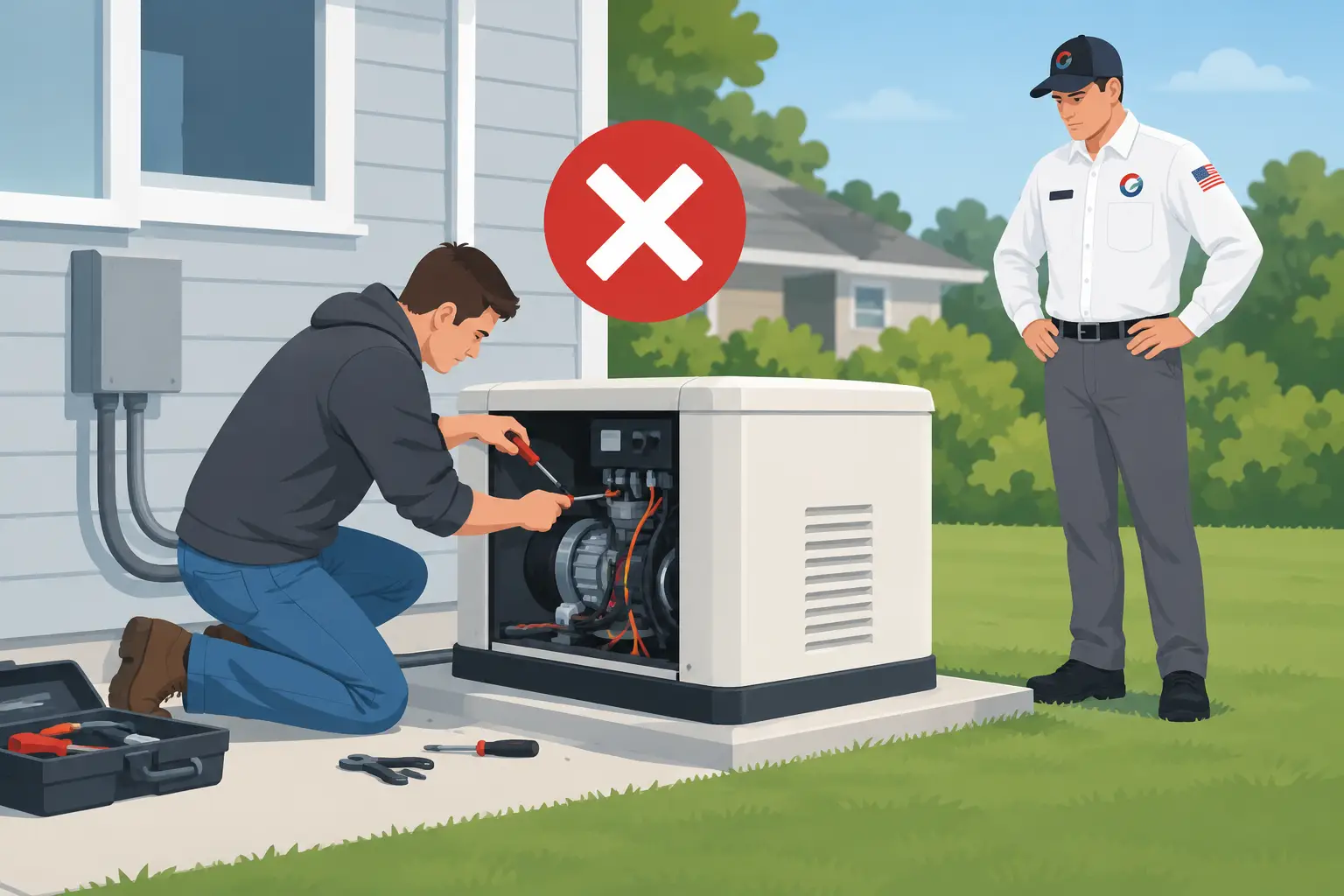
A generator can make a power outage feel manageable, but the dangers of DIY generator installs begin long before the first appliance turns back on. A setup that appears to work can still send electricity onto utility lines, overload home wiring, create a fire risk, or allow deadly carbon monoxide into living spaces. For a home backup system, getting power is only half the job. Getting it safely to the right places is what matters.
For Southern Utah homeowners, a generator may be part of preparing for storms, wind events, extreme heat, or an unexpected outage. That preparation should add confidence, not introduce a new electrical hazard. A licensed electrician can assess the home, install the correct equipment, and explain exactly how the system will operate when the power goes out.
Why a Generator Is Not a Simple Plug-In Project
Many DIY problems start with a reasonable goal: keep the refrigerator cold, run a few lights, or power medical equipment during an outage. The trouble begins when a homeowner tries to connect a portable or standby generator directly to the home’s electrical system without the proper transfer equipment.
A generator produces electrical power just like the utility does. If both sources can feed the home wiring at the same time, that power has to be controlled and isolated correctly. A proper installation uses equipment designed to prevent the generator and utility power from energizing the same circuits at the same time.
Plugging a generator into a dryer outlet, range outlet, or another household receptacle is especially dangerous. This practice can energize wiring in ways it was never intended to handle. It may overload circuits, damage equipment, create exposed shock hazards, and send power back through the service lines. That last risk, called backfeeding, can put utility workers and neighbors in danger when they believe a line is de-energized.
The Dangers of DIY Generator Installs Go Beyond Shock
Electric shock is a serious concern, particularly during an outage when homeowners may be working in low light, rain, or a cluttered garage. But electrical contact is not the only threat. A generator installation affects the panel, branch circuits, fuel source, ventilation, and the home’s overall electrical load.
Backfeeding can endanger people far from your home
Without an approved transfer switch or interlock installed for the specific panel, generator power can travel beyond the circuits you intend to use. It can move through the main electrical system and out toward utility equipment. Even a small generator can produce enough voltage to cause severe injury or death.
Backfeeding can also damage the generator when utility power returns. If the generator is still connected incorrectly, the returning utility supply can create a destructive fault. The result may be damaged wiring, a ruined generator, or a fire inside the electrical panel.
Overloaded wiring can overheat behind the walls
Generators are often sized around what homeowners want to run, not what the electrical system can safely support. A portable unit may be able to start some appliances but struggle as loads cycle on and off. Air conditioners, well pumps, refrigerators, electric water heaters, and other motor-driven equipment can draw much more power at startup than during normal operation.
An improper connection may place too much demand on a circuit, cord, receptacle, breaker, or panel component. Breakers are safety devices, but they cannot correct every bad connection or undersized conductor. Heat can build up at a loose terminal or overloaded connection point, sometimes out of sight until insulation is damaged or a fire begins.
Carbon monoxide is a fast-moving emergency
A generator must operate outdoors, away from doors, windows, vents, garages, crawlspace openings, and other paths that can bring exhaust into the home. Carbon monoxide has no color or smell. People may not realize they are being exposed until they become dizzy, confused, nauseated, or unconscious.
Running a portable generator in a garage with the door open is not safe. Neither is placing it near a window or under an enclosed patio where exhaust can collect. The right electrical connection does not make a poor generator location safe. Both parts of the setup matter.
Grounding and neutral bonding require real expertise
Generator grounding is commonly misunderstood because the correct arrangement depends on the generator, transfer equipment, and electrical system. A generator may have a bonded neutral or a floating neutral, and the wrong configuration can interfere with fault protection or create objectionable current on equipment grounding paths.
This is not an area for guesswork or a quick online diagram. An electrician evaluates the specific equipment and the home’s existing electrical system so the generator can operate as intended during normal use and during a fault.
Standby and Portable Systems Have Different Requirements
A permanently installed standby generator is a whole-home electrical project, not just an appliance installation. It requires correctly sized conductors, overcurrent protection, transfer controls, fuel coordination, clearances, and a load calculation. Depending on the home and the equipment selected, the panel may also need upgrades or reconfiguration.
Portable generators can be a practical option for limited backup power, but they still need a safe connection plan. Extension cords may be appropriate for a small number of individual appliances when they are properly rated, kept dry, and used according to the generator’s instructions. They are not a substitute for safely powering selected home circuits through approved transfer equipment.
The right choice depends on what must remain powered. A household that only needs refrigeration, lighting, and a few outlets has different needs from a home that relies on critical medical equipment, a well pump, or cooling during high temperatures. A professional assessment helps avoid buying more generator than necessary or, just as frustrating, installing a system that cannot support the loads that matter most.
Permits and Inspections Protect More Than Paperwork
Electrical permits and inspections can feel like an extra step when the power is already out or a project feels straightforward. In reality, they help verify that the installation includes the safeguards a generator system needs. Properly installed transfer equipment, breaker protection, conductor sizing, disconnecting means, and clear labeling all reduce the chance of a dangerous mistake later.
They also make the system easier to use under pressure. During an outage, no one should have to remember which improvised cord goes where or whether the main breaker must be turned off first. A professionally installed system provides a clear operating process that household members can understand.
What Homeowners Can Safely Do
Homeowners still have an important role in generator safety. Keep the generator maintained according to its manufacturer instructions, store fuel safely, test carbon monoxide alarms, and make sure everyone in the household knows the generator must stay outdoors. Before an outage, decide which appliances are essential and avoid trying to run every electrical load at once.
If you already have a generator but no approved way to connect it to the home, do not improvise. Use properly rated extension cords for individual items only when appropriate, or have an electrician install a safe transfer solution. If you notice a burning smell, warm receptacle, tripping breakers, flickering lights, damaged cords, or a generator that behaves unpredictably, stop using the setup and have it checked.
A Safer Way to Plan Backup Power
A generator installation starts with a conversation about the home, not a guess at wattage. An electrician can identify essential circuits, evaluate the panel, calculate expected loads, and recommend a properly designed connection method. You will know what the generator can power, what it cannot power at the same time, and how to operate it without putting the home or utility workers at risk.
Service Right Electric helps homeowners make those decisions with clear explanations, licensed electrical work, and upfront pricing before work begins. Whether you are planning a standby system or need a safe connection for a portable generator, the goal is the same: reliable backup power without turning an outage into an emergency.
When the lights go out, your family should be thinking about comfort and safety, not whether a temporary electrical connection will hold. Plan the generator system before the next outage, and let a qualified electrician make sure it is ready to work when you need it.




0 Comments