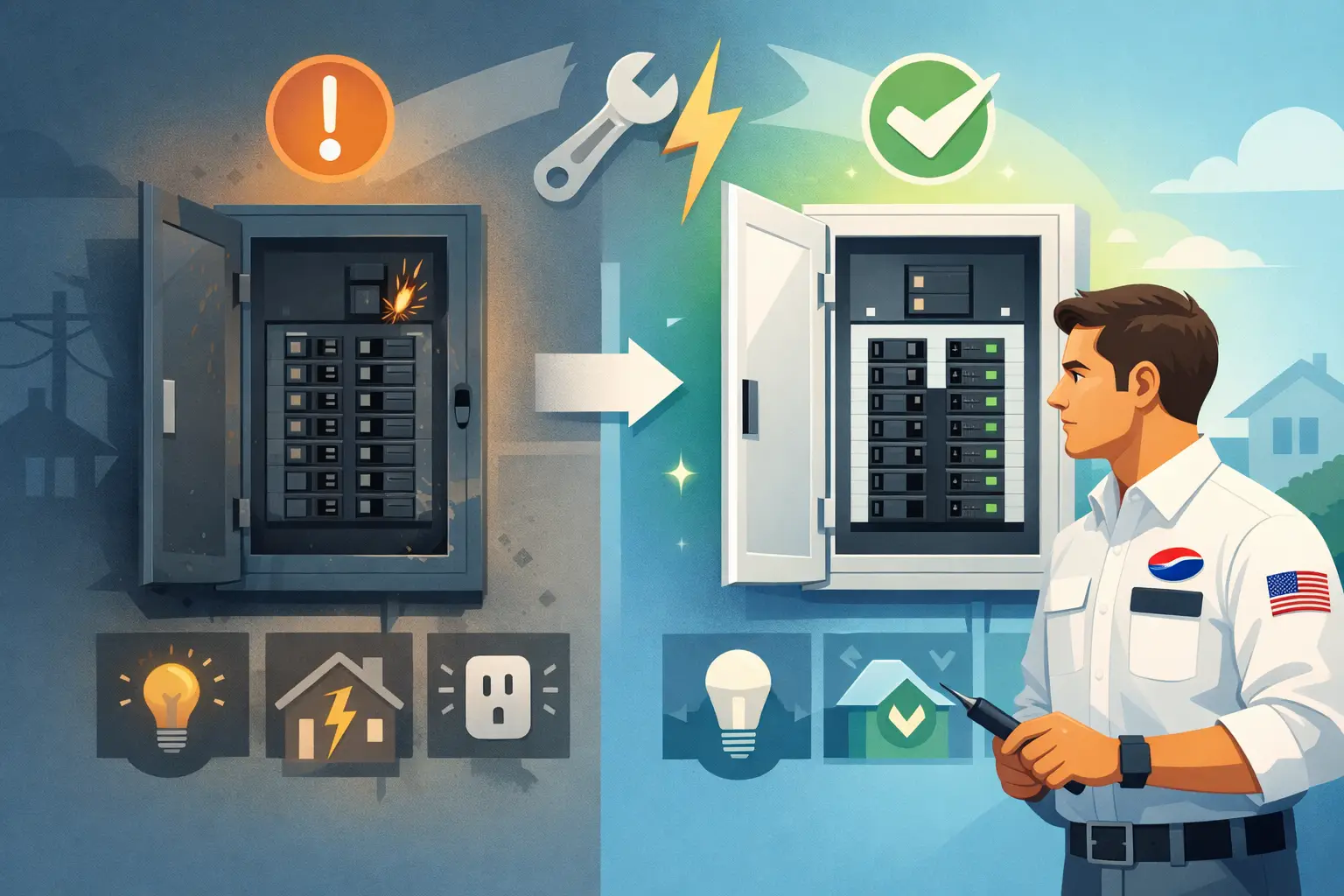
A breaker trips while the microwave and air fryer are running. A bedroom light flickers when the AC starts. You keep reaching for extension cords because there are not enough outlets where your family actually uses power. Breaker panels are built to protect your home in moments like these, but an aging or overloaded panel can become the source of the problem instead.
Your electrical panel is not something you need to think about every day. That is a good thing. When it is correctly sized, properly installed, and in good condition, it quietly directs electricity throughout the house and shuts off a circuit when it detects a fault or overload. When warning signs appear, however, prompt professional service helps protect your home, your equipment, and the people inside.
What Breaker Panels Do for Your Home
Often called the electrical panel, service panel, or breaker box, this metal cabinet is the control center for your home’s electrical system. Power enters the home and is distributed from the panel to individual circuits for lights, outlets, appliances, heating and cooling equipment, and other electrical needs.
Each circuit breaker is a safety device. If a circuit draws more power than its wiring can safely handle, the breaker is designed to trip and stop the flow of electricity. It can also trip in response to certain electrical faults. That interruption can be inconvenient, but it is a critical layer of protection against overheated wiring and electrical fires.
A panel is not just a collection of switches. Its capacity, condition, connections, grounding, and layout all matter. A home with a newer panel can still have circuit issues if the panel was not sized for the household’s actual electrical demand. Likewise, an older home may be functioning day to day while carrying electrical equipment that deserves a closer look.
Signs Your Breaker Panel Needs Attention
A breaker that trips once after a clear overload may simply be doing its job. For example, several high-demand kitchen appliances plugged into the same circuit can exceed that circuit’s limit. Repeated tripping is different. It is a signal to have the circuit and panel evaluated rather than a reason to keep resetting the breaker.
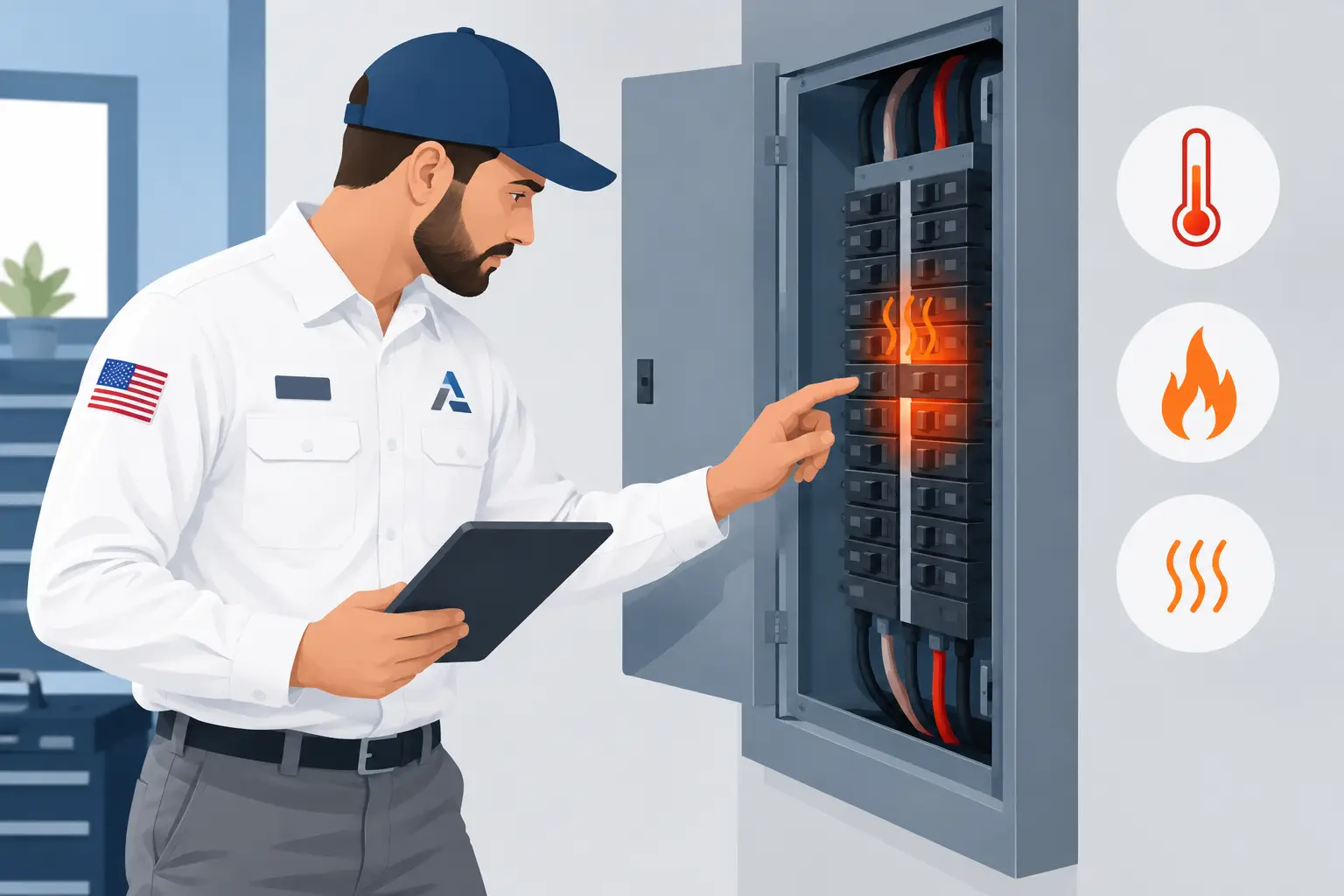
Pay attention if you notice flickering or dimming lights, outlets that feel warm, buzzing near the panel, a burning smell, discoloration around breakers or outlets, or breakers that will not stay reset. These signs may point to a loose connection, damaged wiring, an overloaded circuit, or another condition that needs professional diagnosis.
Rust, water staining, corrosion, physical damage, and a panel cover that will not close properly also deserve attention. Southern Utah homes can face demanding conditions, from heat and dust to monsoon-related moisture concerns. Electrical equipment should remain dry, secure, accessible, and free from visible deterioration.
Another common issue is lack of space. If every open breaker position is already used and you are planning to add a new circuit, do not assume a crowded panel can simply be made to work. A licensed electrician can assess available capacity, the panel’s rating, and the best path for a safe installation.
When an Upgrade Makes Sense
A panel upgrade is not automatically required because a home is older. The right decision depends on the panel’s condition, its electrical capacity, the condition of the service equipment, and the loads your home needs to support. A professional assessment separates a true upgrade need from a smaller, targeted repair.
Upgrades are commonly considered when a household is adding equipment that needs a dedicated circuit or places a meaningful demand on the electrical system. An EV charger, hot tub or sauna wiring, larger HVAC equipment, a standby generator connection, and some major remodeling projects can all change the calculation. The same is true when a homeowner is converting underused space into a home office, workshop, or additional living area.
Modern homes use electricity differently than homes built decades ago. More devices charge every day, kitchens carry more countertop appliances, and homeowners expect convenient power where they need it. A panel that was adequate for yesterday’s habits may not leave much room for tomorrow’s plans.
A panel upgrade can also be the right move when existing equipment is damaged, obsolete, undersized, or no longer able to support safe circuit additions. It may involve more than replacing the panel cabinet itself. Depending on the home’s needs, the work can include service equipment improvements, new breakers, properly installed dedicated circuits, grounding updates, or surge protection. The scope should be explained clearly before work begins.
Why Panel Work Is Not a Weekend DIY Project
Opening an electrical panel exposes components that can remain energized even when individual breakers are switched off. The risks include severe shock, arc-related injuries, fire, and damage to the home’s electrical system. Guessing at wire sizes, breaker types, panel capacity, or connection methods can create hazards that are not obvious until a circuit fails under load.
This is also why a breaker that repeatedly trips should not be replaced with a larger breaker to stop the inconvenience. The breaker must match the circuit wiring and the intended load. Installing the wrong size can allow wiring to overheat before the breaker trips. The problem is not solved – the safety protection has been compromised.
A licensed residential electrician can diagnose the cause rather than treating the symptom. That process may include evaluating circuit loads, inspecting connections, checking panel condition, identifying damaged components, and determining whether a repair, added circuit, or panel upgrade is appropriate. Homeowners deserve a clear explanation of what was found and what options make sense.
What to Do If You Notice a Panel Problem
If you smell burning, see smoke or sparking, hear persistent buzzing, or notice a panel that is hot to the touch, treat it as urgent. Keep people away from the area and contact a qualified electrician promptly. If there is an immediate threat to life or property, contact emergency services.
For less urgent concerns, make a few notes before your appointment. Which breaker trips? What was running when it happened? Is the issue limited to one room or does it affect several areas? Details like these can help an electrician diagnose the issue more efficiently, but do not remove the panel cover or attempt repairs yourself.
It also helps to think ahead. If you are considering an EV charger, hot tub, new appliance, home addition, or backup power project, schedule an electrical assessment before installation plans are final. Early planning can prevent delays and help ensure the electrical system is ready for the upgrade.
A Clear Path to Safer, More Reliable Power
A good electrical service visit should not leave you guessing. The process starts with listening to what you have noticed, followed by a professional diagnosis and a straightforward explanation of the recommended work. You should understand what is causing the issue, what needs to be fixed, and what the next steps look like before work begins.
For homeowners in St. George and across Southern Utah, Service Right Electric provides residential panel repairs, circuit additions, and upgrades with licensed technicians and upfront pricing. Whether the issue is a nuisance breaker trip or a larger capacity concern, the goal is the same: safe, reliable power and work completed correctly.
Your breaker panel does a quiet but essential job. If it starts asking for attention through tripped breakers, heat, flickering lights, or a lack of capacity, act before a small warning becomes a larger disruption. A professional evaluation can give you a safer home today and room for the improvements you want next.


0 Comments