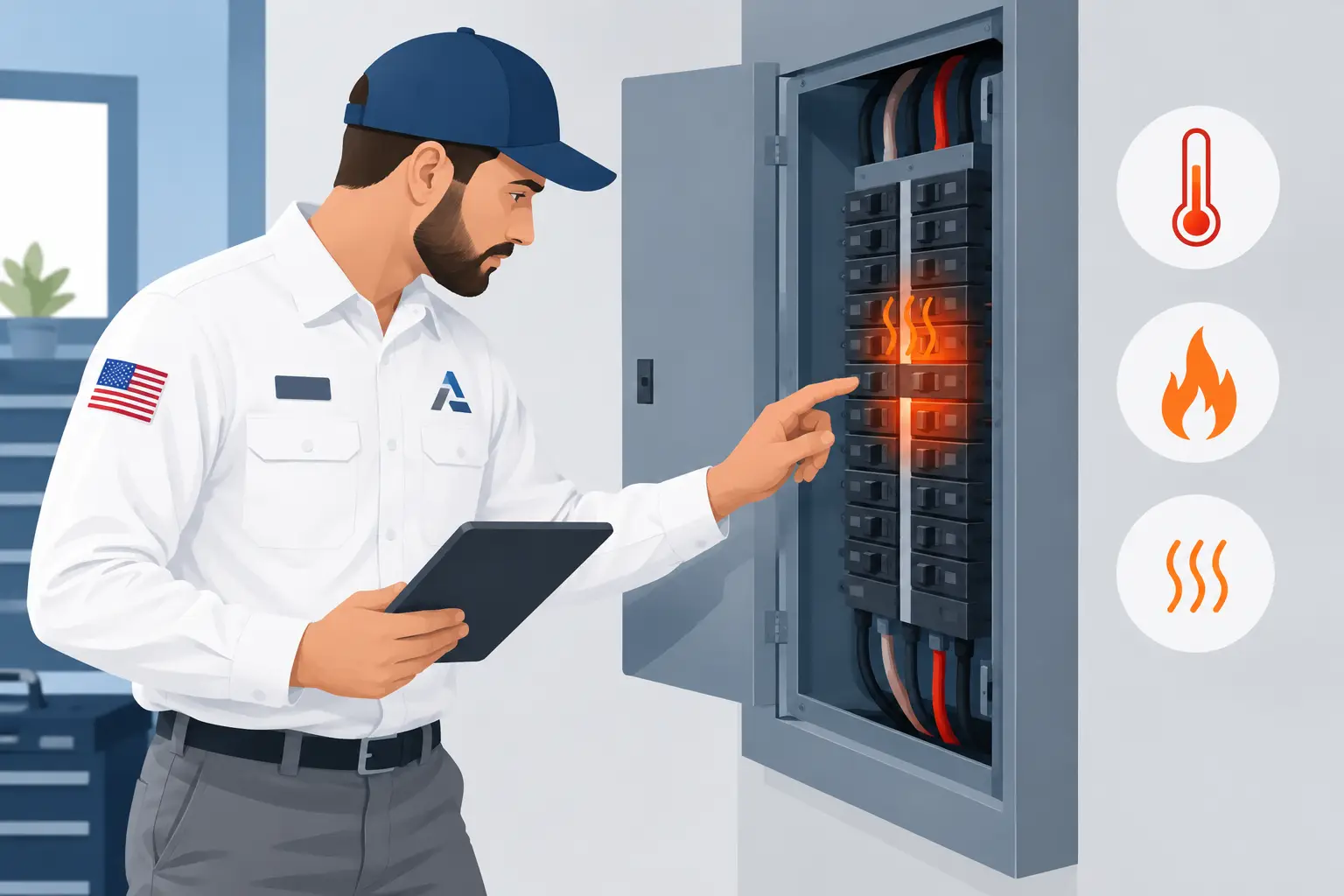
A breaker that feels warm may get a homeowner’s attention. A breaker that is hot, smells burned, trips repeatedly, or makes unusual sounds needs prompt attention. So, can breakers overheat? Yes. Circuit breakers can overheat when too much current passes through them, when a connection is failing, or when the panel itself has an underlying problem.
A breaker is designed to protect your home by shutting off power when a circuit becomes unsafe. When it gets unusually hot, that protection may be responding to a real electrical issue – or the breaker may no longer be able to do its job reliably. This is not a weekend DIY project. Treat overheating at the panel as a safety concern and have a licensed electrician diagnose the cause.
What a Circuit Breaker Is Supposed to Do
Your electrical panel divides your home’s power into individual circuits. Each breaker is matched to the wiring and intended electrical load for a portion of the home, such as bedrooms, kitchen outlets, air conditioning equipment, or a dedicated appliance.
When a circuit draws more electricity than its wiring can safely handle, the breaker is supposed to trip. That interruption helps prevent overheated wires, damaged equipment, and electrical fires. Some warmth around a working electrical panel can occur, especially when larger equipment is running. But a breaker should not be hot enough to make you pull your hand away, and the panel should never produce a burning odor, crackling sound, smoke, or visible discoloration.
The difference matters. A mildly warm breaker may simply reflect normal use. A hot breaker is a signal that something deserves a professional inspection.
Signs an Overheating Breaker Needs Immediate Attention
You do not need to remove the panel cover or touch internal components to recognize warning signs. Keep the panel door closed and look for changes in how your home’s electrical system behaves.
A breaker that trips more than once, particularly when you use the same appliance or room, is one of the most common signs. Lights that flicker or dim when equipment starts, outlets that feel warm, or appliances that lose power unexpectedly can point to an overloaded or failing circuit.
Take the situation more seriously if you notice a burning-plastic smell, buzzing or crackling from the panel, scorch marks near a breaker, melted plastic, smoke, or a panel that feels unusually hot. Turn off power to the affected circuit if you can do so safely without opening the panel or touching damaged areas. If there is smoke, sparking, or an active fire risk, move away from the area and contact emergency services.
Do not repeatedly reset a breaker that keeps tripping. Resetting it without addressing the cause can allow an overloaded circuit or loose connection to continue heating up.
Why Circuit Breakers Overheat
Overheating is not one single problem. The cause can range from a circuit being asked to do too much to a damaged component inside the panel. A proper diagnosis is the safest way to determine which condition is present.
An overloaded circuit
Overloads happen when too many devices run on one circuit at the same time. Portable heaters, hair tools, countertop cooking appliances, power tools, and older window air conditioners can draw substantial power. In a busy household, it is easy for several high-demand items to end up on the same circuit.
The breaker may trip as intended, but repeated overloading can create ongoing heat and wear. The practical fix may be as simple as changing how certain devices are used. In other homes, the right answer is a new dedicated circuit, especially for equipment that needs consistent power.
A loose or damaged connection
Electricity moving through a loose connection creates resistance, and resistance creates heat. A wire that is not properly secured at the breaker, a damaged conductor, or a worn connection at the panel can overheat even when the circuit does not appear heavily loaded.
This is one reason a breaker issue should not be judged by appearance alone. The source of the heat may be behind the panel cover, where homeowners should not attempt repairs.
A failing breaker
Breakers are mechanical safety devices. They can wear out, become damaged, or fail to trip correctly over time. A defective breaker may overheat internally, trip too easily, or fail to respond appropriately to an overload.
Replacing a breaker is not simply a matter of installing one that fits. The replacement must be compatible with the panel and correctly matched to the circuit wiring. Installing a larger breaker to stop nuisance tripping is especially dangerous because it can allow wires to overheat before the breaker shuts off power.
An undersized circuit for modern electrical use
Many homes have more electrical demand than they did when they were built. Home offices, entertainment systems, garage tools, electric vehicle charging, hot tubs, and expanded kitchen appliances all place new demands on a home’s electrical system.
Older wiring and panels are not automatically unsafe, but they may not be sized or configured for how the home is used now. If a circuit runs near its limit regularly, an upgrade can improve both safety and convenience.
Panel damage or moisture exposure
Southern Utah homes can experience heat, dust, monsoon moisture, and outdoor equipment exposure. While an indoor panel is protected from weather, damage from past leaks, corrosion, pests, or moisture can still affect electrical connections. An outdoor disconnect or equipment panel may face additional exposure.
Corrosion, water damage, and compromised equipment require a careful evaluation. Electrical components and moisture are not a combination to ignore.
What to Do If You Suspect a Breaker Is Overheating
Start with safety, not troubleshooting. Avoid removing the panel cover, tightening wires, or replacing breakers yourself. Even with the main breaker off, parts of the electrical system may remain energized.
If there are no signs of immediate danger, reduce the load on the affected circuit. Unplug portable high-draw devices and avoid using the outlets or equipment served by that breaker until it has been checked. If you know which circuit is involved and the breaker is hot or repeatedly tripping, leave it off rather than continuing to reset it.
It helps to make a few observations before your appointment. Note which breaker trips, what was running at the time, whether lights flicker, and whether the issue occurs at certain times of day. Those details help an electrician narrow down the problem efficiently.
If you smell burning, hear arcing or crackling, see discoloration, or find melted material, treat it as urgent. Keep people away from the panel and contact a qualified electrician right away. Do not use water on an electrical fire.
How a Licensed Electrician Diagnoses the Problem
A professional diagnosis goes beyond replacing the breaker that appears to be hot. The electrician checks the breaker, wire connections, circuit load, panel condition, and signs of heat damage. They may identify an overloaded circuit, a loose termination, damaged wiring, an aging panel component, or a need for a dedicated circuit.
The best repair depends on what caused the heat. A loose connection may need correction and inspection for damage. An overloaded circuit may need load changes or a new circuit. A failing breaker may need a properly matched replacement. If the panel has broader capacity or safety concerns, a panel upgrade may be worth discussing.
That is why transparent diagnosis matters. You should understand what is causing the problem, what repair is recommended, and what work will be completed before the job begins.
Preventing Future Breaker Problems
The most useful prevention is matching your electrical system to the way you actually live. Avoid plugging several high-demand appliances into one outlet area, and do not rely on extension cords or power strips as a permanent solution for equipment that needs its own circuit.
Pay attention when you add major electrical loads. An EV charger, hot tub, sauna, workshop equipment, or new HVAC equipment may require dedicated wiring and a review of panel capacity. Planning the electrical work before installation is safer than discovering a problem after the breaker begins tripping.
For homes with aging panels, recurring trips, flickering lights, or recent renovations, a residential electrical inspection can provide useful answers before a minor warning becomes a disruptive repair. Service Right Electric follows a straightforward approach: call, diagnose, fix. You get a clear explanation of what is happening and a safe path forward.
A hot breaker is your home asking for attention. Acting early can protect the wiring behind your walls, keep your household powered safely, and give you confidence that the next time you switch something on, your electrical system is ready for it.


0 Comments