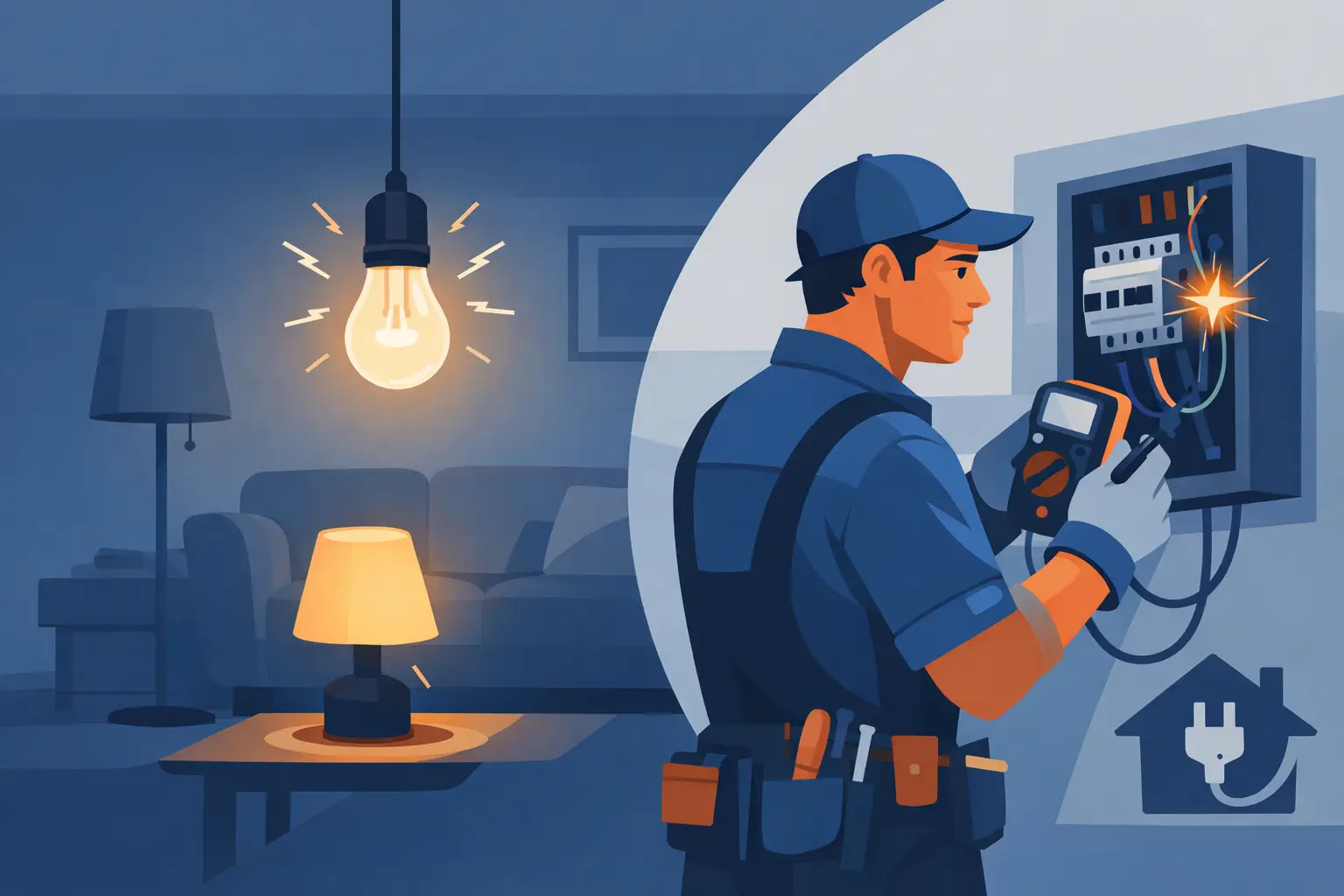
A light that flickers once when you turn on the garbage disposal may be annoying. A light that repeatedly dims, flashes, or changes brightness for no clear reason can point to a problem that needs flickering lights electrical repair. The difference matters because your lighting may be warning you about a loose connection, an overloaded circuit, a failing fixture, or a larger issue at the electrical panel.
For Southern Utah homeowners, the safest move is not to guess. Notice what the lights are doing, whether other electrical devices are affected, and whether you smell anything unusual. Then have a licensed residential electrician diagnose the cause before a small repair becomes damaged wiring, a failed circuit, or a fire risk.
What Flickering Lights Can Tell You
Not every flicker has the same cause. A single light flickering usually points to a problem near that fixture, bulb, switch, or outlet. Multiple lights flickering in one room may indicate a loose circuit connection. When lights throughout the home dim or brighten together, the issue may involve the panel, main service, meter equipment, or utility connection.
The timing provides useful clues. If lights flicker only when a large appliance starts, such as an air conditioner, microwave, refrigerator, or washing machine, the circuit may be carrying more demand than it should. Some brief dimming can occur when a motor starts, especially in an older home. Repeated or dramatic dimming is not normal and deserves professional attention.
LED bulbs can also reveal problems that older bulbs might hide. LEDs use very little power and respond quickly to voltage changes, so they may flash or pulse when a connection is loose or when they are installed on an incompatible dimmer. That does not automatically mean the wiring is unsafe, but it does mean the fixture and circuit should be checked rather than repeatedly replacing bulbs.
Common Causes of Flickering Lights
A loose bulb, fixture connection, or switch
Sometimes the repair is limited to the light itself. A bulb may not be seated properly, a fixture connection may have loosened over time, or a worn switch may no longer make consistent contact. This is more common with older fixtures, ceiling fans with light kits, and frequently used switches.
A homeowner can safely confirm that the correct bulb type is installed and that a cool bulb is snug. Beyond that, fixture wiring and switch connections should be handled by a trained electrician. Turning off a wall switch does not always make a box safe to work in, and loose wiring behind a switch can overheat without obvious signs from the outside.
An overloaded circuit
Modern households ask a lot from circuits. Space heaters, countertop appliances, hair tools, entertainment equipment, and charging devices can add up quickly. In older homes, a room may have fewer circuits than a family needs today.
If lights flicker when certain devices run, the answer may be a dedicated circuit, a circuit upgrade, or a correction to an improperly shared load. The right repair depends on the panel capacity, existing wiring, and what the circuit is serving. Adding another power strip is not a solution for a circuit that is already working too hard.
Loose or damaged wiring
Loose connections are one of the more serious causes of flickering lights. Electrical current creates heat when it passes through a poor connection. Over time, that heat can damage wire insulation, terminals, switches, outlets, and breakers.
Connections can loosen because of age, prior work, vibration, expansion and contraction from temperature changes, or damage inside a wall or attic. This is why a flicker that seems minor should not be ignored when it is frequent, getting worse, or affecting more than one device.
A problem at the electrical panel or service equipment
When lights in several rooms flicker, brighten, or dim, the source may be farther upstream than the fixture. A failing breaker, loose neutral connection, corroded panel component, or issue near the meter can affect multiple circuits at once.
These problems require prompt diagnosis. A loose neutral, in particular, can create unstable voltage that harms electronics and appliances. This is not a weekend DIY project. A licensed electrician can test the system safely, determine whether the problem is inside the home or on the utility side, and explain the appropriate next step.
An incompatible dimmer or LED setup
If a light flickers only when dimmed, the dimmer and bulb may not be compatible. Older dimmers were designed for incandescent bulbs and may not regulate LED bulbs correctly. Low-quality LEDs can also flicker, especially on dimming circuits.
This can be a straightforward upgrade, but it still pays to verify the fixture, dimmer rating, and wiring condition. Replacing parts without finding the actual cause can leave a connection problem hidden behind a new switch.
When Flickering Lights Need Urgent Electrical Repair
Call for professional help promptly if flickering is paired with any sign of overheating, damage, or unstable power. Turn off the affected circuit at the panel if you can do so safely, and avoid using the fixture or outlet until it has been inspected.
Watch for these warning signs:
- A burning smell, sizzling sound, buzzing switch, or warm outlet cover
- Sparks, discoloration, scorch marks, or melting around a fixture, outlet, or panel
- Lights that brighten and dim throughout the house
- A breaker that trips repeatedly or a circuit that suddenly stops working
- Flickering after water exposure, storm damage, remodeling, or rodent activity
If you see smoke, flames, or active sparking, get everyone away from the area and call emergency services. Do not touch damaged electrical equipment or attempt to put out an electrical fire with water.
What to Check Before the Electrician Arrives
You do not need to troubleshoot the wiring yourself. A few observations can help the electrician diagnose the issue more efficiently. Notice whether the flickering affects one fixture, one room, or the entire home. Think about what was running when it started, such as the HVAC system, a major appliance, or a new device.
It also helps to note whether the issue occurs at a certain time of day, during high winds, or only when a dimmer is used. If a breaker has tripped, leave it off rather than resetting it several times. Repeated resets can feed power into a circuit that already has a fault.
Avoid removing outlet covers, opening the electrical panel, or tightening wires. Electrical problems can be hidden behind walls and inside boxes, and a connection that looks simple may be part of a larger issue.
How a Professional Diagnoses the Problem
A proper service visit begins with the symptoms, then moves to testing. The electrician will inspect the affected fixtures, switches, outlets, breakers, and accessible wiring connections. They may measure voltage, check circuit loading, inspect panel components, and identify whether the issue is isolated to the home or may require utility involvement.
From there, you should receive a clear explanation of what was found and what repair options make sense. Some homes need a small fixture or dimmer correction. Others need a failed connection repaired, a new dedicated circuit, panel work, or an upgrade to safely support how the home is used now.
Service Right Electric follows a simple call, diagnose, and fix process, with upfront pricing before work begins. That means you can make an informed decision without wondering what the repair will involve or where the cost is going.
Do Not Let a Small Flicker Become a Bigger Problem
Flickering lights are easy to put off when they come and go. But electrical systems rarely correct themselves. A loose connection can worsen with normal use, and a circuit that is overloaded today may become more unreliable as more devices are added.
If the flickering is persistent, affects multiple areas, or comes with heat, noise, odors, or breaker problems, schedule a residential electrical inspection soon. A careful diagnosis can restore steady lighting, protect your equipment, and give your family confidence that the power behind the walls is working safely.




0 Comments