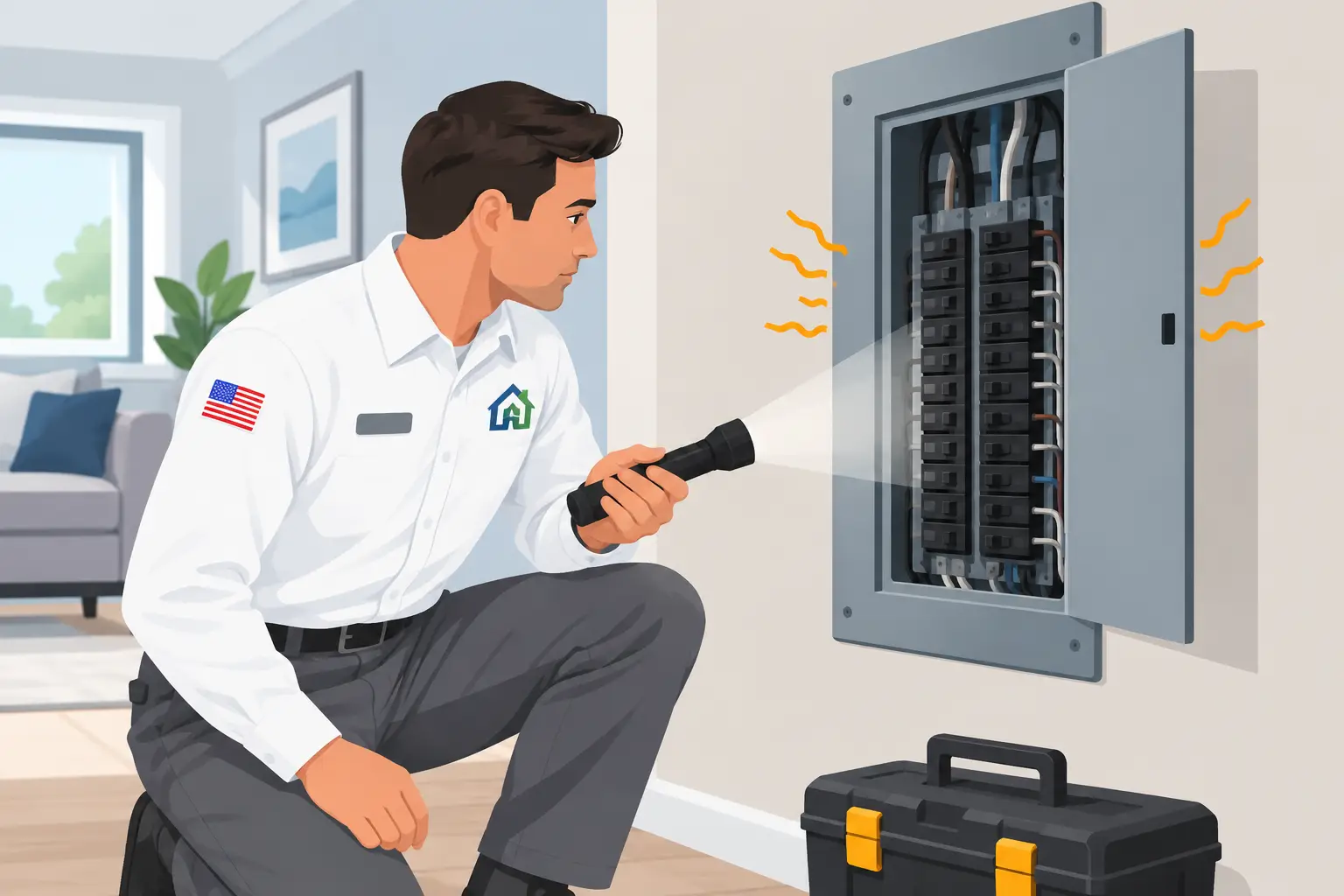
A breaker panel should not become part of your home’s background noise. If you are asking what causes buzzing electrical panels, the answer can range from a minor vibration to a developing electrical fault. Because the panel distributes power throughout your home, a new or persistent buzz deserves professional attention, especially if it happens with flickering lights, heat, a burning odor, or breakers that trip.
The safest response is simple: do not remove the panel cover or try to tighten anything yourself. Call a licensed residential electrician to identify where the sound is coming from and correct the underlying issue. Electrical work inside a live panel is not a weekend DIY project.
Why an electrical panel may buzz
Electrical current naturally creates a small amount of electromagnetic force. Under normal conditions, your breaker panel should be quiet enough that you do not notice it. A clear humming, buzzing, crackling, or vibrating sound means a component may be loose, worn, overloaded, or failing.
The character of the noise matters. A low, steady hum that begins only when a major appliance runs may point to a heavy electrical load. A sharp buzz, sizzling sound, or intermittent crackle is more concerning because it can indicate arcing, where electricity jumps across a gap instead of traveling through a secure connection.
A loose connection inside the panel
Loose electrical connections are one of the most common reasons a panel starts buzzing. A wire, terminal, breaker connection, or neutral connection can loosen over time through normal heating and cooling cycles. When current passes through a loose point, resistance increases. That resistance creates heat and can produce vibration, buzzing, or a crackling sound.
This problem cannot be safely diagnosed from outside the panel. An electrician needs to inspect the equipment, look for heat damage or discoloration, test connections, and make the repair according to code. Left alone, a loose connection can damage breakers, wiring, and the panel itself.
An overloaded circuit or panel
A panel can buzz when one circuit or the entire service is carrying more demand than it was designed to handle. This is more likely in homes with older electrical systems or homes that have added high-demand equipment over the years, such as an electric vehicle charger, hot tub, sauna, workshop tools, or additional heating and cooling equipment.
An overload does not always trip a breaker immediately. Sometimes the warning signs begin with a warm panel, lights that dim when equipment starts, frequent breaker trips, or a noise that appears during periods of high use. The solution depends on the cause. It may be as focused as adding a dedicated circuit, or it may call for a panel upgrade to safely support the home’s current electrical needs.
A failing or damaged circuit breaker
Breakers are designed to protect wiring by shutting off power during overloads and faults. Like any mechanical electrical component, they can wear out or become damaged. A failing breaker may buzz when it is under load, feel unusually warm, trip repeatedly, or fail to stay in the on position.
Do not keep resetting a breaker that trips or buzzes. Resetting it repeatedly does not fix the problem and may allow a fault to continue. An electrician can determine whether the breaker itself has failed or whether it is responding correctly to a problem farther down the circuit.
Arcing or damaged wiring
Arcing is a serious possible cause of buzzing. It can happen when a conductor is damaged, a connection is loose, insulation has deteriorated, or a device connection has failed. Unlike a normal low hum, arcing often sounds more like sizzling, snapping, or a harsh intermittent buzz.
Older homes, rodent-damaged wiring, water intrusion, and connections affected by excessive heat can all raise the likelihood of wiring problems. This is one reason a sound from the electrical panel should not be ignored just because the power is still working. Electricity can continue flowing even while a connection is deteriorating.
Vibration from equipment near the panel
Not every buzz originates inside the panel. A vibrating conduit, a loose panel cover, or nearby electrical equipment can transfer sound to the panel enclosure. In some cases, the panel may only seem like the source because the metal box amplifies vibration.
That said, homeowners should not assume the noise is harmless based on sound alone. A qualified electrician can trace the source, distinguish ordinary vibration from an electrical defect, and explain what needs to be fixed before work begins.
What causes buzzing electrical panels to become urgent?
Any new panel noise is worth scheduling, but some signs call for immediate action. Turn off power at the main breaker only if you can do so safely without opening the panel or touching damaged equipment. Then contact an electrician promptly if you notice any of the following:
- A burning, melting-plastic, or smoky odor near the panel
- Heat, discoloration, scorch marks, or visible damage on the panel exterior
- Crackling, sizzling, sparking, or a loud and rapidly worsening buzz
- Repeated breaker trips, flickering lights, power loss, or shocks from outlets or switches
If there is smoke, visible fire, or an immediate threat to people or property, move everyone away from the area and contact emergency services. Do not spray water on electrical equipment.
What to do before an electrician arrives
You do not need to diagnose the panel yourself to provide useful information. Note when the buzzing occurs. Does it start when your air conditioner, oven, dryer, or another large appliance turns on? Does it continue after you shut off individual breakers? Are lights flickering in one area or throughout the house?
Keep the area around the panel clear, avoid using high-demand appliances if the sound is active, and do not cover the panel. If the panel is hot, smells burnt, or makes a sharp crackling sound, treat it as urgent. Avoid touching the panel door or attempting to remove breakers, tighten wires, or replace components.
A professional diagnosis typically includes checking the panel’s load, inspecting breaker condition, testing connections, and evaluating affected circuits. The right repair may be a connection repair, breaker replacement, circuit repair, a dedicated circuit, or a larger electrical upgrade. The goal is not to silence the sound temporarily. It is to correct the condition creating it.
When an upgrade may be the better long-term fix
A repair is often enough, but there are times when an aging panel no longer fits the way a home is used. Southern Utah homeowners commonly add power-demanding features after moving in, from garage equipment and pool-area amenities to EV charging and backup power planning. If the existing panel has limited capacity, frequent issues, obsolete components, or no room for needed circuits, a properly planned upgrade can improve both safety and convenience.
An upgrade is not automatically necessary because a panel makes noise. It depends on the panel’s condition, electrical load, available space, and the results of a professional inspection. A trustworthy electrician should explain the findings clearly, outline the available options, and provide upfront pricing before repairs begin.
Service Right Electric helps homeowners across Southern Utah diagnose concerning panel noises and make the right repair without guesswork. A buzzing panel is your home asking for attention. Address it early, and you can protect the equipment that keeps every room powered safely.


0 Comments