
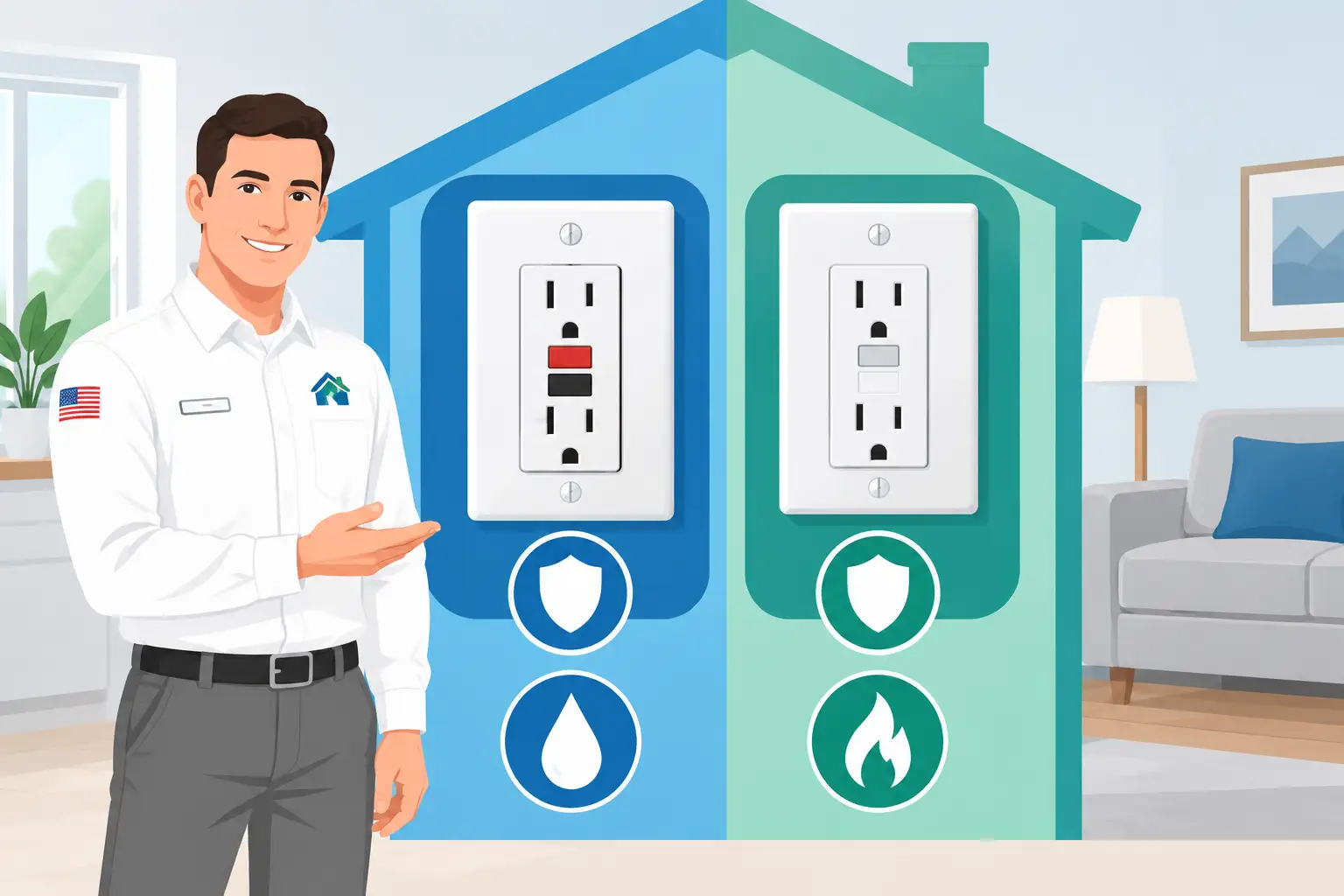
A bathroom outlet that will not reset and a bedroom breaker that trips for no obvious reason may look like the same problem. They are not. GFCI versus AFCI protection is a common point of confusion because both devices are designed to improve electrical safety, but they respond to very different hazards.
For homeowners, the practical question is simple: Is your electrical system protecting people from shock, protecting the home from dangerous arcing, or both? Knowing the difference helps you recognize when a tripped device is doing its job and when it is time to have a licensed electrician find the cause.
What GFCI Protection Is Designed to Do
A ground-fault circuit interrupter, usually called a GFCI, helps protect people from electrical shock. It monitors the electricity leaving on the hot wire and returning on the neutral wire. If it detects even a small difference, it can shut off power quickly.
That difference can occur when electricity takes an unintended path, such as through water, a damaged appliance, or a person. This is why GFCI protection is commonly found where moisture and electricity may meet: bathrooms, kitchens, garages, laundry areas, unfinished spaces, exterior outlets, and other locations defined by electrical code.
You may recognize a GFCI as an outlet with TEST and RESET buttons. But protection can also come from a GFCI breaker in the electrical panel. A breaker can protect an entire circuit, while a GFCI receptacle may protect itself and, when wired correctly, additional outlets downstream.
A GFCI is not a repair for a wiring problem. If it trips once after an appliance gets wet or a storm affects an outdoor outlet, the source may be clear. If it repeatedly trips, refuses to reset, or shuts off power with nothing plugged in, treat that as a reason for professional diagnosis. Moisture intrusion, a worn receptacle, damaged wiring, or a failing appliance can all be involved.
What AFCI Protection Is Designed to Do
An arc-fault circuit interrupter, or AFCI, is designed to reduce the risk of electrical fires caused by dangerous arcing. An arc occurs when electricity jumps across a gap or a compromised connection instead of flowing through the intended path.
Some arcs are normal, such as the brief spark inside a switch when it operates. Dangerous arcs can develop from loose connections, damaged cords, aging wiring, pinched cables, or a nail or screw contacting a conductor. Those conditions can create heat at a small point in the wiring system, sometimes without drawing enough current to trip a standard breaker.
AFCI devices monitor the electrical pattern on the circuit for signs of hazardous arcing. In many homes, AFCI protection is provided by breakers in the panel. Current electrical requirements commonly call for AFCI protection in many living areas, especially when circuits are added or altered. The exact requirement depends on the work being performed, the location, and the code adopted by the local authority.
An AFCI trip deserves attention, but it does not automatically mean the wiring in your walls is failing. Certain appliances, damaged cords, loose plugs, and poor connections can produce a pattern that the device identifies as a possible arc fault. The right response is not to keep resetting the breaker until it holds. The right response is to identify what changed and have recurring trips checked.
GFCI Versus AFCI Protection: The Key Difference
The shortest answer is that GFCI protection focuses on shock hazards, while AFCI protection focuses on fire hazards from arcing.
A GFCI watches for current leaving the circuit by an unintended path. An AFCI watches for electrical signatures that suggest an unsafe arc is occurring. Neither device replaces the other, and neither is a substitute for proper grounding, correctly sized wiring, secure connections, or a properly maintained electrical panel.
In some locations, a circuit may need both forms of protection. A combination AFCI/GFCI breaker can provide both functions at the panel. In other cases, the protection may be arranged through a breaker and receptacle combination, depending on the circuit layout and the requirements for the work.
This is where guessing can create problems. Replacing one outlet or breaker with a device that looks similar does not guarantee the circuit is protected correctly. Line and load connections, shared neutrals, panel compatibility, and the circuit’s existing condition all matter.
Where Homeowners Commonly Encounter Each Device
GFCI protection is most familiar near water and outdoors. In Southern Utah, exterior outlets can face intense heat, windblown dust, irrigation spray, and sudden rain. A weather-exposed receptacle with a cracked cover or failing seal can become a safety concern even if it has worked for years.
AFCI protection often comes up in bedrooms, hallways, living rooms, closets, and other interior spaces where cords, furniture, and concealed wiring are common. A bedroom breaker that trips when a lamp is moved, a vacuum is plugged in, or a space heater is used may point to a damaged cord, a worn outlet, or a circuit issue worth investigating.
Kitchen and laundry circuits can involve both concerns. They may serve areas where moisture is present, while also powering appliances that place regular demand on connections and wiring. The required protection should be determined by the circuit, its location, and applicable code, not by a one-size-fits-all assumption.
What a Trip Is Telling You
Safety devices can trip because they are working correctly. The goal is to avoid treating every trip as either a false alarm or a major emergency before the cause is known.
Start by unplugging portable appliances on the affected circuit and checking for obvious damage. Look for scorched plugs, loose outlet faces, cracked cords, water near an outlet, or a device that feels unusually hot. Do not open outlets, remove the panel cover, or replace a breaker yourself. Electrical troubleshooting is not a weekend DIY project.
If the device resets and stays on after one clearly identifiable event, keep an eye on it. If it trips again, will not reset, trips immediately with everything unplugged, or is accompanied by buzzing, burning odor, discoloration, heat, or flickering lights, stop using that circuit and schedule service promptly.
A licensed electrician can test the circuit, inspect connections, evaluate the panel device, and separate an appliance problem from a wiring problem. That diagnosis matters because a tripping GFCI or AFCI is a symptom, not the final answer.
Testing Matters, but It Has Limits
Most GFCI receptacles have a TEST button and should be tested periodically according to the manufacturer’s instructions. Pressing TEST should cut power, and RESET should restore it. If the button does not work as expected, the receptacle may be failed, improperly wired, or not receiving power correctly.
AFCI breakers may also have a test function. Because breaker testing and panel access involve energized equipment, homeowners should follow the device instructions and leave any abnormal result to a qualified electrician. Never force a breaker to stay on or hold it in place.
Testing confirms that a safety device can respond under a test condition. It does not prove that every outlet, cord, appliance, and hidden wiring connection in the home is problem-free. That is why recurring trips, renovation projects, and aging-panel concerns call for a deeper inspection.
When an Electrical Upgrade Makes Sense
Older homes may not have the level of protective technology expected in newer construction, particularly if rooms were remodeled over time or circuits were extended by previous owners. An upgrade may make sense when you are renovating a kitchen or bathroom, finishing a space, replacing an outdated panel, adding dedicated circuits, installing new outdoor power, or correcting failed outlets.
The best approach is to assess the whole circuit before selecting a device. Sometimes the fix is a properly installed protective receptacle. Sometimes it is a breaker replacement, a wiring repair, a dedicated circuit, or a panel upgrade. It depends on how the circuit was built and what condition it is in now.
Service Right Electric can diagnose tripping protection devices, inspect wiring concerns, and explain the safest repair options before work begins. Clear answers matter when the issue involves the electrical system that protects your family and home.
If a GFCI or AFCI keeps tripping, do not work around it with extension cords or repeated resets. Leave the circuit off when there are signs of heat, damage, or odor, and have the cause identified before the next use.




0 Comments