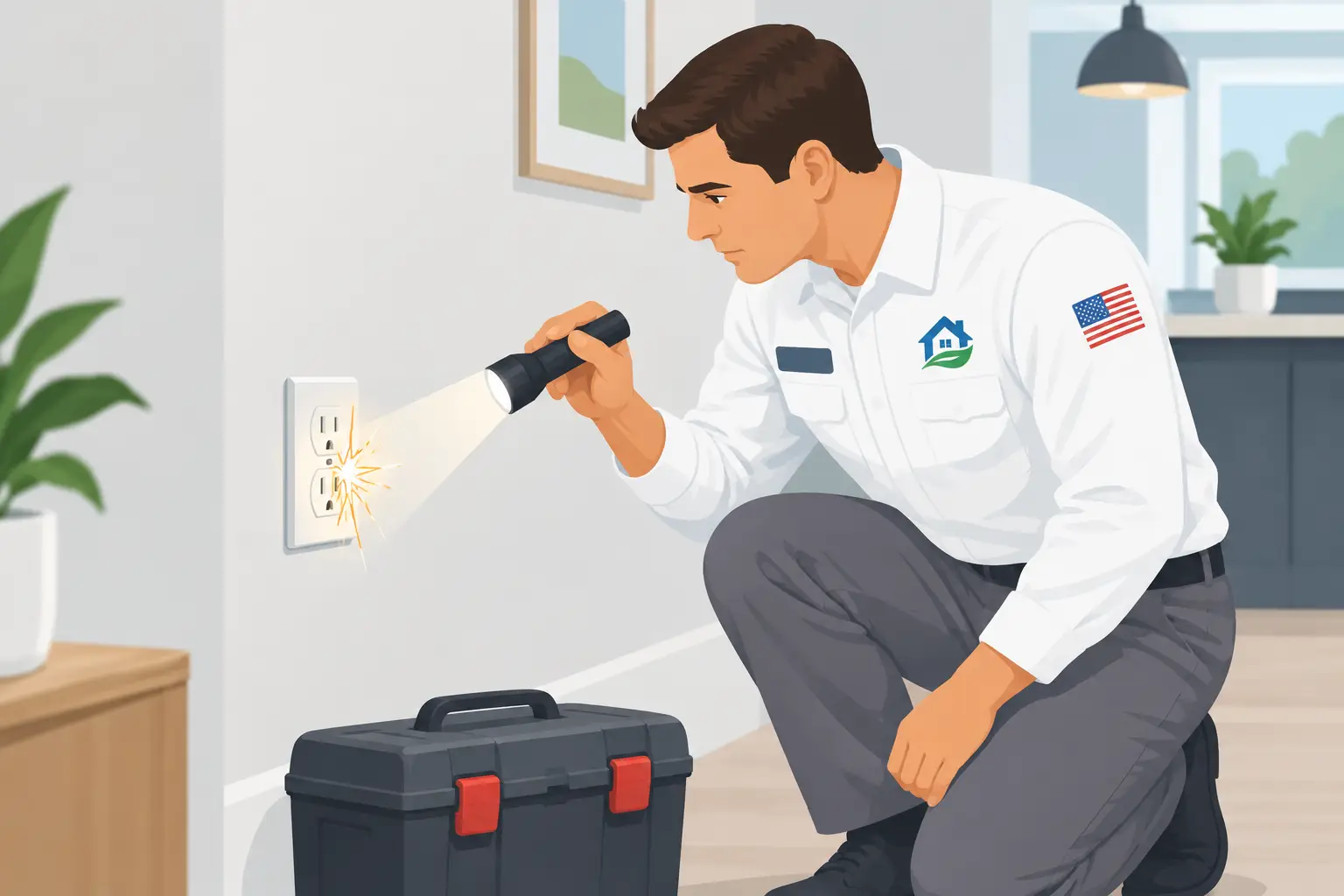
A tiny blue flash at the outlet can make anyone pause, especially when it happens near a child’s bedroom, kitchen counter, or home office. So, why do outlets spark? Sometimes the answer is a normal, brief electrical arc as a plug makes contact. Other times, that flash is an early warning of a loose connection, damaged receptacle, overloaded circuit, or appliance problem that needs prompt attention.
The difference matters. Electricity should work quietly in the background. If an outlet is sparking often, making noise, feeling warm, or showing discoloration, stop using it and have a licensed electrician diagnose the cause. This is not a weekend DIY project.
Why Do Outlets Spark When You Plug Something In?
When you insert a plug, its metal prongs contact the energized parts inside the outlet. For a fraction of a second, electricity can jump through a small gap before the connection is fully seated. That jump is called an arc, and it may appear as a small blue or white spark.
A single, small spark that occurs only as a plug is inserted can be more noticeable when the device is already switched on or immediately draws a lot of power. A lamp, computer charger, or appliance may create a quick inrush of current as it starts. In many cases, that brief spark does not mean the outlet is failing.
But normal does not mean something to ignore forever. The spark should be small, occasional, and limited to the moment the plug goes in. It should not come with popping sounds, smoke, a burning smell, heat, flickering power, or a breaker that trips. Those signs point to a problem that should be checked before the outlet is used again.
When a Sparking Outlet Is a Safety Concern
A sparking outlet deserves immediate attention when the flash is large, repeats after the plug is seated, or happens when nothing is being plugged in. Turn off the circuit at the electrical panel if you can do so safely, keep people away from the outlet, and arrange for professional service.
You should also stop using the outlet if you notice any of these conditions:
- A burning or fishy odor near the outlet, cover plate, or connected cord
- Black, brown, melted, cracked, or discolored plastic
- Buzzing, sizzling, crackling, or popping sounds
- An outlet, plug, or wall surface that feels warm or hot
- Loose plugs that fall out or wiggle in the receptacle
- A breaker that trips repeatedly or lights that flicker when an appliance runs
Do not keep testing the outlet to see whether it sparks again. Do not spray anything into it, wrap a damaged cord with tape, or remove the cover plate while the circuit is energized. A spark can be the visible part of a hidden wiring issue inside the wall or electrical box.
Loose Connections Create Heat
Outlets rely on firm connections at the terminals and inside the receptacle. Over time, normal use, worn parts, poor past repairs, or movement in the box can loosen those connections. Electricity then meets resistance as it passes through, and resistance creates heat.
That heat can damage the outlet, insulation, and wiring around it. A loose plug is a useful clue because the internal contacts may no longer grip the plug prongs properly. Replacing an outlet may sound simple, but the electrician also needs to determine whether the wiring and connections behind it have been affected.
Damaged Outlets and Cords Can Arc
Cracked faceplates, broken receptacles, bent plug prongs, and frayed appliance cords can prevent a clean connection. A damaged cord can also cause a spark at the plug itself, which may look like the outlet is at fault.
If the sparking happens only with one appliance or charger, unplug that item and do not use it until it has been inspected or replaced. If multiple devices spark at the same outlet, the outlet or circuit is more likely to be the issue. Either way, do not force a plug into a loose or damaged receptacle.
Moisture Changes the Risk
Water and electricity are a dangerous combination. Outlets near sinks, laundry areas, garages, patios, and outdoor living spaces need protection suited to those locations. Moisture, humidity, irrigation overspray, or a weather-damaged outdoor cover can lead to corrosion and unsafe arcing.
If an outlet has been wet or you see corrosion around it, do not use it. Shut off power to that circuit if possible and call for service. Southern Utah homes can still face moisture concerns around pools, outdoor kitchens, hose connections, and monsoon weather, even in a dry climate.
Overloads, Faults, and Breaker Problems
An overloaded circuit does not always cause a visible spark at an outlet, but it can contribute to overheating and repeated electrical trouble. Plugging several high-demand devices into one area of the home can strain an older circuit, particularly when power strips and extension cords are used as a permanent solution.
A breaker that trips is doing its job by interrupting power when it detects an overload, short circuit, or ground fault. Resetting it once after an obvious temporary overload may be reasonable. Resetting it again and again without finding the cause is not. Repeated trips can indicate a damaged appliance, failed outlet, wiring fault, or circuit that no longer matches the home’s electrical needs.
Arc faults are another concern. These occur when electricity jumps across an unintended gap, such as a damaged wire or loose connection. Modern safety devices can detect certain dangerous arc patterns and shut off power. If one of these devices trips repeatedly, it should be diagnosed rather than bypassed or replaced with a standard device.
What to Do Right Away
Start by unplugging the device without touching any damaged metal or scorched areas. If the plug is stuck, the outlet is hot, or you smell burning, leave it alone and turn off the circuit breaker if it is safe to reach the panel. Keep children and pets away from the area.
Next, look without touching. Note whether the outlet is discolored, whether the plug or cord is damaged, and whether other outlets or lights on the same circuit are acting strangely. These details help an electrician isolate the cause faster.
Avoid using another outlet on the same circuit for a high-demand appliance until the issue is understood. An extension cord is not a repair. It can create another hazard if it is undersized, run under rugs, pinched in a doorway, or overloaded.
How a Licensed Electrician Finds the Cause
A proper diagnosis goes beyond swapping an outlet. The electrician checks the receptacle condition, wiring connections, grounding, circuit load, breaker operation, and signs of heat damage. They may also test the appliance or identify whether the problem is isolated to one outlet or part of a larger circuit issue.
The repair depends on what the inspection finds. It could be a worn receptacle, damaged wiring, a failed safety device, an overloaded circuit, or a needed circuit upgrade for modern household use. The right fix should address the source of the spark, not merely hide the symptom.
For homeowners in St. George and across Southern Utah, Service Right Electric provides clear residential diagnostics and explains the recommended repair before work begins. The goal is simple: restore safe, reliable power and leave you confident about what was fixed.
Preventing Future Outlet Sparks
Use outlets as they were intended. Insert plugs straight, keep cords in good condition, and replace loose outlets before they become a bigger problem. Switch appliances off before plugging them in when practical, especially devices that draw more power at startup.
Give high-demand equipment the electrical capacity it needs. Space heaters, kitchen appliances, garage tools, entertainment equipment, and charging equipment can quickly overwhelm an older or heavily shared circuit. A dedicated circuit may be the safer long-term answer when a particular appliance regularly trips breakers or causes voltage changes elsewhere in the home.
Also take a quick look at outlets during normal cleaning and home maintenance. Discoloration, loose cover plates, cracked receptacles, and plugs that will not stay in place are small details worth addressing early. When an outlet sparks more than once or shows any sign of heat, trust that warning and have it checked before the next plug-in becomes a larger repair.



0 Comments