
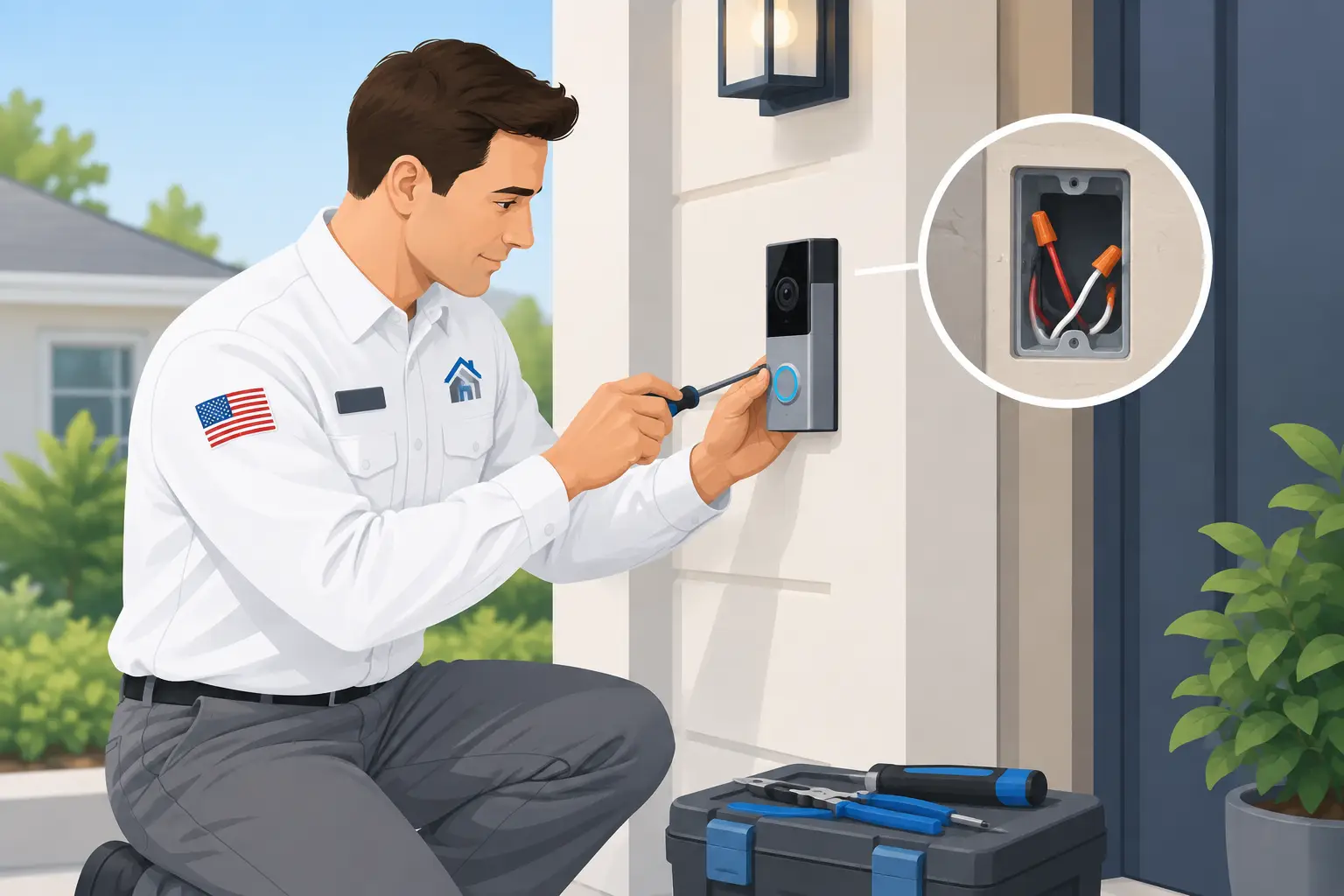
A smart doorbell can be a practical upgrade for a Southern Utah home, but the camera at the front door is only as dependable as the wiring behind it. This smart doorbell wiring guide explains what homeowners should check before installation, why older doorbell systems can create trouble, and when calling a licensed electrician is the safer path.
Many doorbells appear simple because the visible work happens at the button and chime. The electrical system that powers them may not be simple at all. A smart doorbell often needs more steady power than a traditional push-button chime, especially when it is recording video, using night vision, and maintaining a network connection. An underpowered or poorly connected system can lead to missed alerts, repeated shutdowns, chime problems, or damaged equipment.
How Smart Doorbell Wiring Works
Most wired smart doorbells operate on low-voltage alternating current supplied by a doorbell transformer. That transformer reduces household voltage to a lower level suitable for the doorbell circuit. The system generally includes the transformer, wiring run to the doorbell location, a chime or chime connector, and the doorbell itself.
Low voltage does not mean no risk. The transformer is connected to your home’s standard electrical system, and it may be located near a breaker panel, attic junction box, garage, utility space, or chime wiring. Loose connections, damaged insulation, improper splices, and incorrect transformer installation can all create safety concerns. In a home with aging electrical work, the doorbell issue may also reveal a larger wiring problem.
The first question is not whether two wires are visible at the door. It is whether the entire circuit can supply the power the new doorbell requires.
Check Voltage and Transformer Capacity
Smart doorbells have a specified voltage range and power requirement. A transformer that worked for a basic mechanical chime for decades may fall below that range or may not provide enough capacity once a smart doorbell is connected. The device might start up, then lose power during operation. That can make the issue confusing because the doorbell may seem fine for a few minutes or days.
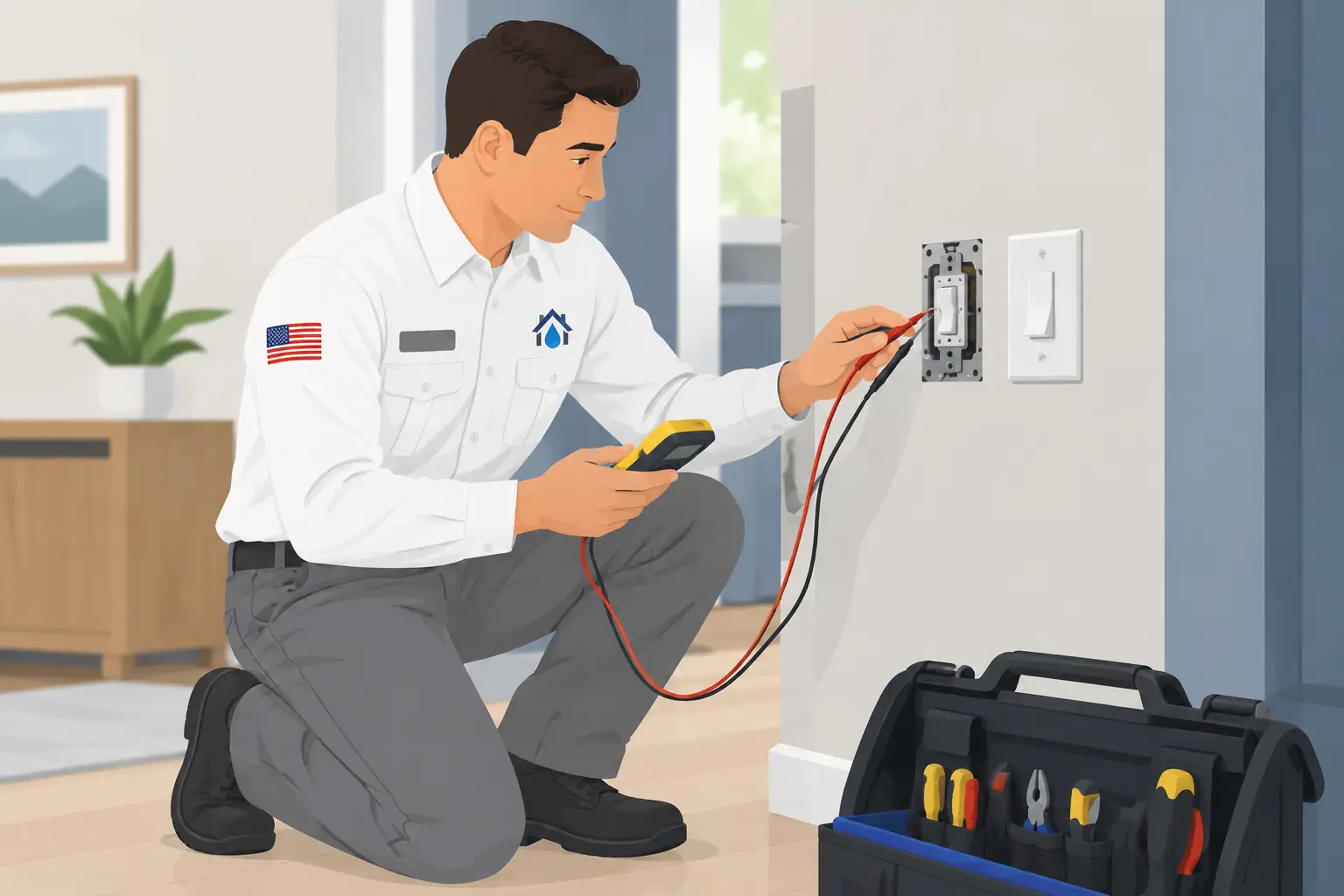
An electrician can test the transformer output, inspect its connections, and confirm that its capacity matches the new equipment. Replacing a transformer is not simply a matter of swapping parts. It must be properly connected, enclosed where required, and installed in a location that allows safe access and service.
Voltage can also vary under load. A reading that seems acceptable when nothing is happening may drop when the doorbell activates the chime, camera, or night-vision features. Proper diagnosis looks at the whole circuit instead of guessing based on a single symptom.
Inspect the Existing Doorbell Wires
Older homes may have thin, brittle, corroded, or partially damaged doorbell wire. Southern Utah’s heat can be especially hard on wiring in hot attic spaces, exterior wall cavities, and garages. If the wire has been pinched, painted over, chewed by pests, or altered during a remodel, a new doorbell may not receive consistent power.
At the exterior mounting location, the wires should have intact insulation and enough length for a secure connection. They should not be frayed, pulled tight, or exposed to moisture. A loose terminal can create intermittent power loss that looks like a Wi-Fi problem but is actually an electrical connection issue.
If the existing wire is not usable, replacing or rerouting low-voltage cable may be the right repair. The difficulty depends on the home’s construction and the path between the transformer, chime, and entry door. There is no one-size-fits-all answer, which is why an on-site diagnosis saves time and prevents unnecessary wall damage.
Smart Doorbell Wiring Guide: Before You Install
Before mounting a new doorbell, confirm that a wired installation makes sense for your home. Some entry doors have no existing doorbell wiring. Others have a transformer but no functioning chime, or wiring that was disconnected during an earlier renovation. A battery-powered option may work for certain homes, but it still needs periodic charging and may not offer the same performance in every setup.
For a wired installation, turn off power to any circuit that could feed the transformer before inspecting or handling electrical connections. Do not assume the doorbell wire is harmless just because it is low voltage. The transformer and its supply wiring may be tied to a nearby lighting circuit, receptacle circuit, or electrical panel connection.
Homeowners can safely gather useful information without taking apart energized electrical equipment. Note whether the current doorbell works, whether the indoor chime sounds, and whether the doorbell has two visible conductors at the exterior location. Take note of humming, overheating, flickering nearby lights, or a breaker that trips. Those details help a technician narrow down the cause quickly.
Avoid using improvised connectors, taping wires together, or bypassing components to make the doorbell turn on. Those shortcuts can leave connections unreliable or expose wiring to weather. A doorbell at the front entry should look clean, work consistently, and remain secure through heat, rain, wind, and everyday use.
When the Chime Needs Attention
A new smart doorbell may work with an existing mechanical or electronic chime, but compatibility depends on the equipment and wiring arrangement. In some cases, an included chime connector is installed at the existing chime to manage the power flow. In other cases, the old chime may need to be bypassed, replaced, or left disconnected.
This is a common point of confusion because chime boxes can contain several terminals and multiple wires. If your home has a front and rear doorbell, an intercom system, a multi-tone chime, or a previous owner’s modifications, the layout can be more involved than it appears. Connecting the wrong terminals can prevent the chime from working or overload the transformer.
A persistent humming sound from the chime or transformer should not be ignored. It can indicate an issue with voltage, wiring, a stuck circuit, or component compatibility. Turn off the relevant power and have the system inspected rather than allowing it to continue operating under strain.
Signs You Should Call an Electrician
A straightforward doorbell replacement may be manageable when the existing low-voltage circuit is modern, tested, and in good condition. It is time to bring in a professional when the job involves the household electrical supply or the system is showing signs of failure. Call for help if you notice any of the following:
- The doorbell has no power, powers on and off, or regularly disconnects.
- The transformer is hot, buzzing loudly, damaged, or difficult to access safely.
- The chime hums continuously, does not ring, or behaves unpredictably.
- Wiring is cracked, corroded, too short, or missing at the door location.
- A breaker trips, lights flicker, or you smell burning near the chime, transformer, or panel.
These are not problems to solve by repeatedly resetting a breaker or trying different wire combinations. They need a proper diagnosis. An electrician can identify whether the trouble is at the transformer, chime, low-voltage cable, device connection, or the branch circuit supplying the transformer.
A Safer, Cleaner Installation
A professional installation is about more than getting a doorbell camera online. The goal is a secure mounting surface, protected wire connections, correct transformer power, and a chime setup that performs as intended. It also means checking that the electrical portions of the work meet applicable requirements rather than burying a questionable connection behind a wall or cover plate.
For homeowners in St. George and across Southern Utah, Service Right Electric follows a simple process: call, diagnose, fix. Our licensed residential electricians inspect the existing setup, explain what they find in plain language, and provide upfront pricing before work begins. If a transformer upgrade, wire repair, or chime adjustment is needed, you will know why and what the completed repair involves.
Your front door is one of the first places your home meets the outside world. A smart doorbell should add peace of mind, not create an electrical question mark. If the wiring is uncertain or the system is acting up, choose a safe inspection and a fix that is built to last.


0 Comments