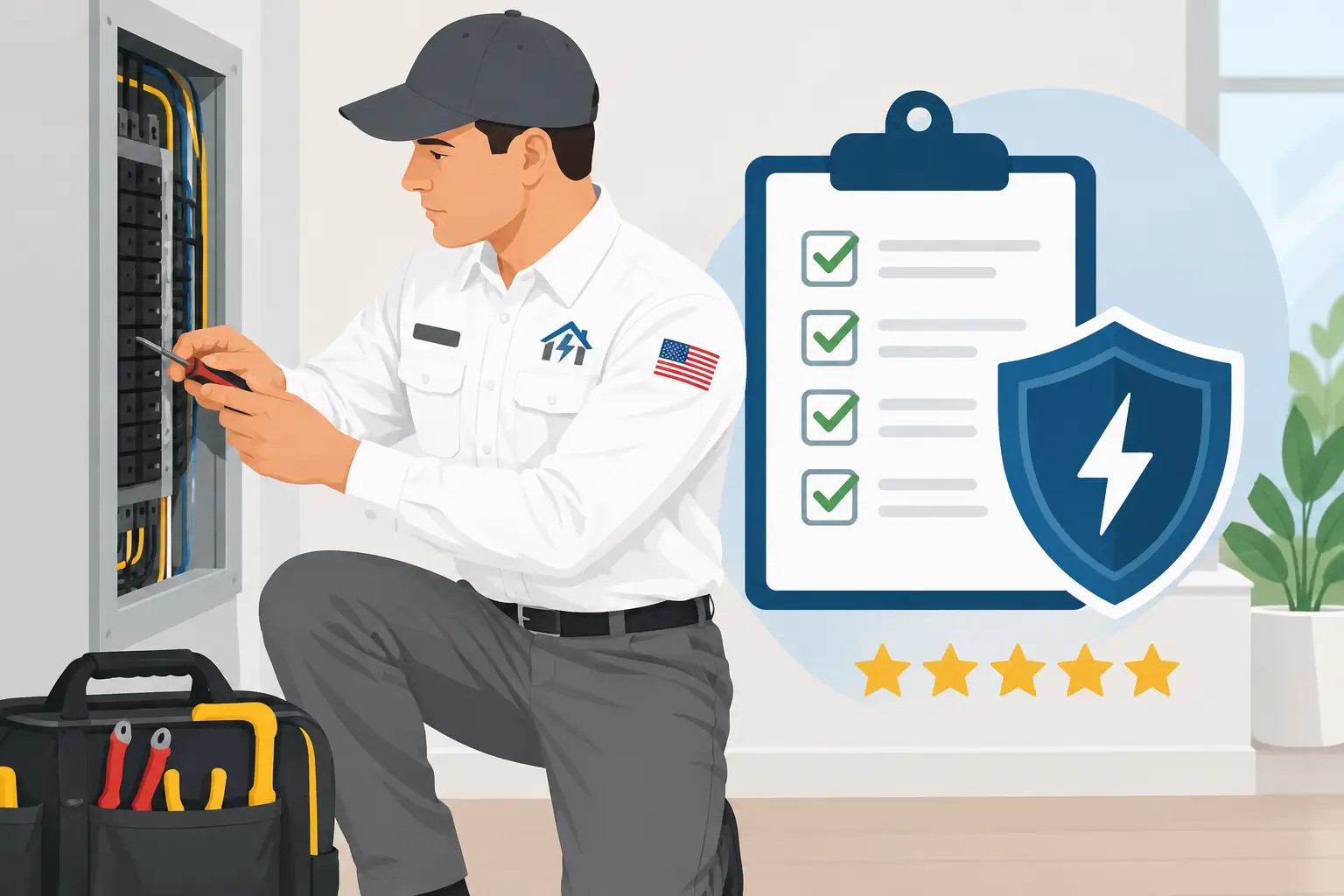
A flickering light or dead outlet can look like a small problem until it points to loose wiring, an overloaded circuit, or a failing electrical connection. That is why licensed electrician review criteria should help you evaluate more than a star rating. The right reviews reveal whether a company shows up prepared, explains the issue plainly, protects the home, and completes repairs safely.
For Southern Utah homeowners, reviews can be one of the fastest ways to narrow the search when something electrical needs attention now. But the most useful reviews are not always the shortest or most enthusiastic. Look for patterns that tell you what the service experience will be like when a technician is standing in your home, diagnosing a real problem.
Start With License and Residential Experience
A review cannot confirm a contractor’s license by itself. Before scheduling, verify that the electrician is properly licensed through the appropriate Utah licensing records and ask whether the company is insured. This is basic protection for your home and a reasonable question for any professional to answer clearly.
Then read reviews for evidence of residential experience. Homes have their own challenges: older wiring, crowded breaker panels, additions with different electrical needs, and appliances that require dedicated circuits. A technician who regularly works in homes is more likely to recognize the practical details that affect a safe repair or upgrade.
Pay attention when reviewers mention work similar to yours. If you need a panel concern evaluated, look for feedback about diagnostics, panel repairs, or electrical upgrades. If you are planning an EV charger, ceiling fan, hot tub connection, or new lighting, reviews about those projects are more useful than broad comments that only say the team was nice.
Licensed Electrician Review Criteria: Look for Specifics
The best reviews usually describe what happened. They may explain that a technician found the cause of a tripping breaker, replaced a damaged outlet, installed a new circuit, or corrected a safety concern discovered during an inspection. Specific details are harder to fake and more helpful than a general statement that the service was good.
Look for reviewers who mention these parts of the visit:
- The technician listened to the problem and performed a real diagnosis before recommending work.
- The homeowner received a clear explanation of the issue and the available repair options.
- The scope of work and upfront price were discussed before the repair began.
- The work area was treated respectfully, with care for walls, floors, furniture, and cleanup.
- The repair was tested and the homeowner understood what had been completed.
One detailed review does not guarantee every visit will be identical. A consistent pattern across recent reviews, however, is meaningful. When many homeowners describe clear communication, careful work, and a working result, that says more than a high rating alone.
Read Recent Reviews Before Old Favorites
A company may have earned excellent feedback years ago but changed ownership, staffing, processes, or service focus since then. Start with recent reviews, then scan older ones to see whether the same strengths appear over time.
Recent feedback is especially valuable if you need prompt scheduling for a failed outlet, a breaker that keeps tripping, damaged electrical equipment, or another concern that cannot wait. Look for comments about responsiveness, arrival windows, and whether the office kept the homeowner informed. Fast service matters, but a company should not rush past diagnosis just to finish quickly.
Also consider the overall volume of reviews. A handful of perfect ratings can be encouraging, but a large number of reviews gives you a clearer picture of how a company performs across many homes and service calls. Service Right Electric carries forward the established local service team’s history of more than 2,000 five-star reviews, which gives homeowners a substantial record to consider alongside their own needs.
Watch How the Company Handles Problems
No service company gets every situation perfectly right. Electrical troubleshooting can uncover hidden damage, outdated wiring, or a problem that requires more than the homeowner first expected. What matters is how the company communicates when the scope changes.
Read the lower-rated reviews as carefully as the positive ones. Is the complaint about something that would matter to you, such as poor communication, unexplained charges, missed appointments, or incomplete work? Then look at the response, if there is one. A professional response should be calm, specific, and focused on making things right rather than arguing with the customer.
Be fair with context. A review that is angry because a technician would not perform unsafe work is not necessarily a warning sign. Electrical professionals should be willing to say no when a shortcut could put people or property at risk. The better question is whether the technician explained the safety issue and offered a sensible path forward.
Separate Good Manners From Good Electrical Work
Friendly service matters. You want a technician who is respectful in your home and comfortable answering questions. Still, politeness is only one part of the job. Reviews should also suggest technical care and a methodical process.
Strong indicators include customers describing a technician who tested the issue, identified the cause rather than guessing, explained why a repair was needed, and checked operation after the work was complete. These details show the difference between replacing a visible part and diagnosing the electrical system behind it.
This is particularly important with intermittent problems. A light that flickers only sometimes, a GFCI outlet that will not reset, or a breaker that trips at random may have several possible causes. A review that praises a quick fix can be positive, but a review that describes careful troubleshooting may be more valuable for a complicated issue.
Check Whether Expectations Were Set Upfront
Homeowners deserve to know what a visit involves before work begins. Reviews that mention clear arrival communication, an explanation of findings, and upfront approval of the work are strong signs of a service-focused company.
Transparency also helps when the answer is not a simple repair. For example, a failed outlet may expose a worn connection elsewhere on the circuit. An electrician should explain the condition, the safety concern, and the repair recommendation in plain language. You should never feel pressured to approve work you do not understand.
Be cautious with reviews that repeatedly mention surprise charges, vague estimates, or difficulty getting answers. Every electrical job has variables, especially in older homes, but clear communication should not be optional.
Use Reviews to Prepare for the Service Visit
Reviews help you choose a company, but they can also help you know what to expect. Before you call, make a brief note of what you have noticed: when the problem began, what was plugged in, which rooms are affected, and whether a breaker has tripped. Do not remove panel covers or attempt to repair wiring yourself. Household electrical work is not a weekend DIY project.
When the technician arrives, describe the symptoms and ask what they find, what repair they recommend, and whether there are related safety concerns worth addressing. A qualified residential electrician should welcome reasonable questions and explain the next step without talking over you.
The goal is not to find a company with the flashiest review page. It is to find a licensed residential professional whose customer feedback shows a repeatable habit of safe work, straight answers, and respectful service. When electrical trouble shows up at your home, that kind of track record lets you make the call with more confidence.



0 Comments