
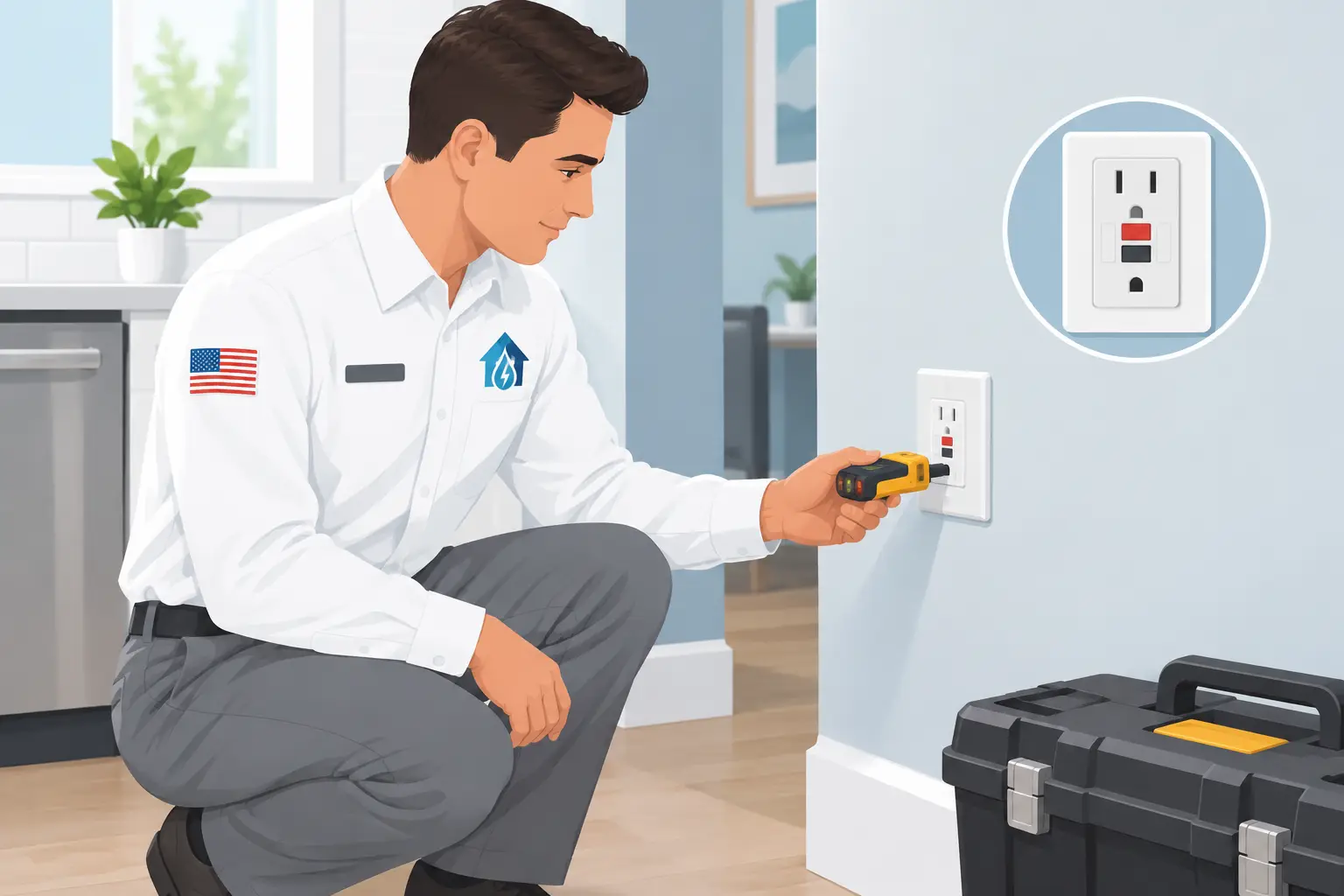
A GFCI outlet is designed to react in a fraction of a second when electricity takes an unsafe path. That makes it one of the most important safety devices in your home, especially near water. Knowing how to test GFCI outlets takes only a minute, but a result that seems small – such as a reset button that will not stay in – can point to a problem worth addressing promptly.
GFCI stands for ground-fault circuit interrupter. These outlets are commonly found in bathrooms, kitchens, laundry rooms, garages, unfinished spaces, outdoors, and other areas where moisture can increase shock risk. They may look like a standard outlet, but the face includes two buttons marked TEST and RESET.
Why GFCI Outlet Testing Matters
A GFCI monitors the electricity flowing through a circuit. Under normal conditions, the electricity leaving through the hot wire returns through the neutral wire. If the device senses even a small difference, it trips and cuts power. That difference can mean electricity is leaking somewhere it should not, including through water or a person.
The TEST button creates a controlled imbalance to confirm that the outlet can trip. The RESET button restores power after the outlet has tripped, provided the device and circuit are functioning correctly.
Testing is simple, but it does not replace professional electrical inspection. A successful test means the GFCI responded to its built-in test function. It does not confirm that every wire, connection, outlet, or appliance on the circuit is free of faults.
How to Test GFCI Outlets Step by Step
Before you begin, plug a small lamp, night-light, or phone charger into the outlet. A lamp is often easiest because you can see immediately whether power is on and off. Avoid testing with expensive electronics or equipment that should not lose power unexpectedly.
1. Confirm the outlet has power
Turn on the lamp or other simple device. If it works, the outlet has power and is ready for testing. If the outlet is already dead, press the RESET button once. If it comes back on, continue with the test. If it does not, do not force the button or take the outlet apart.
2. Press the TEST button
Press the button labeled TEST firmly. You should hear or feel a click, and the lamp should turn off. The RESET button may pop outward depending on the outlet style.
That is the expected result. The GFCI has tripped and stopped power to protect the circuit.
3. Press the RESET button
Press RESET firmly until it clicks into place. The lamp should turn back on. This confirms the outlet can trip and reset under normal conditions.
If the outlet passes both parts of the test, it is functioning as expected at that moment. Make a habit of testing GFCI outlets about once a month, or follow the testing guidance provided with the device if it differs.
Check Other Outlets After Testing
One GFCI outlet can protect other outlets farther along the same circuit. For example, a GFCI in a garage may protect outdoor outlets, or a bathroom GFCI may affect another bathroom outlet. When you press TEST, those downstream outlets may lose power too.
This is normal if they are wired for GFCI protection. After pressing RESET, check that the other affected outlets regain power. If they do not, there may be a separate tripped GFCI, a tripped breaker, a wiring issue, or a failed outlet that needs diagnosis.
Do not assume a dead outdoor or garage outlet means the outlet itself has failed. First, look for GFCI outlets in nearby bathrooms, garages, kitchens, laundry rooms, and exterior areas. A reset button located elsewhere may restore it. If you cannot identify the source safely, a licensed electrician can trace the circuit and correct the issue.
What It Means When a GFCI Outlet Fails the Test
A GFCI that does not trip when you press TEST is not providing the protection it should. Stop using that outlet for anything that could expose you to shock, particularly appliances used near water. The outlet may be worn out, improperly wired, damaged, or affected by a circuit problem.
A GFCI that trips but will not reset also needs attention. In some cases, there is simply no power feeding the outlet because a breaker has tripped. In other cases, the GFCI is detecting a real issue downstream, such as moisture in an exterior box, a damaged cord, a loose connection, or a fault in an appliance.
Try unplugging everything connected to the outlet and to nearby outlets that may be on the same protected circuit. Then press RESET once. If it resets, reconnect devices one at a time. If it trips again when a particular device is connected, stop using that device until it can be repaired or replaced.
If the reset button will not stay in with everything unplugged, do not keep trying or bypass the device. A failed reset can indicate a wiring fault or an end-of-life GFCI. This is a good time to schedule professional service.
Why a Dead GFCI May Not Be a Bad GFCI
GFCI outlets are often blamed when power goes out, but the outlet may be reacting correctly to another problem. Outdoor outlets are a common example in Southern Utah homes. Wind-driven rain, irrigation overspray, insects, cracked weather covers, and sun-damaged exterior components can all allow moisture or damage to create a fault.
The same is true for garage refrigerators, freezers, power tools, hot tub equipment, bathroom appliances, and older extension cords. The GFCI is supposed to shut down when it detects unsafe leakage. Replacing the outlet without finding the source can leave the real problem in place.
A licensed electrician can determine whether the issue is the GFCI device, the circuit wiring, an exterior box, or equipment connected to the circuit. That diagnosis matters because the correct repair depends on the cause.
Can You Use an Outlet Tester?
A plug-in outlet tester can provide useful information about basic wiring conditions, such as an open neutral or reversed polarity. Some models also include a button intended to trip a GFCI. It can be a helpful additional check, but it is not a replacement for using the outlet’s own TEST button.
The built-in TEST button checks the GFCI’s internal sensing and tripping function. A plug-in tester may not reveal every wiring issue, and the indicator lights can be misleading in certain wiring situations. Use it as a screening tool, not as proof that an outlet is completely safe.
If a tester shows an unusual result, a GFCI trips repeatedly, or you notice warmth, discoloration, buzzing, burning smells, loose plugs, or water exposure, leave the outlet alone. Those are not weekend DIY repairs.
When to Call an Electrician
Call for service when a GFCI will not reset, fails to trip during a test, trips repeatedly without an obvious cause, or controls outlets that remain dead after resetting. You should also call if the outlet is cracked, discolored, loose in the wall, warm to the touch, or located in an area that has had water intrusion.
For homeowners in St. George and throughout Southern Utah, Service Right Electric can diagnose the circuit, explain what is causing the problem, and provide clear options before work begins. Whether the fix is a failed safety device, damaged outdoor wiring, or a broader circuit issue, the goal is the same: safe, dependable power in your home.
A GFCI test is quick. Acting on a failed test is what keeps a small warning from becoming a bigger electrical problem.



0 Comments