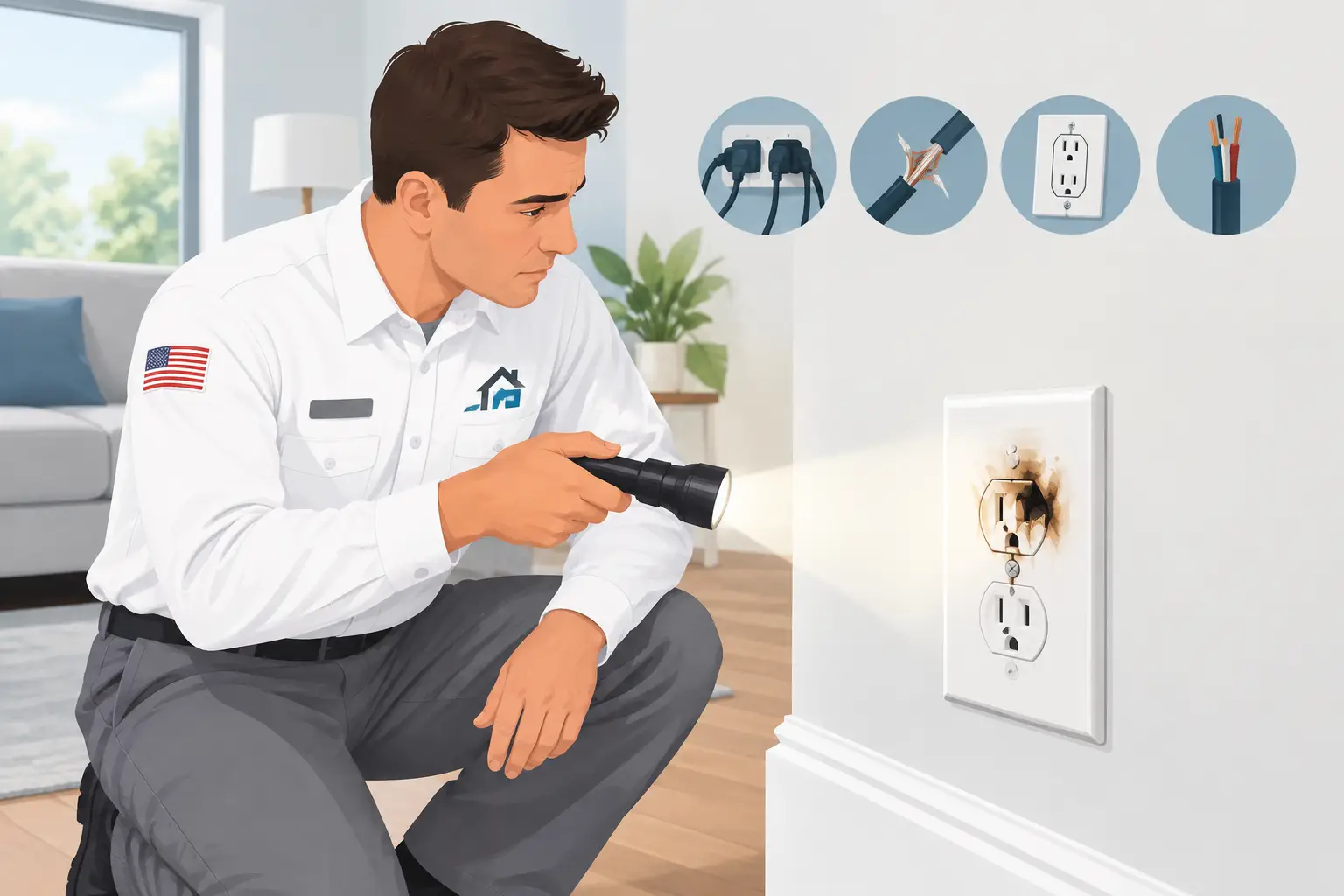
A warm outlet, a burning-plastic smell, brown discoloration, or a popping sound is not a minor inconvenience. These are warning signs that electricity may be creating dangerous heat inside the wall. Understanding the common causes of burning outlets can help you act quickly, protect your home, and avoid the temptation to treat a serious electrical problem as a simple outlet replacement.
If an outlet is hot, smoking, sparking, or smells burned, stop using it immediately. Unplug devices only if you can do so without touching a hot or damaged area. Turn off the circuit at the electrical panel if it is safe to identify, keep people away from the outlet, and call a licensed residential electrician. Do not keep testing the outlet, cover the smell with air freshener, or wait to see whether it happens again.
What a Burning Outlet Usually Means
Electricity always produces some heat as it moves through a circuit, but a properly installed outlet should not become hot or smell like it is burning. Excess heat usually means there is resistance where there should be a secure electrical connection, or that the circuit is being asked to deliver more power than it can safely handle.
The visible outlet cover is only part of the concern. Damage may be behind the receptacle, in the wiring, at a wire connection, or farther back at the panel. An electrician needs to locate the source before replacing any damaged components. Installing a new receptacle without correcting the reason it overheated can leave the hazard in place.
Common Causes of Burning Outlets
Loose connections behind the outlet
Loose wiring is one of the most frequent causes of overheating. A wire that is not firmly connected can create resistance as electricity passes through it. That resistance produces heat, which can scorch the outlet, melt insulation, and damage the electrical box.
Connections can loosen over time, particularly in older homes or outlets that see frequent use. Repeatedly inserting and removing plugs can also wear internal contact points. The outlet may work intermittently before it becomes visibly damaged, which is why a loose outlet or a plug that does not fit snugly deserves attention before there is a burning smell.
Overloaded outlets and circuits
An outlet can overheat when too many high-demand devices are connected to it or to other outlets on the same circuit. Space heaters, portable air conditioners, hair tools, kitchen appliances, power tools, and similar equipment can draw substantial power. Extension cords and plug-in power strips can make it easy to connect more equipment than an outlet or circuit was designed to support.
The issue is not simply the number of items plugged in. It is the combined electrical load and how long that load runs. A phone charger and a lamp are very different from a heater and a vacuum running at the same time. If a breaker trips repeatedly, it is doing its job by interrupting an unsafe demand. Resetting it again and again without finding the cause is not a fix.
Damaged outlets or worn internal contacts
Outlets wear out. The internal metal contacts that grip plug prongs can become weak after years of use, allowing a plug to sit loosely. A loose plug can arc, meaning electricity jumps across a small gap rather than flowing through a solid connection. Arcing creates intense heat and may leave dark marks around the slots or on the plug blades.
Cracked covers, broken receptacles, discoloration, or a buzzing sound are all reasons to stop using the outlet. A damaged outlet is especially urgent when it serves a high-use area such as a kitchen, bathroom, garage, workshop, or outdoor space.
Faulty plugs, cords, or appliances
Sometimes the outlet is not the original problem. A damaged appliance cord, bent plug prong, loose plug connection, or failing appliance can overheat at the point where it connects to the outlet. You may notice that one device gets hot, smells burned, or only works when the cord is positioned a certain way.
Do not move that device to another outlet to “test” it. That can damage another receptacle or create a shock hazard. Set the appliance aside and have the outlet and device evaluated. If the outlet remains warm or discolored after the device is removed, there may be more than one issue.
Improper wiring or a past repair that was not completed correctly
Electrical problems sometimes trace back to an improper installation, an incorrect wire connection, a damaged wire hidden in the wall, or an outlet that was replaced without addressing the condition of the wiring. These issues may not show up right away. They can surface when a circuit carries a heavier load, when weather changes affect older components, or when a connection gradually deteriorates.
This is one reason burning outlets are not a weekend DIY project. The repair may involve more than the receptacle itself, and the safest solution depends on accurate diagnosis. A licensed electrician can inspect the outlet, the circuit, the electrical box, and related connections before recommending the right repair.
Aging electrical systems
Older homes can have outlets, wiring, and panels that were never intended to support modern household electrical use. Today, a single room may include televisions, computers, charging stations, climate-control equipment, and other devices that were not part of the original plan for the home.
Age alone does not mean a system is unsafe, but it can increase the chance of worn insulation, loose connections, outdated outlet types, or undersized circuits. If multiple outlets feel warm, lights dim when appliances start, or breakers trip often, the concern may be broader than one outlet. A circuit upgrade or panel evaluation may be the more reliable long-term answer.
Moisture, corrosion, and outdoor exposure
Outlets near sinks, bathrooms, laundry areas, garages, patios, and exterior walls can be affected by moisture. Water intrusion and corrosion can weaken connections and create conditions for arcing or overheating. Outdoor outlets need proper weather protection, and indoor outlets near water need the right safety devices for their location.
In Southern Utah, wind-driven rain, irrigation, pool areas, and outdoor entertaining spaces can all expose electrical equipment to moisture. An outlet that trips, crackles, or shows rust should be inspected rather than dried out and put back into service.
What to Do When You Notice Heat or a Burning Smell
Treat the outlet as an active safety concern, even if the smell fades. First, stop using the receptacle and anything connected to it. If there is smoke, active sparking, or signs of fire, move to a safe location and call emergency services. Do not use water on an electrical fire.
If there is no active fire, turn off power to the affected circuit at the panel if you can do so safely and confidently. Avoid removing the outlet cover, touching exposed parts, or resetting a breaker that continues to trip. Take note of what was plugged in, whether the outlet was warm, and whether other outlets or lights on the circuit acted differently. Those details can help the technician diagnose the problem faster.
When One Outlet Points to a Bigger Electrical Issue
A single burned outlet may be a localized failure, but patterns matter. Repeated breaker trips, flickering lights, buzzing switches, warm wall plates, or several loose outlets can indicate a circuit or wiring problem that deserves a full evaluation.
It also depends on where the outlet is located and what it powers. An outlet used occasionally for a lamp may need a straightforward repair. One serving a garage, kitchen counter, bathroom, entertainment center, or planned EV charging equipment may need a dedicated circuit or other upgrade to meet the household’s actual electrical demand.
Service Right Electric approaches these calls with a clear process: diagnose the cause, explain the options, and complete the repair safely. That helps homeowners make decisions based on the condition of their electrical system, not guesswork or temporary workarounds.
Preventing Outlet Overheating Going Forward
The best prevention is using outlets and circuits as intended. Plug high-demand appliances directly into properly rated wall outlets, avoid daisy-chaining power strips or extension cords, and replace cords or plugs that feel loose, look damaged, or become hot during normal use.
Pay attention to small changes. A plug that falls out, an outlet cover that feels warm, or a breaker that starts tripping after a new appliance is added may be an early warning rather than an annoyance. Addressing it promptly is usually simpler and safer than waiting for visible scorching or a complete failure.
Your home should never ask you to ignore a burning smell or a hot outlet. A quick professional inspection can replace uncertainty with a clear, safe path forward.

0 Comments