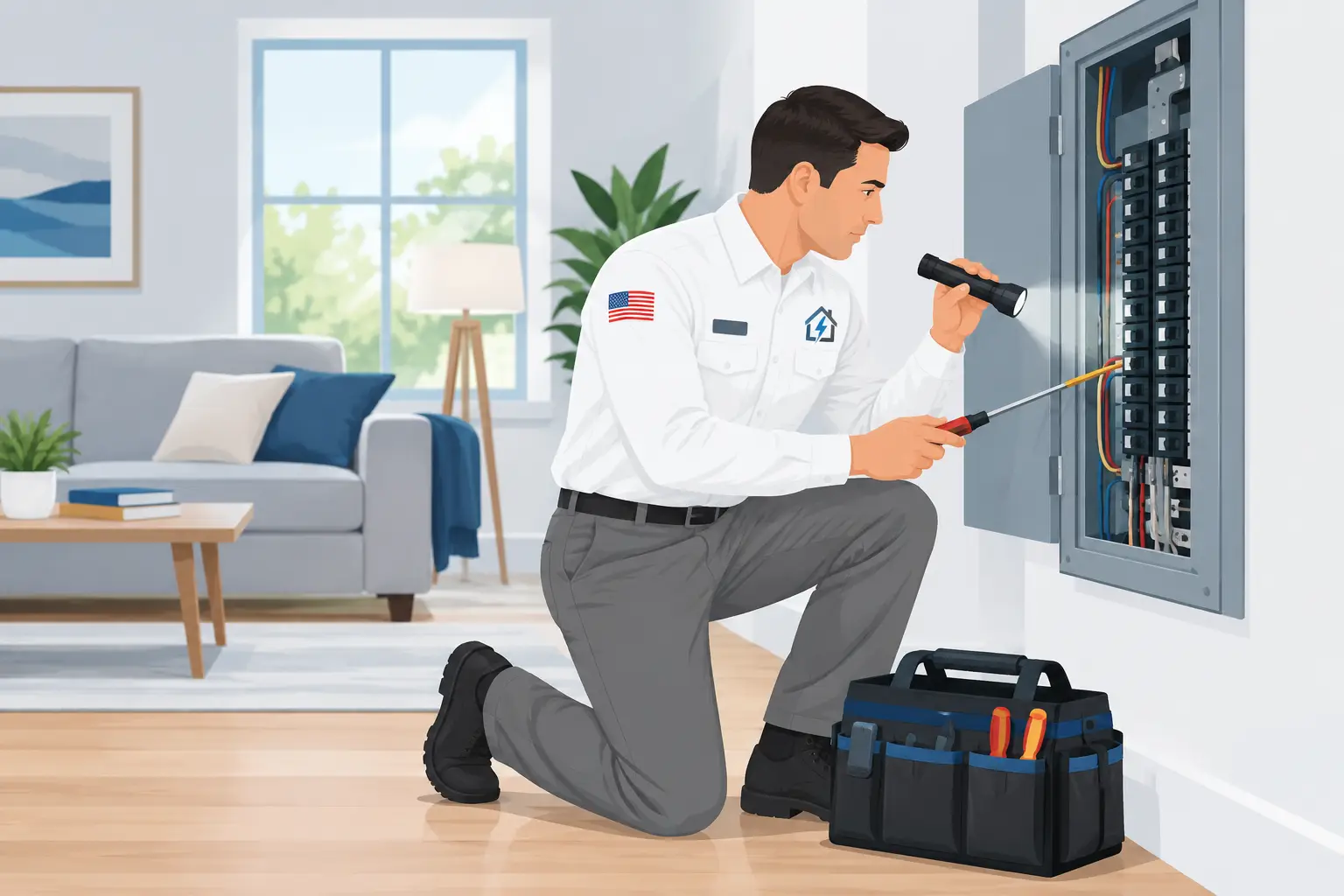
A breaker that trips once may be a minor overload. A breaker that trips again after being reset is your home’s way of telling you something needs attention. The same is true of warm outlets, flickering lights, burning smells, and switches that stop working. Electrical troubleshooting is the process of finding the actual source of those warnings, not simply getting the power back on for the moment.
For Southern Utah homeowners, a fast answer matters. Electrical problems can interrupt daily routines, damage sensitive electronics, and, in some cases, create a fire or shock hazard. The safest next step depends on what you are seeing, smelling, and hearing.
Electrical Troubleshooting Starts With the Symptoms
Electrical systems rarely fail without leaving clues. The details you notice can help an electrician narrow down the problem quickly, but they can also help you decide whether to turn off power and call right away.
A single dead outlet may point to a tripped GFCI safety outlet elsewhere in the home, a loose connection, or a failed receptacle. Lights that flicker only when a large appliance starts may suggest a circuit load issue. Lights that flicker throughout the house, especially with buzzing at the panel or meter equipment, deserve more urgent professional attention.
Pay attention to patterns. Does the issue affect one outlet, one room, or several areas of the house? Did it start after plugging in a new appliance, running outdoor equipment, or using a space heater? Is it happening during a storm, after a remodeling project, or with no obvious trigger at all? These observations are useful, but they are not a reason to take apart an outlet or open the electrical panel.
When a Reset Is Not a Fix
Resetting a tripped breaker once can be reasonable if you know the circuit was overloaded by normal household use. For example, several high-draw appliances on one kitchen or garage circuit can exceed its capacity. Reduce the load, reset the breaker firmly, and see whether it holds.
If the breaker trips again, leave it off. Repeated tripping can indicate a damaged appliance, a short circuit, a loose connection, water exposure, or a problem within the wiring. Forcing a breaker back on again and again can allow heat to build where it should not.
The same rule applies to a GFCI outlet that will not reset. These outlets are designed to shut off power when they detect an imbalance that may signal a shock risk. A failed reset could be caused by moisture, a downstream wiring issue, a worn device, or a fault on the circuit. The outlet is doing a safety job, so do not bypass it or replace it with a standard outlet.
Signs That Require a Fast Call
Some electrical concerns should not wait for a convenient time. Turn off power at the breaker only if it is safe to do so, keep people away from the area, and arrange professional service when you notice any of these conditions:
- A burning odor, smoke, sparks, discoloration, or melted plastic near an outlet, switch, panel, or electrical cord
- An outlet or switch plate that feels hot, makes crackling sounds, or has visible damage
- A breaker that trips repeatedly or will not stay on after normal loads are removed
- Water near electrical equipment, including outdoor outlets, meter equipment, or garage wiring
- Frequent whole-home flickering, power loss in multiple rooms, or buzzing from electrical equipment
Do not touch damaged electrical equipment if it is wet, smoking, or sparking. Keep children and pets clear of the area. If there is an immediate fire danger, contact emergency services first.
What a Professional Electrical Diagnosis Looks For
Good electrical troubleshooting is more than replacing the part that appears to have failed. A licensed electrician starts by listening to what happened, identifying the affected circuit, and testing the system safely. The goal is to locate the fault and confirm the repair addresses the cause.
That process may include checking the breaker panel, circuit load, outlet connections, switches, safety devices, lighting connections, and wiring condition. An electrician may also look for signs of aging equipment, improper past repairs, outdoor moisture intrusion, or circuits that no longer match how your family uses the home.
This matters because different problems can create the same symptom. A dead outlet could be a failed receptacle, but it could also be a loose connection upstream. A tripping breaker could be overloaded, but it could also be protecting the home from a serious fault. Replacing parts without diagnosis may hide the warning without correcting the hazard.
Common Home Electrical Problems and Their Causes
Dead outlets and failed switches
Outlets and switches wear out, particularly in busy kitchens, bathrooms, garages, and outdoor areas. Loose wiring connections can also interrupt power. If several outlets stop working together, the cause may be a tripped GFCI device, a breaker issue, or a problem farther back on the circuit.
Flickering or dimming lights
A loose bulb can be a simple explanation, but recurring flickering deserves a closer look. The cause may involve the fixture, switch, dimmer compatibility, circuit load, or a wiring connection. If the problem affects multiple rooms, treat it as more urgent than a single fixture issue.
Overloaded circuits
Homes were not always designed around modern electrical use. Home offices, garage tools, entertainment equipment, portable heaters, and convenience appliances can all add demand. Extension cords and power strips may make the problem less visible, but they do not add circuit capacity. A dedicated circuit or panel upgrade may be the right long-term solution, depending on the equipment and the home’s existing electrical system.
Outdoor and moisture-related faults
Southern Utah weather can be hard on outdoor electrical equipment. Sun exposure, windblown debris, irrigation, and seasonal storms can affect outlets, lighting, and wiring connections. Exterior electrical components must be properly rated, protected, and installed for their location. If an outdoor outlet trips after rain or irrigation, stop using it until it has been inspected.
Avoid the DIY Shortcuts
Electrical work is not a weekend DIY project when the issue involves a panel, damaged wiring, recurring breaker trips, or signs of heat. Removing an outlet cover, changing wiring connections, or installing the wrong breaker can expose you to shock, damage the system, and create a hidden fire risk.
There are safe homeowner steps that do help: unplug a suspected appliance, note which rooms are affected, take a photo of visible damage from a safe distance, and write down when the issue occurs. Those details give the technician a better starting point. What homeowners should not do is probe live wiring, remove the panel cover, use a larger breaker to stop tripping, or ignore a warning sign because the power came back.
A Clear Path From Problem to Repair
When you call for service, you should not have to guess what happens next. The practical process is straightforward: call, diagnose, and fix. First, explain the symptoms and any urgent safety concerns. Then, a trained technician evaluates the affected electrical system, explains the findings and repair options, and provides upfront pricing before work begins.
Service Right Electric keeps that process focused on residential homes, whether the issue is a failed outlet, an aging panel, a new EV charger circuit, upgraded lighting, or wiring for a hot tub or standby generator. The right repair may be small, or it may reveal a needed upgrade. Either way, the decision should be based on a clear diagnosis, not pressure or guesswork.
If something in your home is flickering, tripping, heating up, or simply not working as it should, trust the warning. A prompt professional inspection can turn an uncertain electrical problem into a safe, clearly explained repair.



0 Comments