
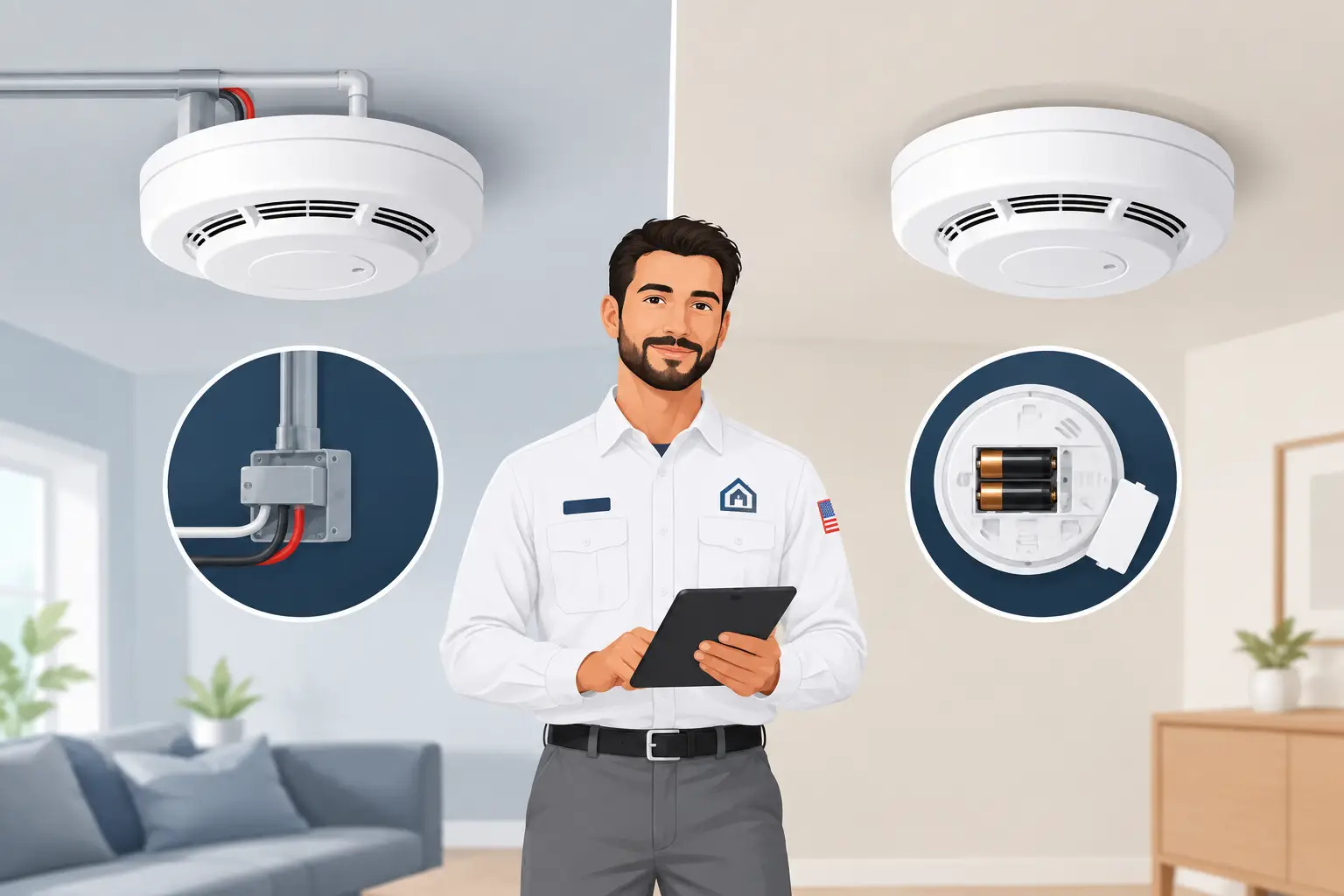
A smoke alarm that chirps at 2 a.m. gets attention fast. But when it is time to replace one, the choice is bigger than swapping batteries: hardwired versus battery smoke alarms can affect reliability, placement, backup power, and how well alarms throughout the house work together.
For many Southern Utah homes, the best answer is not simply one type or the other. It depends on the home’s age, existing wiring, the number and location of alarms, current code requirements, and whether you are replacing one device or making a broader safety upgrade. The goal is simple: every member of the household should get a clear warning early enough to get outside safely.
Hardwired versus battery smoke alarms: the main difference
Hardwired smoke alarms are connected to the home’s electrical system. They receive normal power from a dedicated circuit and typically include a battery backup so they can continue operating during an outage. In many newer homes, hardwired alarms are also interconnected. When one alarm senses smoke, every connected alarm sounds.
Battery-operated smoke alarms run solely on batteries. Some use replaceable batteries, while others have sealed long-life batteries designed to last for the expected service life of the alarm. They are often used where wiring is unavailable or where adding a new alarm location would require opening walls or ceilings.
Neither option should be treated as a set-it-and-forget-it device. Both types need regular testing, cleaning, and replacement at the end of their rated life. The difference is how they receive power and how easily they can be coordinated across the home.
Why hardwired alarms are common in newer homes
Hardwired alarms offer a dependable primary power source without relying on a homeowner to replace a battery on schedule. Their battery backup matters because power outages can happen during storms, utility work, or an electrical fault. A properly installed unit remains ready when the home loses normal power.
Interconnection is another major benefit. Smoke from a fire in a garage, basement, or far end of the house may trigger one alarm before anyone in a bedroom notices it. If the alarms are interconnected, the warning is heard throughout the home at once. This is especially valuable for larger homes, homes with separate bedroom wings, and families with children or older adults.
Hardwired systems can also make replacement straightforward when the correct wiring and compatible equipment are already in place. That does not mean every replacement is a simple do-it-yourself task. Electrical boxes, wiring connections, compatibility, and local requirements all deserve a careful review. If an alarm will not stop chirping, fails to communicate with other alarms, or has loose or damaged wiring, it is time for a licensed electrician to diagnose the problem.
The trade-offs with hardwired smoke alarms
Hardwired alarms require electrical wiring and correct installation. Adding them to an older home may involve access challenges, drywall repair, and planning around existing circuits. It is not a weekend DIY project, particularly when new wiring, interconnected devices, or code-required alarm locations are involved.
A hardwired alarm can also create confusion when it chirps. Homeowners sometimes assume the alarm is powered by the home and therefore cannot need a battery. In reality, the backup battery may be low, improperly seated, or nearing the end of its life. Dust, age, and a failed unit can also cause recurring alerts.
Where battery smoke alarms make sense
Battery-operated alarms can be a practical choice for existing homes that need coverage in an area without wiring. They are quicker to install in many situations and can help address an immediate safety gap while a homeowner plans larger electrical improvements.
They are also useful where the home’s layout has changed. A converted room, finished basement, or remodeled sleeping area may need additional protection. The right placement depends on the room, nearby cooking sources, ceiling design, and applicable requirements. An alarm placed too close to a kitchen or bathroom may produce nuisance alarms, which can lead people to disable it – a dangerous response.
The weakness of battery-only alarms is human nature. Batteries get ignored, removed after nuisance alerts, or replaced with the wrong type. A sealed long-life battery reduces that maintenance burden, but the alarm itself still has an expiration date. When a sealed-battery unit reaches the end of its rated service life, replace the entire alarm.
Interconnected alarms provide a stronger warning
When comparing hardwired versus battery smoke alarms, homeowners often focus only on the power source. The larger safety question is whether alarms work together.
Interconnected hardwired alarms are a standard feature in many newer homes, but interconnection is not limited to wired systems. Some battery-operated alarms can communicate wirelessly. Whether that is the right solution depends on the home, the equipment already installed, and the scope of the project.
A whole-home warning system is worth considering when bedrooms are far from the kitchen, garage, utility area, or main living space. Early warning is not just about detecting smoke. It is about making sure the alarm can be heard behind closed doors, over fans or televisions, and by everyone who needs to respond.
Replacement is not always a one-for-one decision
Smoke alarms do not last forever. Most have a manufacturer date printed on the back, and many should be replaced after about 10 years. An alarm may still beep when tested even though its sensing components are nearing the end of their useful life. Testing confirms that the alarm can sound. It does not restore an aging sensor.
If one alarm in an interconnected group is failing, inspect the age of the others too. Homes built or remodeled at the same time often have alarms installed during the same project. Replacing only the noisy unit may solve today’s chirp while leaving several equally old alarms overhead.
Look for signs that a full evaluation is needed: repeated chirping after a fresh backup battery, alarms that do not all sound together, yellowed or damaged housings, missing alarms, nuisance alarms that cause residents to remove batteries, or units past their replacement date. These are safety issues, not just annoyances.
Installation and placement deserve professional attention
Smoke alarm requirements can change based on the home’s age, renovations, sleeping areas, and local rules. An electrician can evaluate whether existing hardwired alarms are properly powered, interconnected, and located where they are needed. They can also identify outdated wiring or electrical boxes that may affect a replacement.
For homeowners in St. George and throughout Southern Utah, dry conditions and fast-moving fire risk make dependable early warning especially meaningful. The right system is one that is properly installed, regularly maintained, and easy for every person in the home to hear and understand.
Avoid disabling an alarm to stop nuisance alerts. Address the reason it is sounding instead. The cause may be cooking smoke, steam, dust, a weak backup battery, a failing unit, or a wiring issue. A trained technician can separate a simple replacement need from an electrical problem that requires repair.
Simple maintenance that supports either option
Test each smoke alarm monthly using its test button. Keep the exterior free of dust with gentle vacuuming or the manufacturer-approved cleaning method, and never paint over an alarm. If your unit uses replaceable batteries, replace them according to the manufacturer’s instructions and whenever the low-battery warning begins.
Most importantly, make sure everyone in the home knows what the alarm sounds like and what to do next. A working alarm needs a practiced exit plan behind it: leave immediately, meet at a designated location outside, and do not go back inside.
If your alarms are old, inconsistent, missing, or constantly chirping, Service Right Electric can assess the system, explain the available options clearly, and complete the work safely. A few minutes spent checking the alarms over your family’s heads can make a meaningful difference on the day they are needed most.



0 Comments