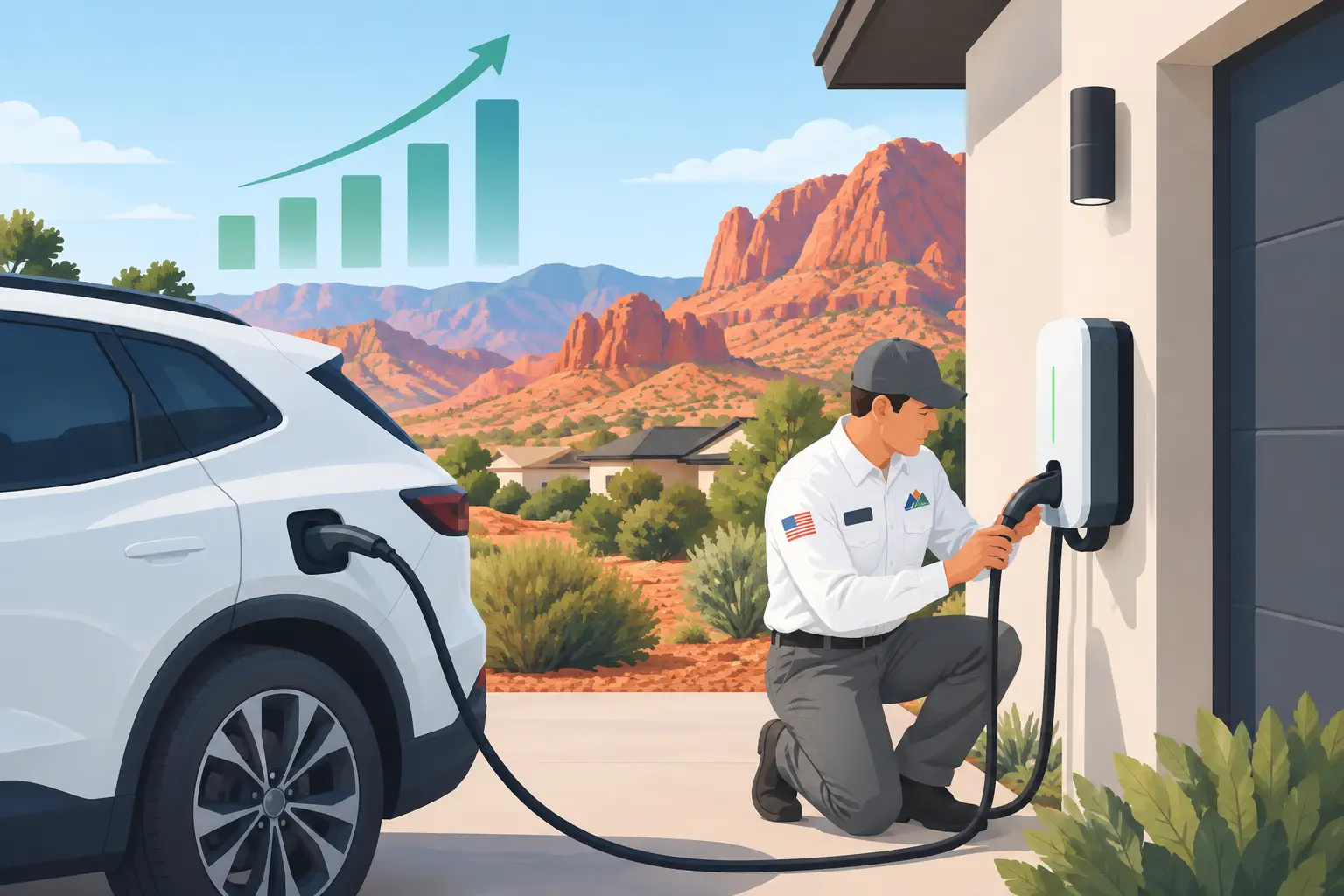
A new EV in the driveway changes more than the way a household fuels a vehicle. It changes how the home uses electricity, especially during the evening hours when cooking, cooling, laundry, and other daily loads are already competing for capacity. EV charging demand trends point to a practical reality for Southern Utah homeowners: convenient charging is becoming a standard home upgrade, but the electrical work behind it needs to be planned correctly.
A charging cord plugged into a standard outlet may work for occasional use. For most drivers, however, it is too slow to support everyday travel reliably. A dedicated home charging setup can make ownership easier, but it also places a significant, recurring load on the electrical system. That is not a weekend DIY project.
EV Charging Demand Trends Are Moving Home
Public charging remains useful for road trips, errands, and drivers without home parking. But for homeowners with a garage or driveway, home charging is usually the most predictable option. The vehicle can charge while it is parked, rather than requiring a separate stop during a busy day.
That preference is shaping EV charging demand trends. More households are planning for charging during remodels, garage upgrades, panel replacements, and new-home purchases. Some are installing a charger when they buy an EV. Others are preparing the electrical infrastructure first, even if the vehicle purchase is still a year or two away.
The strongest trend is not simply more chargers. It is more thoughtful planning around where power is available, how much capacity the home has, and when the vehicle will charge. Those details determine whether a charger is convenient and dependable or a source of nuisance breaker trips and avoidable electrical stress.
Why Evening Charging Matters to Your Electrical Panel
Most vehicles are plugged in after work. That timing often overlaps with some of a home’s highest electrical use. In Southern Utah, air conditioning can remain a major load well into the evening. Add an electric range, dryer, pool equipment, hot tub, water heater, or workshop tools, and the panel may have a lot to manage.
A professional installation begins with more than finding an open breaker space. An electrician evaluates the home’s electrical service and performs a load calculation. This helps determine whether the existing system can support the added charging load while the household operates normally.
It depends on the home. A newer house with a larger service may have room for a dedicated EV circuit without major changes. An older home, a home with a smaller panel, or a property that has added electrical equipment over time may need a panel upgrade, service upgrade, or another carefully designed solution before charging equipment is installed.
This is why an outlet that appears unused is not automatically the right connection point. Circuit ratings, wire size, breaker protection, equipment location, and the total load on the home all matter. A licensed electrician can explain what the system can safely handle before work begins.
Faster Charging Requires the Right Circuit
Home charging equipment is available at different power levels. A standard household receptacle offers a slower option that may add limited driving range over many hours. A dedicated higher-capacity circuit can charge much faster, making it more practical for regular commuting, family schedules, and unexpected trips.
Faster is not always the only goal. A household with short daily drives may be well served by a modest setup. A family with one vehicle, longer commutes, or frequent regional travel may benefit from greater charging capacity. The right choice should match the vehicle, driving routine, available electrical capacity, and future plans for the property.
The installation also needs to be designed for continuous use. EV charging can run for hours at a time, which is different from briefly using a small appliance. Properly sized conductors, correct breaker protection, secure terminations, and equipment installed according to applicable requirements all help protect the home and support consistent charging.
What Homeowners Should Plan Before Installing a Charger
The best time to think about EV charging is before the charger arrives. A little planning can avoid moving equipment later, opening finished walls twice, or discovering that the selected location is impractical.
Start with where the vehicle will actually park. A charger should be located so the charging cable reaches the vehicle without being stretched across a walkway, driveway, or garage floor. The equipment needs a suitable mounting location and access to the electrical panel or a route for safely running the new circuit.
Next, consider the household’s full electrical picture. Homeowners should mention planned additions such as a hot tub, sauna, workshop equipment, electric appliances, solar-related electrical changes, or a standby generator. Individually, each project may make sense. Together, they can affect the capacity needed at the panel.
It also helps to think beyond the first EV. A household may begin with one plug-in vehicle, then add a second vehicle later. Preparing conduit, selecting a panel with appropriate capacity, or making room for a future circuit during the first project can be a smart move. It is not always necessary, but it is worth discussing while the work is being evaluated.
Garage Conditions Deserve Attention Too
Garages can be hard on electrical equipment. Heat, dust, vehicle movement, moisture near exterior-facing areas, and accidental impacts all affect installation decisions. Equipment should be mounted securely, positioned where it is protected as much as practical, and installed with the right wiring method for the location.
For outdoor parking, weather exposure becomes an even bigger consideration. The charger and its electrical components must be suited to the environment, and the installation must account for safe cable routing. Running an extension cord from a garage outlet to a vehicle outside may look like a quick fix, but it is not a dependable long-term charging plan and can create safety concerns.
Signs Your Home May Need Electrical Work First
A charger installation often goes smoothly, but some homes need attention before the new circuit is added. Warning signs include frequent breaker trips, flickering lights when large appliances start, warm outlets or panel components, corrosion or visible damage, a crowded or outdated panel, and circuits that have been modified repeatedly over the years.
These issues do not automatically mean the home cannot support EV charging. They do mean the system should be inspected rather than assumed to be ready. Electrical problems tend to become more noticeable when a significant new load is added.
Homeowners should also avoid the temptation to solve capacity concerns by replacing a breaker with a larger one or using adapters to make existing outlets fit charging equipment. Breakers are sized to protect the wiring they serve. Changing parts without evaluating the circuit can remove that protection and create a fire risk.
A qualified residential electrician can diagnose the condition of the panel, verify circuit capacity, identify code and safety concerns, and present clear options. That gives homeowners a defined scope of work instead of guesswork.
Planning for Reliable Charging, Not Just Installation Day
The most useful charger is one that fits daily life without making the electrical system work beyond its design. Some homeowners benefit from scheduling charging for overnight hours. Others may need to coordinate charging with other high-use equipment or choose a configuration that works within available capacity.
This is also a good time to consider whole-home electrical priorities. If a panel is aging, if surge protection is missing, or if the home has recurring power-quality concerns, combining related work can make the project more efficient and easier to plan. The right approach is specific to the house, not a one-size-fits-all package.
For homeowners in St. George and across Southern Utah, heat and household cooling demands add another reason to get the assessment right. A charger should support the vehicle without compromising the comfort, safety, and normal operation of the home.
Service Right Electric can assess your panel, explain the options in plain language, and complete the dedicated circuit and charging equipment installation correctly. You will know what the home needs before work starts.
A well-planned charging setup turns an EV into the convenient daily driver it is meant to be. Before bringing more demand to your driveway, make sure the power behind the garage is ready for it.



0 Comments