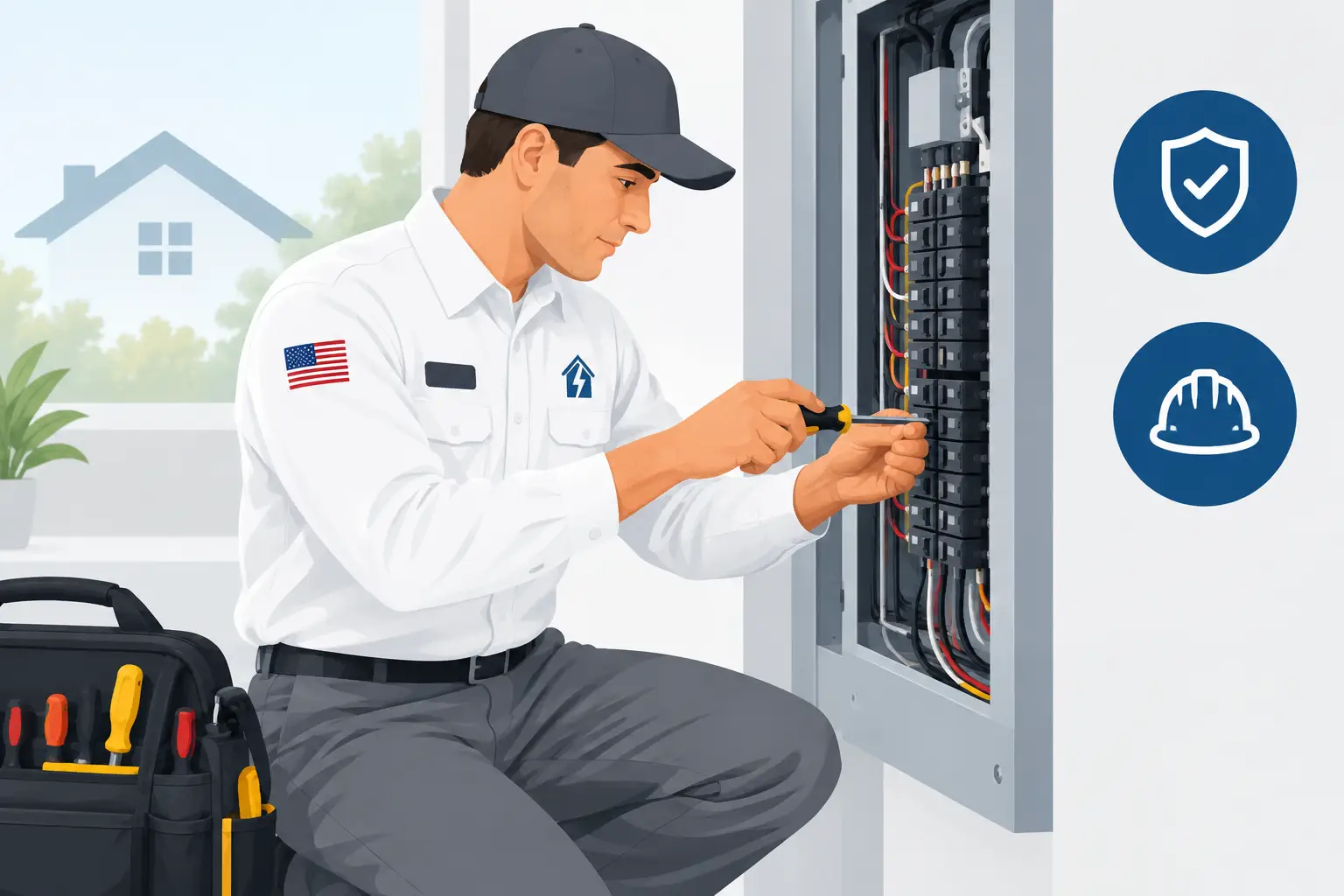
A flickering light, warm outlet, or breaker that keeps tripping can feel like a small household problem until it is not. Choosing a licensed and insured electrician is one of the simplest ways to protect your home, your family, and the investment you have made in it. It means the person working behind your walls, inside your panel, or near your meter has professional qualifications and business protections that matter if something goes wrong.
For Southern Utah homeowners, electrical work is rarely just about getting the lights back on. It may involve protecting an older home from overloaded circuits, adding safe power for an EV charger, wiring a hot tub, or preparing for an outage with a standby generator. These jobs deserve more than a quick fix or a weekend DIY attempt.
What Licensed and Insured Actually Means
The phrase is common in home services, but homeowners deserve to know what it means before letting anyone work on their electrical system.
A license shows that an electrician or electrical contractor has met state requirements to perform electrical work. Requirements can include training, experience, examinations, and ongoing compliance with applicable codes and regulations. Licensing does not make every electrician identical, but it establishes a meaningful professional baseline. Electrical systems are not forgiving of guesswork. Correct wire sizing, grounding, overcurrent protection, connections, and load calculations all affect whether a repair or installation performs safely over time.
Insurance is a separate protection. A properly insured electrical company carries coverage intended to help address certain property damage or injury claims connected to its work. If a contractor is uninsured and an accident happens, a homeowner may face a much more complicated situation. The exact coverage and limits can vary, so “insured” should not be treated as a vague promise. It is reasonable to ask for confirmation.
For a homeowner, the practical value is clear: licensed and insured professionals bring accountability to work that can affect your home long after the service visit ends.
Why Electrical Work Has Different Stakes
Many home projects allow room for a little trial and error. Electrical work is not one of them. A connection can appear to work normally while creating heat inside a box or panel. An outlet can provide power while lacking proper grounding. A new circuit may function until several appliances run at once and reveal that the load was not planned correctly.
That is why professional diagnosis matters. The visible symptom is not always the source of the problem. A dead receptacle may trace back to a failed connection elsewhere. Repeated breaker trips could point to an overloaded circuit, a damaged appliance, a wiring fault, or an issue in the electrical panel. Replacing a breaker without finding the cause is not a repair.
Licensed electricians are trained to evaluate the system, identify the actual issue, and recommend a repair that fits the home. They can also recognize when a seemingly isolated problem is a sign of aging wiring, inadequate capacity, moisture exposure, or unsafe modifications made in the past.
This is especially important in homes with higher electrical demands. EV charging, electric appliances, outdoor lighting, spas, saunas, and modern entertainment equipment can all change how a home uses power. A properly planned installation considers the existing panel, available capacity, circuit requirements, placement, and safety devices instead of simply adding another wire.
What to Verify Before You Schedule
You do not need to become an electrical expert before calling for help. A few direct questions can give you confidence that you are hiring a qualified residential service provider.
First, ask whether the company is licensed for the work being performed and whether the technician assigned to your home is qualified to do that work. A professional company should answer clearly, not brush past the question.
Next, ask whether the company is insured. If you want additional reassurance, ask for proof of coverage. This is a normal request for work involving your home’s electrical system, and a reputable provider will understand why it matters.
It also helps to confirm that the company focuses on residential service. Homes present different conditions than commercial properties: aging panels, remodels completed in stages, hidden wiring changes, family schedules, pets, finished walls, and the need to keep everyday life moving while repairs are made. A residential-focused team is prepared for those realities.
Finally, ask how the visit will work. You should know whether the electrician will diagnose the issue first, explain the findings, and provide clear options before work begins. Upfront communication is not just good customer service. It gives you the information needed to make a sound decision about your home.
Insurance Protects More Than the Contractor
Homeowners sometimes assume insurance is only a business detail. In reality, it is part of responsible service.
Electrical work can involve ladders, attics, crawlspaces, energized equipment, walls, ceilings, and sensitive household electronics. Even with careful planning, unexpected conditions can arise. Insurance helps create a layer of protection when a covered incident causes damage or injury.
There is also a trust issue. A company that invests in proper licensing and insurance is showing that it intends to operate professionally and stand behind its work. That does not mean homeowners should ignore the details of a project, but it is an important sign that the company takes its responsibilities seriously.
The lowest initial quote can be tempting, particularly when the issue seems minor. But a lower price is not a better value if it comes with unclear qualifications, no coverage, rushed troubleshooting, or work that must be corrected later. Electrical repairs should be evaluated on safety, scope, communication, and workmanship – not just the first number you hear.
When You Should Call Right Away
Some electrical issues should not wait for a convenient time. If you notice a burning smell, smoke, sparks, a hot panel or outlet, discoloration around a switch or receptacle, buzzing from electrical equipment, or repeated breaker trips, stop using the affected equipment when it is safe to do so and call a professional electrician.
A damaged meter area, loose service equipment, or water near electrical components also calls for prompt attention. Do not remove panel covers, reset a breaker repeatedly, or try to repair scorched wiring yourself. Turning power off to the affected area may be appropriate if you can do so safely, but diagnosis and repair belong with a qualified electrician.
Not every call is an emergency, of course. A new ceiling fan, better indoor lighting, additional outlets, or a dedicated circuit can often be scheduled as a planned improvement. The same standard still applies. The work should be sized correctly, installed cleanly, and tested before the job is complete.
The Value of a Clear Service Process
Homeowners should not have to guess what happens after they call. A straightforward electrical service visit begins with listening to the problem, then diagnosing it on site. Once the electrician understands the condition of the system, they should explain what they found in plain language and discuss the repair or upgrade options before starting work.
That process is particularly helpful when there is more than one reasonable path forward. For example, a failed outlet may need a simple repair, while a group of outdated or damaged outlets may justify a broader safety upgrade. An older panel may still be serviceable, or it may lack the capacity for a planned EV charger or hot tub. The right answer depends on the home, the condition of the existing equipment, and how you use electricity.
Service Right Electric follows this practical approach: call, diagnose, and fix. Homeowners get a clear explanation of the issue and a professionally completed solution, without being pushed to make sense of technical details alone.
Professional Work Gives You Confidence at Home
The best electrical repair is often the one you stop thinking about. The outlet works safely. The lights stay on. The breaker holds. The new circuit supports the equipment it was designed for. Behind that everyday reliability is careful diagnosis, correct installation, and a technician who understands the responsibility of working on someone’s home.
When you need electrical help, ask the direct questions, expect clear answers, and choose a licensed and insured team that treats your home with care. A safe repair today can prevent a much larger problem tomorrow.



0 Comments