
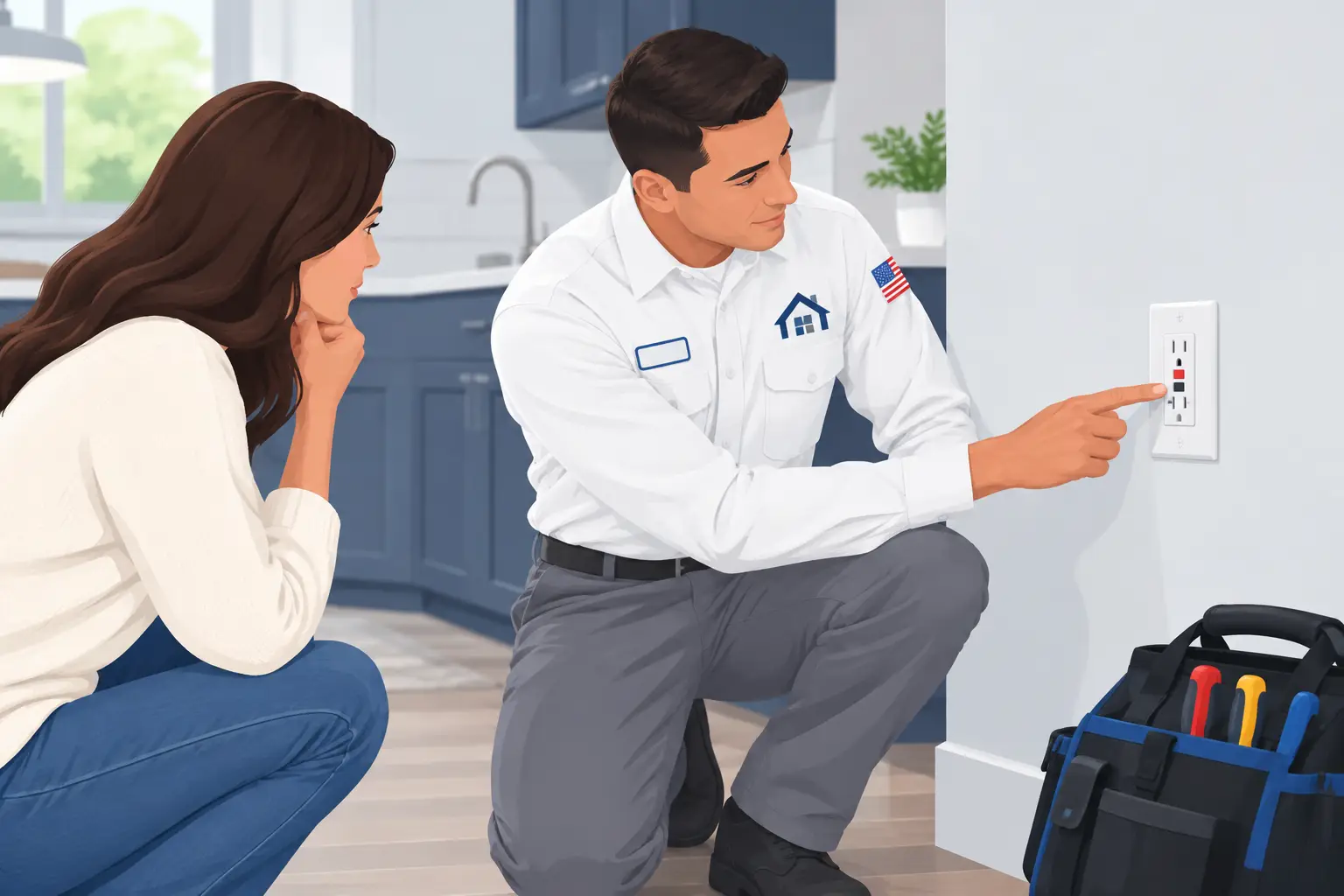
That outlet beside the bathroom sink, kitchen counter, garage workbench, or patio is supposed to protect you. So when it suddenly clicks off and leaves you asking, “why does my GFCI trip,” the interruption can feel inconvenient. But the reset button is doing a serious job: it is responding to a condition that could allow electrical current to travel somewhere it should not, including through a person.
A GFCI trip is not always an emergency, but it should not be ignored or repeatedly reset without finding the cause. The good news is that many problems can be narrowed down safely. The right next step depends on when the device trips, what is plugged in, and whether it will reset at all.
What a GFCI Outlet Is Actually Detecting
A ground-fault circuit interrupter, usually called a GFCI, monitors the electricity moving out through the hot wire and returning through the neutral wire. Under normal conditions, those amounts match. If the device senses even a small difference, it shuts off power quickly.
That mismatch can mean electricity is leaking through water, damaged insulation, a faulty appliance, or an unintended path to ground. This is why GFCI protection is common in places where people are more likely to encounter moisture, including bathrooms, kitchens, laundry areas, garages, unfinished spaces, and outdoor locations.
A GFCI is different from the breaker in your electrical panel. A breaker primarily protects wiring from overheating due to an overload or short circuit. A GFCI is designed to protect people from ground faults. Either can shut off power, but they do so for different reasons.
Why Does My GFCI Trip? The Most Common Causes
Moisture in or around the outlet
Water and electricity do not need a visible puddle to create trouble. Humid air, rain blowing into an exterior cover, sprinkler spray, a damp garage, or condensation can introduce enough moisture to trip a GFCI.
Outdoor outlets are frequent offenders in Southern Utah homes, especially after a storm or when irrigation reaches an outlet cover. A bathroom or kitchen outlet may trip after cleaning, a plumbing leak, or water splashing near the receptacle. If you see water, staining, corrosion, cracking, or a loose cover, leave the outlet off and have it inspected.
A plugged-in appliance has a fault
A GFCI often trips because it is doing exactly what it should when connected to a failing appliance or cord. Hair dryers, countertop appliances, power tools, chargers, outdoor equipment, refrigerators, freezers, and older extension cords can all develop insulation damage or internal leakage.
The timing offers a useful clue. If the GFCI stays on with nothing plugged in but trips the moment you connect one item, that item or its cord is a likely source of the problem. Do not keep trying to use it on another unprotected outlet just because it works there. A device that trips GFCI protection may still present a shock hazard.
An outdoor cord or connection is damaged
Extension cords take more abuse than most homeowners realize. They get pinched in doors, cut by tools, exposed to sun, left in wet areas, and pulled by the plug rather than the cord. Damage may be hidden beneath the outer jacket.
Disconnect outdoor cords and equipment before resetting the GFCI. If the outlet resets and remains on after those items are removed, replace the damaged equipment or have it professionally evaluated. Do not wrap damaged cord insulation with tape and consider the issue solved.
The GFCI device is worn out or defective
Like other electrical devices, GFCI outlets have a service life. Internal components can wear out, especially in frequently used, damp, hot, or outdoor locations. An older device may trip without an obvious cause, fail to reset, or no longer respond correctly to its test button.
A failed GFCI outlet needs replacement, but the cause should still be confirmed. Replacing the device without checking the wiring and protected circuit can miss an underlying fault.
A downstream outlet or fixture has a problem
One GFCI can protect several outlets, lights, or other devices farther along the same circuit. That means the outlet that has tripped may not be where the actual problem is located.
For example, a garage GFCI may also protect an exterior outlet, a bathroom receptacle, or another outlet in a utility area. A problem in any protected location can trip the first GFCI. This is one reason a reset button can seem random when the real issue is outside, behind an appliance, or at an outlet you rarely use.
Wiring trouble on the circuit
Loose connections, damaged wiring, incorrect connections, or a shared-neutral wiring issue can all cause repeated GFCI trips. These problems are not visible from the front of the outlet, and they are not a weekend DIY project.
A GFCI that trips immediately when reset, even with everything unplugged, is a strong sign that the outlet, its wiring, or something downstream needs professional diagnosis. Turning the device back on again and again will not repair the fault.
Safe Checks You Can Make Before Calling
Start by unplugging everything from the outlets that have lost power. This includes equipment you may not immediately associate with the GFCI, such as a garage refrigerator, an exterior string-light transformer, a disposal, or a charger in an adjacent room.
Next, look for other GFCI outlets in nearby bathrooms, garages, kitchens, laundry spaces, exterior walls, and unfinished areas. Press the reset button firmly on the tripped device. If it resets and stays on, plug items back in one at a time. Wait briefly between each item so you can identify whether one device causes the trip.
Check for simple visible concerns without removing outlet covers or opening electrical boxes. Look for wet conditions, a cord lying in water, damaged plugs, melted plastic, discoloration, or a loose exterior cover. If you find any of these conditions, keep power off to that outlet and arrange service.
Do not remove the GFCI outlet, work inside the electrical panel, bypass the protection, or replace a GFCI with a standard outlet. Those shortcuts can turn a protective shutdown into an avoidable shock or fire risk.
When a Repeated GFCI Trip Needs an Electrician
Call a licensed electrician if the GFCI will not reset, trips right away with nothing plugged in, trips repeatedly after rain, feels warm, makes buzzing sounds, smells burnt, or shows scorch marks. You should also call if multiple outlets have stopped working and you cannot identify which GFCI controls them.
An electrician can test the outlet, inspect the circuit, locate downstream devices, verify wiring connections, and determine whether the problem is moisture, equipment, a failing GFCI, or a larger circuit issue. That diagnosis matters because the same symptom can have very different causes.
For homeowners in St. George and throughout Southern Utah, Service Right Electric can diagnose the issue, explain what is happening in plain language, and complete the repair with upfront pricing before work begins. The goal is not just to get the reset button working again. It is to make sure the protection works when you need it.
A GFCI that trips once after a wet cord or faulty appliance may have prevented a dangerous situation. Treat that click as useful information, not an inconvenience, and let the pattern of the problem guide your next safe step.



0 Comments