
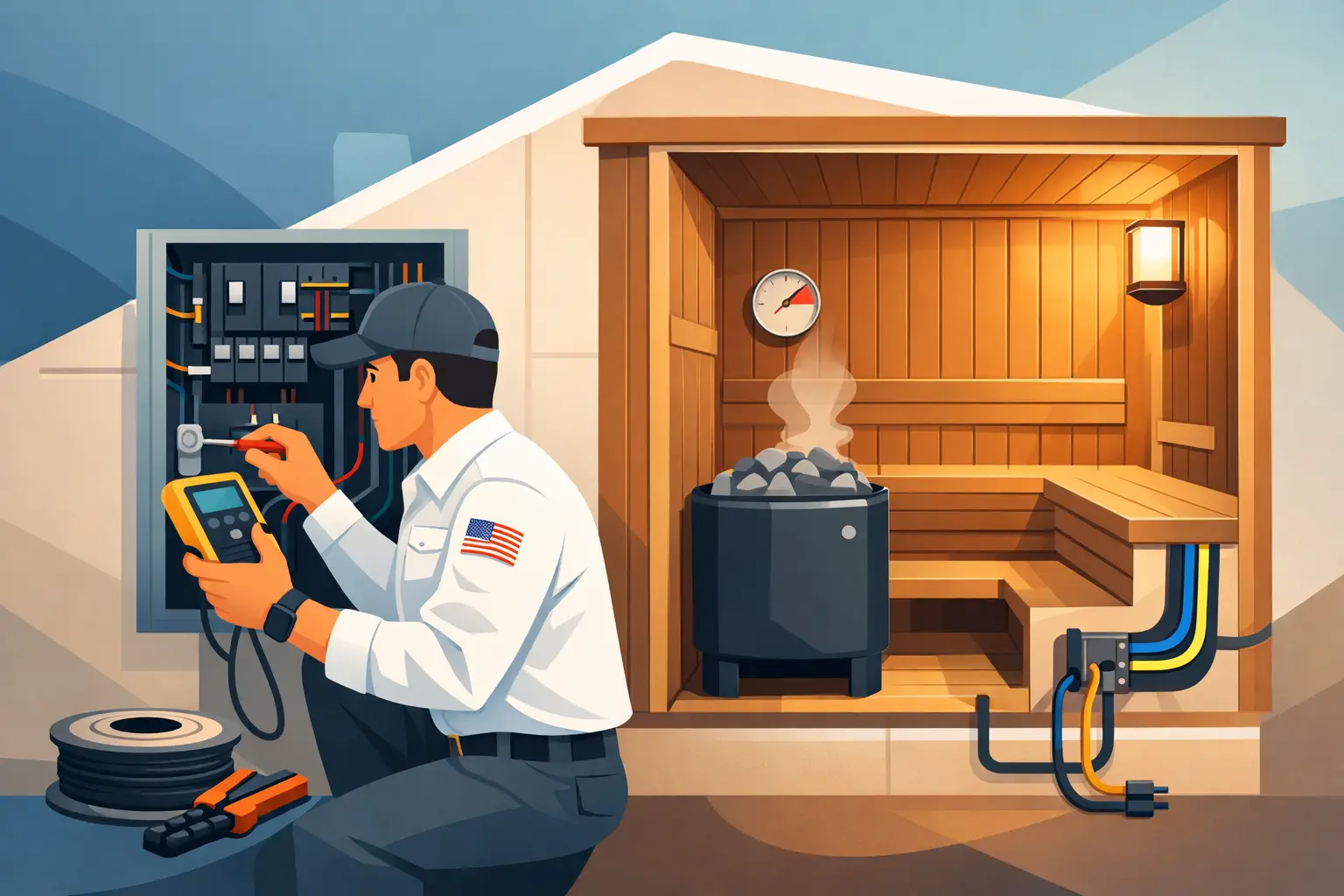
A home sauna should feel like a place to unplug, not a source of electrical worry. The heater, controls, lighting, and ventilation all operate around high heat and, in many cases, moisture. That makes a sauna wiring guide useful for planning the project, but it is not a substitute for professional installation. Getting the electrical details right protects your home, keeps the sauna operating reliably, and helps prevent a relaxing upgrade from becoming an expensive repair.
For most homeowners, the right first step is to choose the sauna and have a licensed residential electrician assess the electrical requirements before construction begins. The heater specifications, the location of the unit, your panel capacity, and local permit requirements all affect the final scope of work.
Start With the Sauna Heater Requirements
The heater determines nearly every major electrical decision. Home saunas can have very different power needs depending on their size, intended temperature, insulation, and whether they are an indoor or outdoor installation. A compact unit may require a dedicated 120-volt circuit, while many traditional electric heaters require 240 volts and a dedicated circuit sized specifically for that equipment.
The installation instructions for the exact heater matter. They identify the required voltage, circuit amperage, wire size, disconnecting means, control configuration, and minimum clearances. Those details are not interchangeable between models. Choosing a breaker or wire size based on what worked for a neighbor’s sauna can create an overheating risk, nuisance tripping, or equipment damage.
An electrician also needs to verify that the home’s service panel has enough capacity for the added load. This is especially relevant in homes that already have high-demand equipment such as an electric range, air conditioning, a hot tub, an EV charger, or a workshop. A panel may have open breaker spaces but still need a load calculation before another large appliance is added.
A Sauna Wiring Guide Begins With a Dedicated Circuit
A sauna heater should not share a circuit with lighting, outlets, or another appliance. It needs a dedicated circuit that runs from the electrical panel to the equipment, with correctly sized conductors and overcurrent protection. This gives the heater the stable power it needs and prevents ordinary household use from affecting its operation.
Dedicated does not simply mean “nothing else is plugged in right now.” It means the circuit is designed and installed solely for that sauna equipment. The circuit route must also be planned carefully. Heat, access limitations, framing, insulation, and the location of the control box can all change how wiring should be installed and protected.
A hardwired heater often requires a nearby disconnecting means, but the required location and type depend on the equipment instructions and applicable electrical code. The disconnect must be accessible for service without being placed where heat or moisture makes it unsafe. This is one reason sauna wiring is not a weekend DIY project. A correct installation involves more than pulling cable and installing a breaker.
Keep Controls and Electrical Parts Out of the Heat Zone
The sauna’s control system deserves as much attention as the heater circuit. Many sauna heaters use a wall-mounted control, a built-in control, or a separate control box. These components must go where the manufacturer permits them, not wherever they are most convenient.
Inside a traditional sauna, temperatures near the ceiling can become extreme. Standard switches, outlets, junction boxes, and wiring methods may not be suitable in those conditions. Equipment that is not rated for the environment can deteriorate prematurely, create unreliable operation, or become a fire hazard.
Controls are commonly located outside the sauna room, where they are easier to access and protected from the hottest conditions. Some systems include temperature sensors, safety limit devices, and communication wiring between the control and heater. Those low-voltage or control connections still need to follow the manufacturer’s routing requirements. A misplaced sensor can cause the sauna to heat improperly or shut down unexpectedly.
Lighting also needs a deliberate plan. The fixture must be listed for the expected temperature and location, and its wiring must be suitable for the application. If the sauna is near a shower, pool area, or other wet location, additional protections may apply. Never assume a standard decorative light fixture or receptacle is acceptable just because it fits the space.
Indoor and Outdoor Sauna Wiring Are Not the Same
An indoor sauna installed in a finished basement, bathroom addition, or spare room presents one set of challenges. An outdoor sauna introduces another. Weather exposure, underground wiring, exterior disconnects, conduit selection, and moisture protection can all affect the installation.
For an outdoor sauna, the electrician will evaluate how power gets from the house to the structure. Depending on the route and local requirements, that may involve burial depth rules, conduit protection, proper transitions into the building, and equipment rated for exterior use. A long run can also affect conductor sizing. Wire that is adequate over a short distance may not be adequate when voltage drop becomes a factor.
Southern Utah’s dry climate does not eliminate moisture concerns. Rain, irrigation, wind-driven dust, condensation, and temperature swings still affect exterior electrical equipment. A well-planned installation protects connections from the elements and makes future service safer and simpler.
Permits and Inspections Protect the Finished Project
Homeowners sometimes see permits as an extra delay. For sauna wiring, they are a practical safeguard. Permitting helps ensure the circuit, panel work, grounding, disconnects, and equipment placement are reviewed against applicable requirements. It also creates a record of the work, which can matter during a home sale or an insurance review.
Requirements can vary by jurisdiction and by the details of the installation. A sauna in an attached structure may be treated differently than one in a detached backyard building. Adding a new feeder, upgrading a panel, or wiring equipment near water can add further considerations. A qualified electrician can identify the likely permit scope before work starts and explain what the installation requires.
Warning Signs to Address Before Using a Sauna
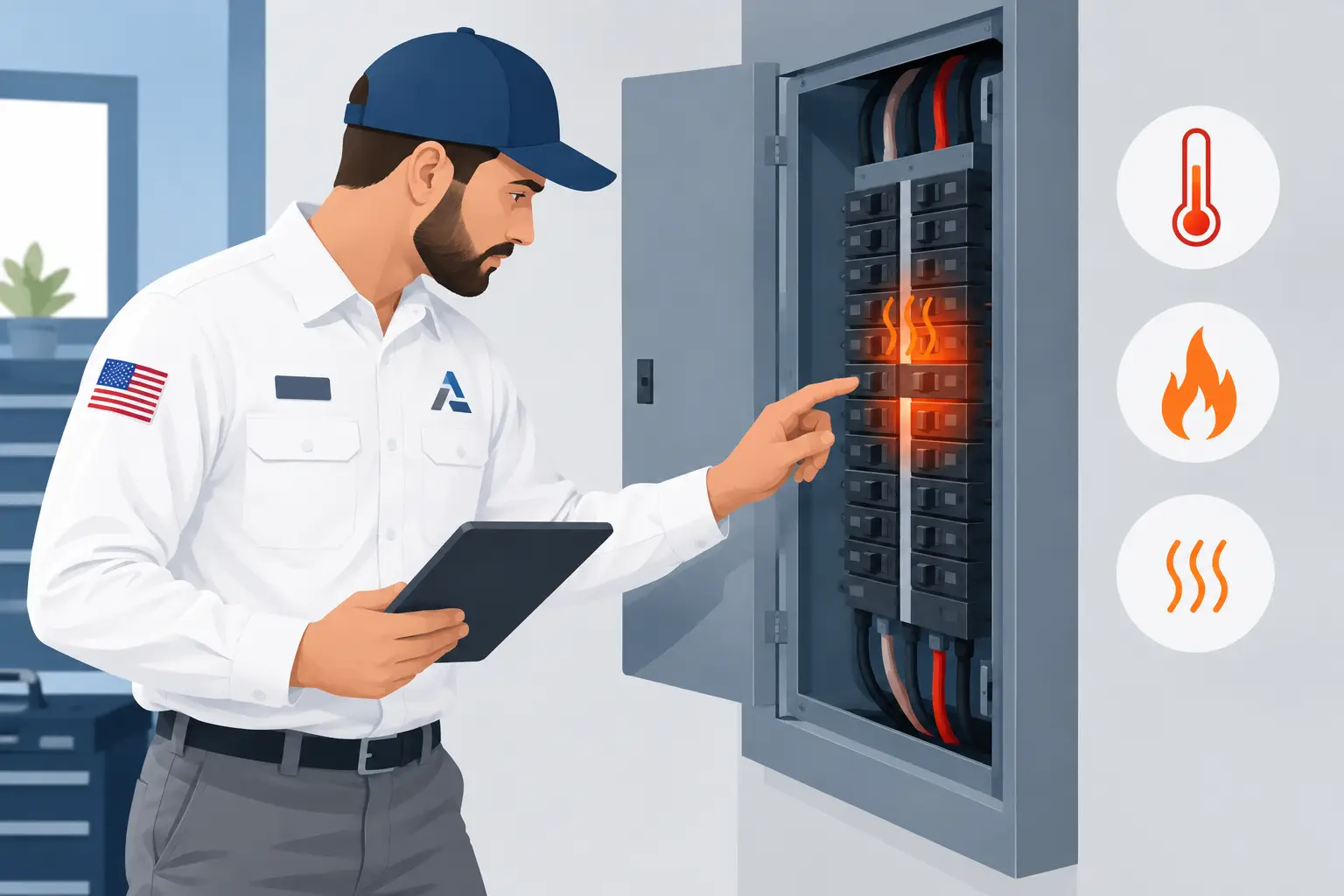
Do not use a newly installed or existing sauna if you notice burning smells, flickering lights, repeated breaker trips, a hot electrical panel, buzzing from controls, damaged insulation, or discolored wiring. These are not normal signs of a heater “breaking in.” Turn the unit off and have the system inspected.
The same applies if a sauna takes unusually long to heat, fails to maintain temperature, trips only after running for a while, or shuts down unpredictably. The cause could be the heater, controls, sensors, circuit connections, breaker, or an undersized electrical system. Diagnosis matters because replacing a visible part without finding the underlying issue can leave the hazard in place.
What a Professional Sauna Electrical Visit Should Cover
Before installation, a residential electrician should review the heater specifications, inspect the service panel, evaluate the circuit path, and confirm the control and disconnect locations. If the sauna is outdoors, the visit should also account for the route to the structure and the protection needed along the way.
During the work, the focus should be on correctly sized wiring, secure terminations, approved equipment placement, and clear labeling at the panel. Once complete, the system should be tested for safe operation. You should know which breaker serves the sauna, where the disconnect is located if one is used, and what symptoms warrant a service call.
At Service Right Electric, our approach is simple: assess the home, explain the work before it begins, and complete the installation with safety at the center. Whether you are planning a new sauna or concerned about an existing heater circuit, a professional evaluation gives you a clear path forward.
A sauna is an investment in comfort at home. Give its electrical system the same level of care, and you can enjoy the heat with greater confidence.



0 Comments