A breaker that trips once after a heavy load is one thing. A panel that feels warm, makes crackling sounds, smells burnt, or trips repeatedly is a reason to stop and get it checked. Panel repair versus replacement is not a choice homeowners should make based on appearances alone. The right answer depends on what is happening inside the panel, how safely it is operating, and whether it can support the way your home uses power now.
For Southern Utah homeowners, a professional diagnosis can separate a contained repair from a larger safety concern. A licensed electrician should inspect the panel, breakers, wiring connections, grounding, service capacity, and any signs of heat or damage before recommending a solution. That means you get a clear scope of work and upfront pricing before repairs begin.
Start With the Condition of the Electrical Panel
Your electrical panel is the control center for the home’s power. It distributes electricity to individual circuits and is designed to shut off a circuit when there is an overload, short circuit, or fault. When the panel and breakers are in good condition, they help protect wiring, appliances, and people in the home.
Many problems are repairable. A loose connection, a failed breaker, corrosion at a terminal, an improperly labeled circuit, or a damaged panel component may be addressed without replacing the entire panel. The key is determining whether the issue is isolated or whether it points to a panel that is outdated, unsafe, or overloaded.
Age alone does not automatically mean replacement. Some older panels remain serviceable when they are properly installed, in sound condition, and sized for the home’s electrical needs. On the other hand, a newer panel may need attention if it has water damage, poor workmanship, overloaded circuits, or equipment with known safety concerns.
When Panel Repair Is Usually the Right Call
Repair is often the practical choice when the panel enclosure, bus bars, main equipment, and service capacity are all in good condition. A licensed electrician can correct the specific defect and confirm that the repair restores safe, reliable operation.
For example, a single breaker that will not reset may simply be failing or responding to a downstream circuit problem. Replacing the breaker without finding the cause is not enough, but the panel itself may not be at fault. Likewise, a loose neutral connection or a damaged wire at a breaker can sometimes be repaired after the affected circuit is safely de-energized and inspected.
Repairs can also make sense after a minor issue is caught early. Small signs of corrosion, a loose panel cover, missing knockouts, poor circuit labeling, or a breaker that is not seated correctly deserve prompt attention. Addressing them early may prevent heat buildup or more extensive damage later.
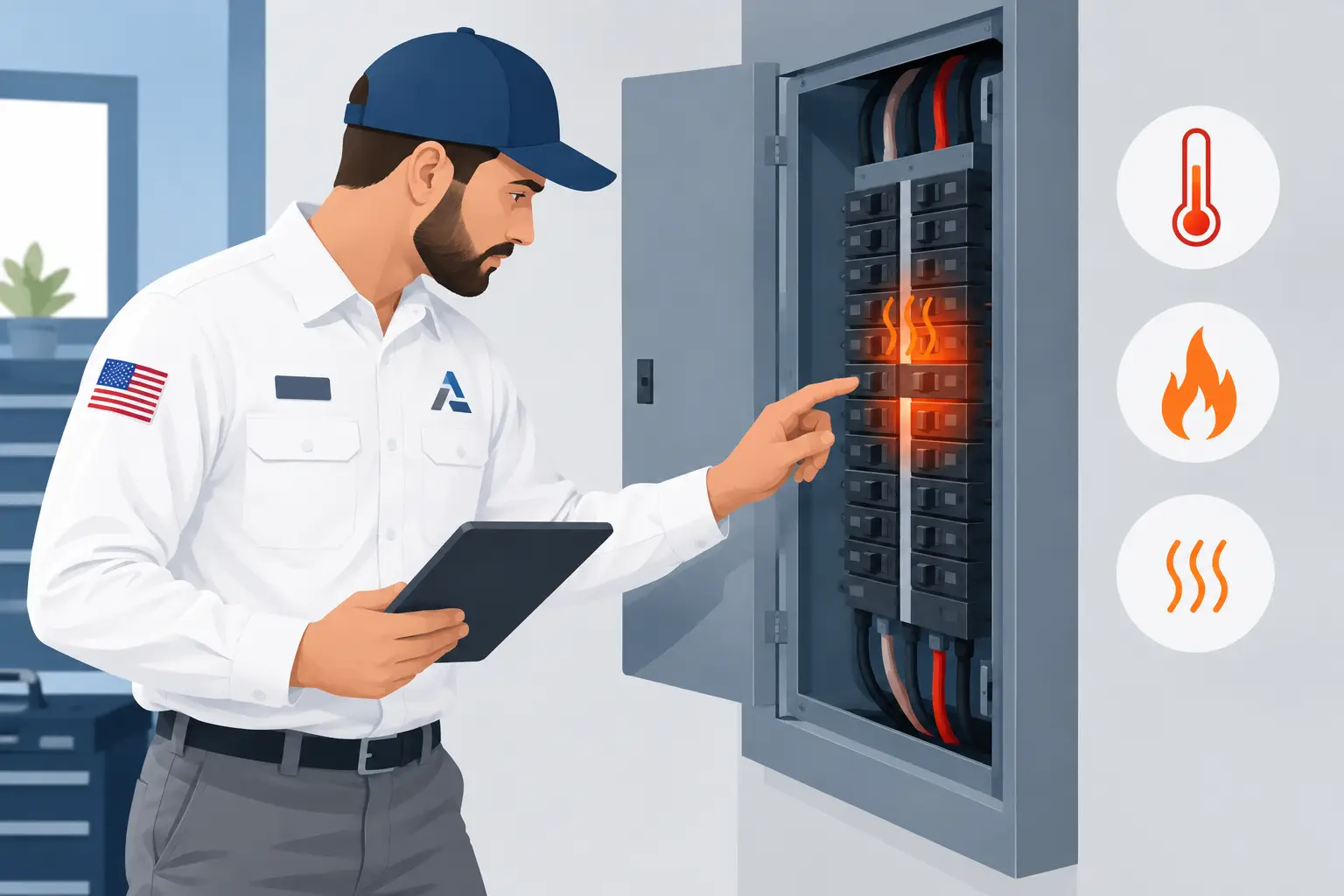
A repair is only a good solution when the equipment can still perform its intended job safely. If the electrician finds burned bus bars, repeated overheating, severe corrosion, or damage that affects multiple breakers, a simple repair may only delay a larger problem.
Signs an isolated repair may be possible
A repair may be appropriate when the issue is limited to one component, the panel has no evidence of widespread heat damage, and there is adequate room and electrical capacity for the home. The diagnosis still matters. A breaker can trip because it is defective, but it can also trip because a circuit is overloaded, a wire is damaged, or an appliance has a fault.
That is why resetting a tripped breaker over and over is not a solution. If it trips again, leave it off and arrange for service. Repeated tripping is the panel doing its job by alerting you to a condition that needs attention.
When Panel Replacement Is the Safer Investment
Panel replacement is usually recommended when the existing equipment cannot be safely repaired, lacks the capacity for the home, or presents an ongoing reliability risk. It is a bigger project than a breaker replacement, but it can provide a safer foundation for future electrical work.
Physical damage is one clear reason to replace a panel. Scorch marks, melted insulation, buzzing, sparking, moisture intrusion, rust that has affected internal components, or a burning odor can indicate dangerous heat or arcing. Turn off power if it can be done safely, avoid touching the panel, and call a qualified electrician right away.
Replacement may also be the right answer when a panel is full and there is no safe way to add the circuits your home needs. Modern households place more demand on electrical systems than many homes were originally designed to handle. An EV charger, hot tub, sauna, electric range, workshop equipment, central air upgrades, or standby generator may require new dedicated circuits and, in some cases, more service capacity.
A panel upgrade is not just about adding more breaker spaces. The electrician must calculate the electrical load, evaluate the service equipment, inspect grounding and bonding, and make sure the installation meets current code requirements. Adding a high-demand appliance to an undersized system can create nuisance tripping at best and overheating at worst.
Common reasons homeowners choose replacement
Homeowners often move forward with a replacement when they have obsolete or recalled equipment, frequent breaker problems across several circuits, insufficient capacity, visible internal damage, or a planned remodel that will add major electrical loads. A replacement can also be worthwhile if prior alterations have left the panel crowded, poorly wired, or difficult to service safely.
There is a trade-off. Replacement costs more than an isolated repair and may require coordination with the utility or permit inspections. But continuing to patch a panel with failing internal parts can become more expensive, less reliable, and less safe over time. A good recommendation explains why replacement is needed, what it includes, and what problems it solves.
Panel Repair Versus Replacement for Home Upgrades
The decision often comes up before a homeowner adds something new. You may be planning an EV charger in St. George, a hot tub in Hurricane, better outdoor lighting, or a generator for backup power. These projects are ideal times to evaluate the panel because the new equipment may change the home’s electrical load.
Do not assume an open breaker slot means the system has capacity. Space in the panel and available electrical capacity are different things. A qualified electrician can perform a load calculation to determine whether the existing service can support the addition without overloading the system.
Sometimes the answer is straightforward: install a new dedicated circuit and complete the upgrade. Other times, the panel needs a subpanel, a service upgrade, or a full replacement first. Getting that answer before purchasing equipment helps avoid delays, surprise costs, and unsafe shortcuts.
What to Expect From a Professional Panel Diagnosis
A proper panel service visit begins with questions about what you have noticed: tripping breakers, flickering lights, appliance issues, recent renovations, or plans for new electrical equipment. The electrician then examines the panel and related electrical components to identify the actual source of the problem.
The inspection may include checking breaker condition, conductor sizing, connection tightness, signs of overheating, panel capacity, grounding and bonding, and the condition of the service equipment. If repair is appropriate, you should receive a clear explanation of the failed component and the work needed. If replacement is recommended, the electrician should explain the safety concern, capacity limitation, or equipment condition behind that recommendation.
This is not a weekend DIY project. Even when the main breaker is off, parts of an electrical system can remain energized. Panel work requires the right training, testing equipment, permits where required, and a clear understanding of residential electrical codes.
Act Before a Small Electrical Warning Grows
If your panel is warm to the touch, buzzing, smoking, producing a burning smell, or showing visible damage, treat it as urgent. Keep people away from the area and call for professional help. For less immediate concerns, such as a frequently tripping breaker or a panel that cannot support an upcoming upgrade, schedule a diagnosis before the issue disrupts your home.
Service Right Electric helps Southern Utah homeowners understand their options without pressure: call, diagnose, and fix. Whether the safe answer is a focused repair or a complete panel replacement, the goal is the same – dependable power and work completed right the first time.



0 Comments