
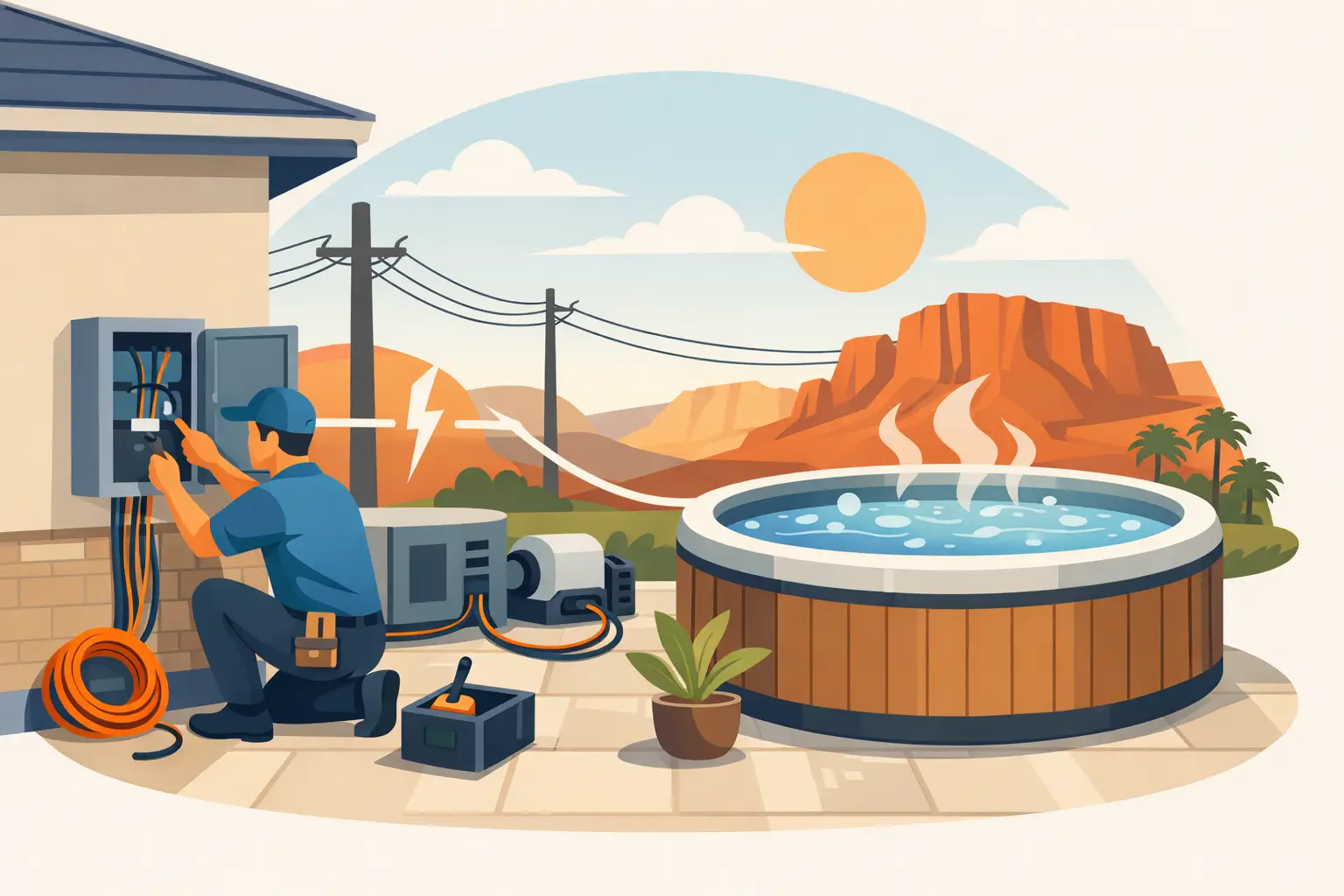
A search for “hot tub electrical installation st george” usually means the spa is picked out, the pad is ready, and you want to enjoy it without worrying about power problems. That last part matters. A hot tub combines water, high electrical demand, and outdoor conditions, so the wiring needs to be planned and installed correctly from the start.
This is not a weekend DIY project or a job for a general handyman. A licensed residential electrician can evaluate your home’s electrical capacity, install the required dedicated circuit and safety protection, coordinate the connection with the spa requirements, and test the finished work before you fill the tub.
What a Safe Hot Tub Electrical Installation Includes
Most full-size hot tubs require a dedicated 240-volt circuit. “Dedicated” means the circuit serves the spa only. It is not shared with outdoor outlets, landscape lighting, a refrigerator in the garage, or another high-demand appliance. Your hot tub’s manufacturer specifications determine the exact amperage, breaker size, wire type, and disconnect requirements.
A proper installation generally starts at the electrical panel. The electrician confirms whether there is room for the required breaker and whether the existing panel and service can safely support the additional load. From there, they run appropriately sized wiring from the panel to an outdoor spa disconnect, then from the disconnect to the hot tub’s control equipment.
The work also requires GFCI protection. A ground-fault circuit interrupter is designed to shut off power quickly if it detects current taking an unsafe path. Around water, that protection is essential. The disconnect must also be accessible, positioned according to code, and far enough from the water that no one can reach it while sitting in the tub.
The details may sound technical, but they directly affect your family’s safety, your hot tub’s performance, and the durability of the installation in Southern Utah heat, wind, rain, and changing temperatures.
Why Hot Tub Wiring Is Different From a Standard Outlet
A hot tub is not simply plugged into the nearest exterior outlet. Some small, manufacturer-approved plug-in spas are designed for a 120-volt receptacle, but even those need the right protected outlet and a careful review of the manufacturer’s instructions. Most permanent hot tubs require a hardwired 240-volt connection.
The circuit must be sized for the equipment’s continuous demand, including pumps, heaters, controls, and any built-in accessories. Undersized wire, an incorrectly sized breaker, loose terminals, or a missing disconnect can create nuisance tripping, damaged equipment, overheating, or a serious shock hazard.
There is also the question of distance. A spa placed at the far end of a backyard may need a longer wire run than a spa located near the home. Longer runs can affect conductor sizing. Trenching, conduit, existing landscaping, walls, patios, and access to the panel all influence the scope of work and final price.
That is why an upfront in-home evaluation is more useful than a guess over the phone. You deserve a clear explanation of what your specific installation requires before work begins.
Hot Tub Electrical Installation in St. George Starts With Your Home
No two homes have the same electrical setup. A newer home with open panel capacity may be ready for a spa circuit with a straightforward installation. An older home may have a full breaker panel, aging equipment, or an electrical service that needs attention before adding another major load.
During a professional assessment, the electrician should look at the panel, available capacity, grounding, the proposed hot tub location, and the manufacturer’s electrical specifications. If an upgrade is necessary, you should hear why it is needed, what options are available, and how the work will be priced.
In some cases, a panel upgrade is not required. In others, it is the safer choice because the existing panel has no room for a new breaker or cannot support the additional load. The right answer depends on the condition and capacity of your home, not on a one-size-fits-all package.
Southern Utah homes also bring practical site considerations. Backyard patios can be finished, side yards can be narrow, and the route from the panel to the spa may cross block walls, decorative concrete, or landscaped areas. A residential electrician can discuss the cleanest, safest route for conduit and wiring while keeping the finished appearance of your property in mind.
Common Problems to Avoid Before the Spa Arrives
The best time to plan the electrical work is before delivery day. Hot tub installers may set the spa in place, but they are not always responsible for running the circuit, installing the disconnect, or upgrading a panel. Waiting until the tub is sitting on the pad can delay your first soak and make access more difficult.
Avoid relying on extension cords or temporary connections. They are not a safe substitute for permanent spa wiring and can overheat or fail outdoors. Do not assume an unused dryer circuit, RV outlet, or garage outlet can be repurposed either. The voltage, amperage, wire configuration, and GFCI requirements may not match your hot tub.
It is also worth checking access before the appointment. If the electrical panel is blocked by storage, the gate is locked, or the hot tub location is not finalized, the electrician may not be able to complete the evaluation efficiently. A little preparation helps keep the visit focused on getting the job done right.
What to Expect From a Professional Spa Wiring Visit
A good electrical service visit should feel straightforward. First, you explain where the hot tub will go and provide the model information, if available. The electrician diagnoses the needs of the home and reviews the installation route, equipment requirements, and any panel concerns.
Next comes transparent pricing. Before work starts, you should understand the recommended scope and the cost. If the electrician finds an issue that changes the plan, they should explain it clearly rather than surprise you after the job is complete.
Once approved, the electrician installs the circuit, breaker, wiring, conduit, disconnect, and required safety protection. They then make the final connections as appropriate for the spa and test the circuit. The goal is not just to make the hot tub turn on. It is to make sure the system is protected, properly connected, and ready for reliable use.
Service Right Electric follows that practical approach: call, diagnose, and fix. As an employee-owned local team serving Southern Utah homeowners, the focus is on clear communication, clean residential workmanship, and electrical work completed safely.
Questions Homeowners Often Ask
Can I install the hot tub before the electrical work is done?
You can often have the spa delivered first, but arranging the electrical installation ahead of time is usually better. The electrician can confirm the disconnect location and wiring route before the tub restricts access. If the spa must be moved again to reach the equipment area, that can add unnecessary delay.
Does every hot tub need a new breaker?
Most permanent 240-volt hot tubs need their own dedicated breaker and circuit. A small plug-in model may be different, but it still needs a properly rated, GFCI-protected receptacle. Always follow the manufacturer’s requirements rather than making assumptions based on appearance or size.
Will my electrical panel handle a hot tub?
It depends on the available breaker space, service capacity, condition of the panel, and the home’s existing electrical loads. An electrician can calculate what is needed and tell you whether the panel is ready or whether an upgrade should be considered.
How long does hot tub wiring take?
A straightforward installation may be completed in one visit. More involved projects can take longer if they require a panel upgrade, difficult trenching, a long conduit run, repairs to existing equipment, or permit coordination. The best way to get an accurate answer is to have the site evaluated before delivery.
A hot tub should be a place to relax, not another thing to troubleshoot. Plan the electrical work early, use a licensed residential electrician, and make sure the circuit is built for your specific spa and your specific home. Then the only thing left to do is enjoy the warm water with confidence.




0 Comments