A breaker that trips once can be an inconvenience. A breaker that keeps tripping is your home’s electrical system telling you something needs attention. Knowing how to reset tripped breakers can restore power safely after a simple overload, but the reset itself should never replace finding the reason it tripped.
For Southern Utah homeowners, that distinction matters. High-demand appliances, garage tools, outdoor equipment, aging outlets, and added loads such as EV chargers or hot tubs can all put pressure on circuits that were not designed for them. Here is what you can safely check, what to avoid, and when it is time to call a licensed electrician.
What a Tripped Breaker Is Telling You
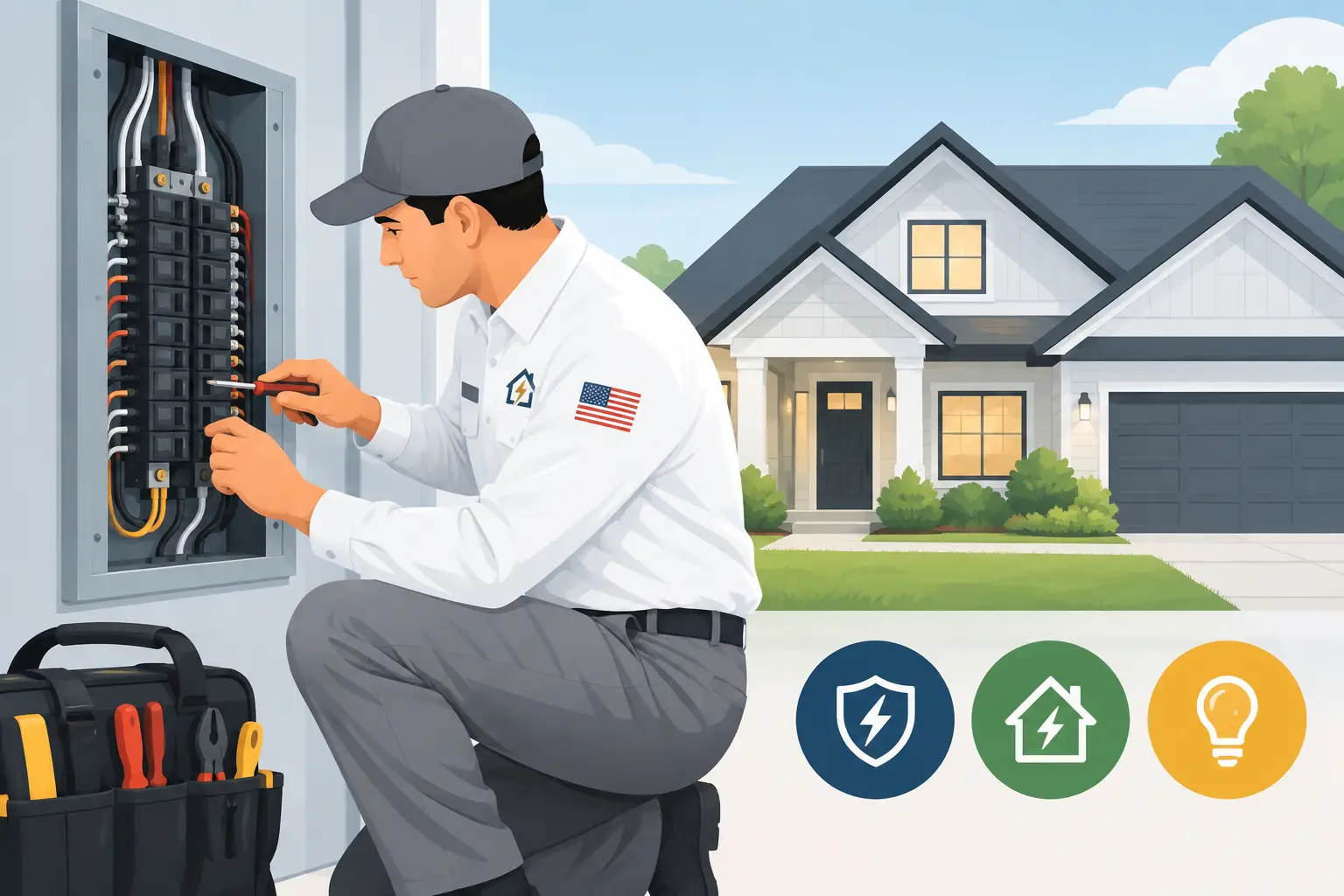
Your electrical panel contains circuit breakers that protect the wiring inside your walls. Each breaker is designed to shut off power when it detects a problem, including too much electrical demand, a short circuit, or a ground fault. That shutdown is called tripping.
A tripped breaker is not necessarily a bad breaker. In many cases, it is doing exactly what it was installed to do: stopping electrical current before overheating damages the wiring or creates a fire risk. Resetting it without considering the cause can lead to repeated outages, damaged equipment, or a more serious electrical failure.
A one-time trip after running a space heater, hair dryer, microwave, and toaster on the same kitchen circuit may point to an overload. A breaker that trips immediately or repeatedly, especially when nothing is plugged in, needs professional diagnosis.
How to Reset Tripped Breakers Safely
Before going to the panel, turn off or unplug the appliances and devices that lost power. This reduces the electrical load when you restore the circuit and helps you identify whether a specific item caused the issue. If a refrigerator, freezer, or essential medical device is affected, avoid repeatedly resetting the breaker just to keep it running. A recurring trip needs attention.
Find the Electrical Panel
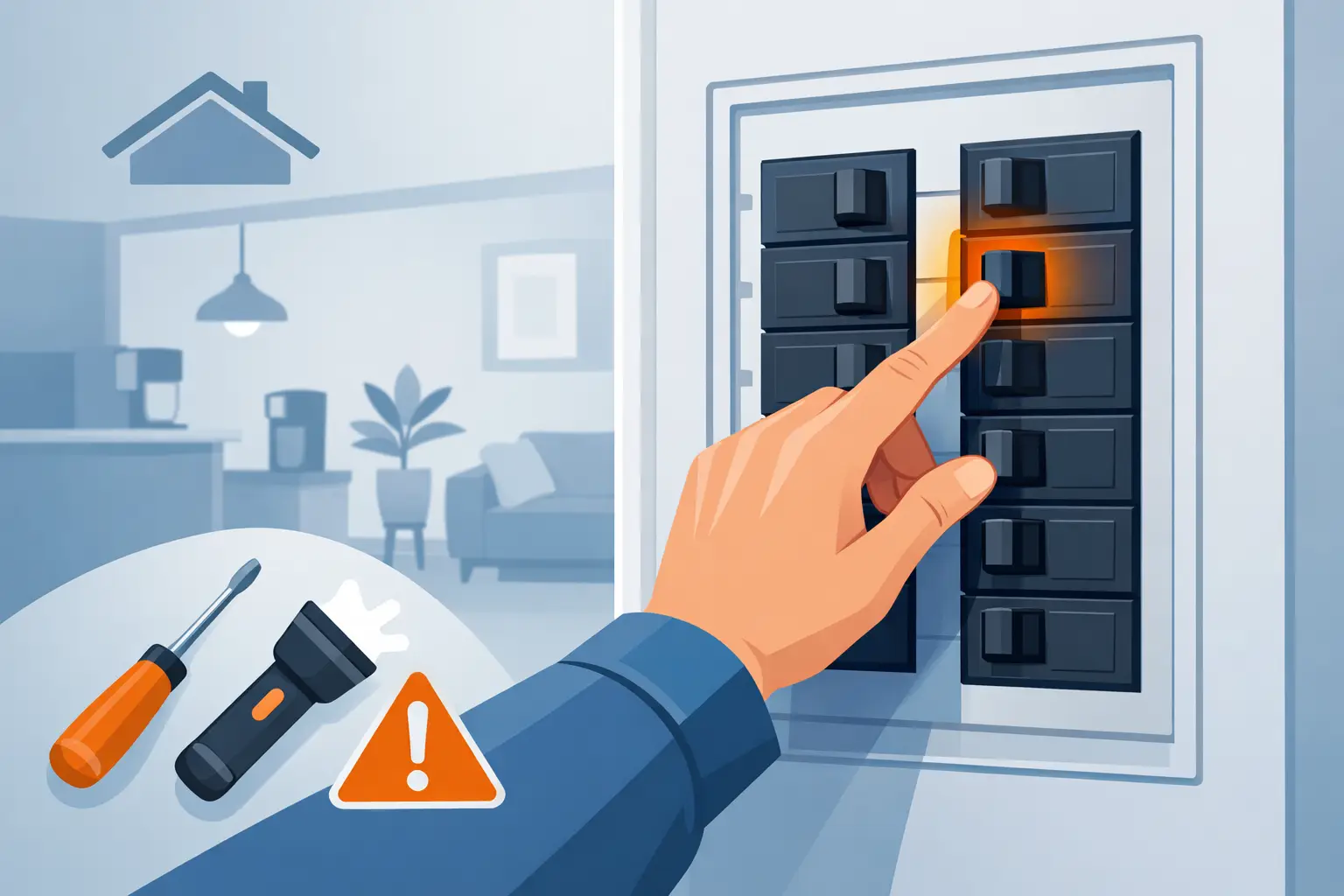
Most homes have a main electrical panel in the garage, utility room, laundry area, basement, exterior wall, or hallway. Use a flashlight if the room is dark. Do not use an open flame, candle, or lighter near the panel.
Open the panel door only. Homeowners should not remove the metal cover inside the panel. Live components may still be exposed behind that cover, even when individual breakers are switched off.
Identify the Tripped Breaker
Look for a breaker that is not lined up with the others. Depending on the panel, a tripped breaker may sit halfway between ON and OFF, show a colored indicator, or be in the OFF position. Panel labels can help identify the affected area, although labels in older homes are not always accurate.
Do not assume the largest breaker is the one you need. A tripped breaker is usually a smaller switch controlling a specific room, appliance, outlet group, or dedicated circuit.
Move It Fully Off Before Turning It On
To reset the breaker, first push its handle firmly all the way to the OFF position. Then move it firmly back to ON. Many breakers will not reset if you simply push them from the middle position toward ON.
Stand to the side of the panel rather than directly in front of it as you reset the breaker. Keep your hands dry, wear shoes with dry soles, and do not touch exposed metal parts. If the breaker remains on and power returns, plug devices back in one at a time rather than turning everything on at once.
Watch What Happens Next
If the breaker holds after you reduce the load, the trip may have been caused by using too many high-wattage devices on one circuit. You may be able to prevent another trip by spreading those appliances across different outlets and circuits.
If it trips again when you reconnect a specific appliance, leave that appliance unplugged. The issue could be a damaged cord, an internal appliance fault, or a circuit that needs repair or upgrading. Do not keep resetting the breaker to test it.
When You Should Not Reset a Breaker
There are times when resetting a breaker is not the safe next step. Leave the breaker off and arrange professional service if you notice any of the following:
- A burning smell, smoke, buzzing, popping, or crackling from the panel, outlets, or walls.
- Heat, discoloration, melted plastic, corrosion, water, or visible damage around the electrical panel.
- A breaker that trips immediately after being reset, even after appliances are unplugged.
- Flickering lights, shocks or tingling from outlets, or multiple circuits losing power at once.
- A panel that feels warm, has loose breakers, or has no clear labeling for critical circuits.
These signs can point to damaged wiring, a loose connection, moisture intrusion, a failing breaker, or an overloaded electrical system. Those are not weekend DIY repairs. Turning a breaker on again can allow a dangerous fault to continue.
If there is active smoke, fire, sparking, or a strong burning odor, move everyone away from the area and call 911. Do not touch the panel or attempt to shut off power if you see flames or if the area is wet.
A Tripped Breaker May Not Be the Only Reset You Need
Sometimes a breaker is on, but an outlet or part of a room still has no power. In bathrooms, kitchens, garages, laundry rooms, exterior areas, and unfinished spaces, look for a GFCI outlet. It has TEST and RESET buttons and may protect other outlets farther down the circuit.
Press the GFCI outlet’s RESET button once. If it will not reset, trips again, or you see damage or moisture, stop there. A GFCI that will not stay reset may be reacting to a ground fault, which requires proper testing to locate safely.
Also consider whether the outage is limited to your home. If neighbors are without power or your entire home has lost electricity, the issue may be related to utility service, the main disconnect, or service equipment rather than one branch-circuit breaker. Do not remove meter equipment or attempt repairs near the service entrance.
Why Breakers Keep Tripping
An overloaded circuit is common, particularly in older homes where one circuit may serve several rooms. Space heaters, portable AC units, hair dryers, air fryers, electric kettles, and garage equipment draw significant power. Plugging several of them into the same circuit can exceed its safe capacity.
But overloads are only one possibility. A short circuit can occur when a hot wire contacts a neutral wire. A ground fault occurs when electricity takes an unintended path to ground, often because of damaged wiring, moisture, or a failing device. Arc-fault breakers may also trip when they sense potentially dangerous arcing in a circuit.
The pattern helps narrow the problem. A breaker that trips only when the microwave runs may indicate a load issue or appliance problem. One that trips during rain could involve moisture in an outdoor outlet, landscape lighting, or exterior wiring. A breaker that trips at random deserves a thorough inspection, even if it resets successfully.
Do Not Replace a Breaker With a Larger One
A bigger breaker is not a fix for an overloaded circuit. Breaker size must match the wire size, circuit design, and connected equipment. Installing an oversized breaker can allow wiring to overheat before the breaker trips.
The right solution may be as simple as repairing a damaged outlet or replacing a failing breaker. In other homes, the better answer is a dedicated circuit for a microwave, garage refrigerator, EV charger, hot tub, or other high-demand equipment. A licensed electrician can test the circuit, explain the cause, and provide clear options before work begins.
Get the Cause Fixed, Not Just the Power Back On
A breaker that trips once after an obvious overload may be easy to reset. A breaker that keeps tripping is a safety signal worth taking seriously. Service Right Electric helps Southern Utah homeowners diagnose circuit issues, repair damaged components, and add the dedicated capacity modern homes need, with straightforward communication and upfront pricing.
If you are unsure why a breaker tripped, leave it off and get it checked. Restoring power matters, but restoring it safely matters more.


0 Comments