
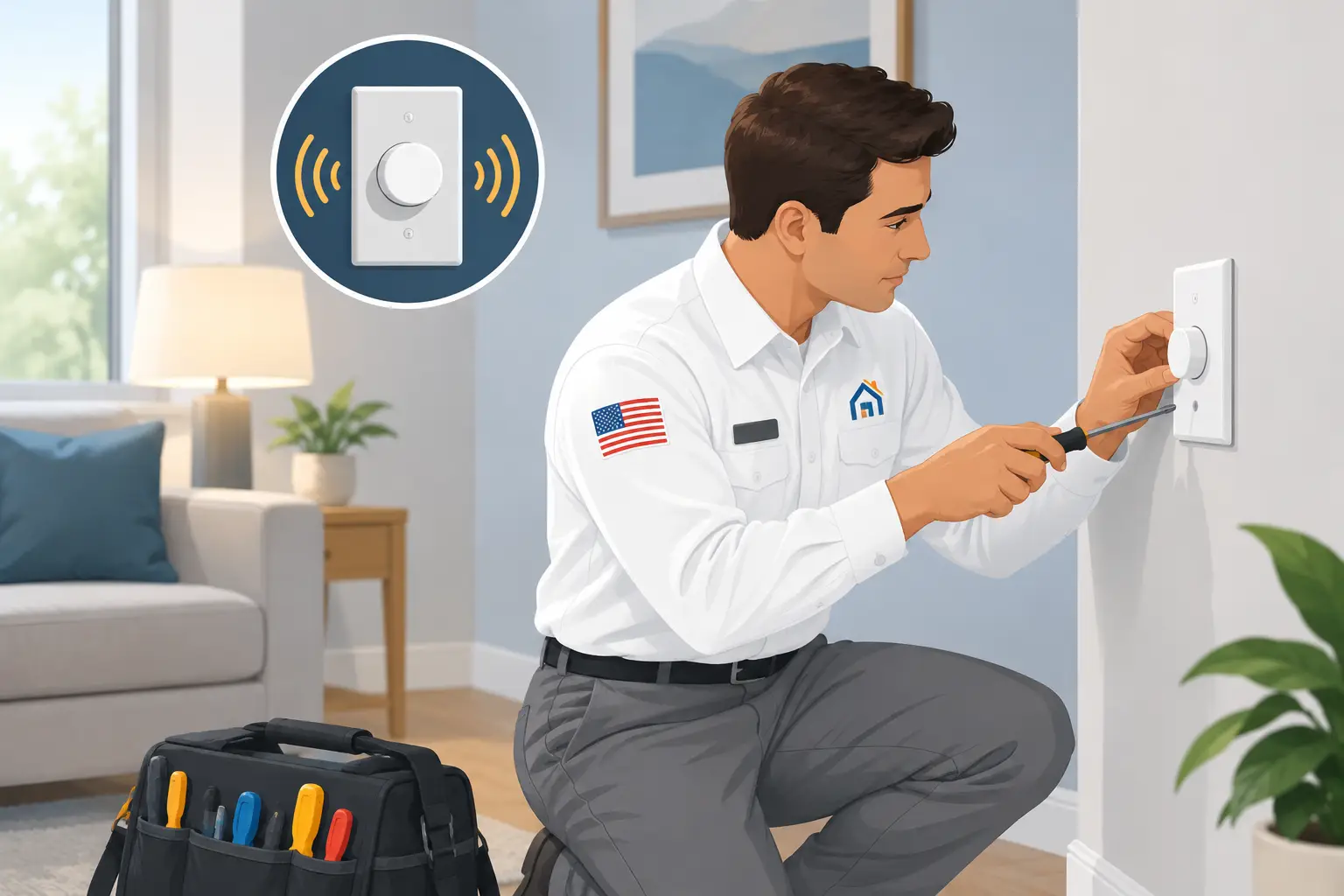
A dimmer that makes a faint sound at one setting can be annoying. A dimmer that suddenly gets loud, feels warm, or comes with flickering lights is a reason to stop and pay attention. So, do dimmer switches buzz? Sometimes – and the sound may come from the switch, the light fixture, or the bulbs themselves.
The right response depends on the type of buzz and what else is happening in the circuit. Some low-level noise is a common side effect of how dimmers control power. Other noises point to incompatible equipment, an overloaded dimmer, loose connections, or a component that should be replaced. Electrical problems are not a weekend DIY project, especially when a switch box or fixture wiring may be involved.
Why Dimmer Switches Can Make Noise
A standard on-off switch sends full power to a light or stops power completely. A dimmer works differently. It rapidly adjusts how much power reaches the light, allowing you to change brightness. That quick electrical switching can create a small vibration in internal components, a lamp driver, or the fixture itself. The vibration becomes an audible hum or buzz.
At low dimming levels, the sound may be more noticeable. You might hear it only in a quiet room, or only when the lights are set around the middle of the dimming range. A soft, steady sound with no heat, odor, flickering, or performance issue is often not an immediate hazard.
Still, “common” does not always mean “something you have to live with.” A properly matched dimmer and compatible bulbs should operate quietly enough that the noise does not distract from a bedroom, dining room, or living space.
The Most Common Causes of a Buzzing Dimmer
Bulbs and dimmers that do not match
Compatibility is the most frequent cause. Not every LED bulb is designed to work with every dimmer. Even bulbs labeled dimmable can buzz, flicker, flash, or drop out at the lowest setting when paired with the wrong dimmer technology.
Older dimmers were often designed around incandescent lighting. Modern LED bulbs use electronic drivers, and those drivers need a dimmer intended for that type of load. A mismatch can make the sound seem like it is coming from the wall switch when the bulb or fixture is actually creating the vibration.
If several bulbs are on the same dimmer, one incompatible bulb can affect the entire group. Replacing bulbs with compatible dimmable models may solve the issue, but it is wise to have the circuit evaluated if the problem began suddenly or includes other warning signs.
An overloaded or underloaded dimmer
Every dimmer has a maximum wattage rating. Exceeding that rating can cause heat, noise, poor performance, and premature failure. This can happen after a lighting update, a fixture change, or the addition of more lamps to a circuit.
The opposite can also be true with some dimmers. A dimmer may require a minimum electrical load to work correctly. When a homeowner replaces a larger incandescent load with a few efficient LEDs, the dimmer may no longer have enough load for stable operation. The lights may buzz or flicker even though the wiring is otherwise sound.
The total load is not always obvious. One switch may control recessed lights, a ceiling fixture, under-cabinet lighting, or outdoor lights together. A licensed electrician can identify the load, confirm the dimmer rating, and recommend the correct control without guessing.
A loose connection or failing device
A buzzing sound that starts out of nowhere deserves more attention than a sound that has been present since installation. Electrical connections can loosen over time, and switches can wear out. A failing dimmer may hum more loudly, become warm to the touch, operate inconsistently, or stop controlling the lights smoothly.
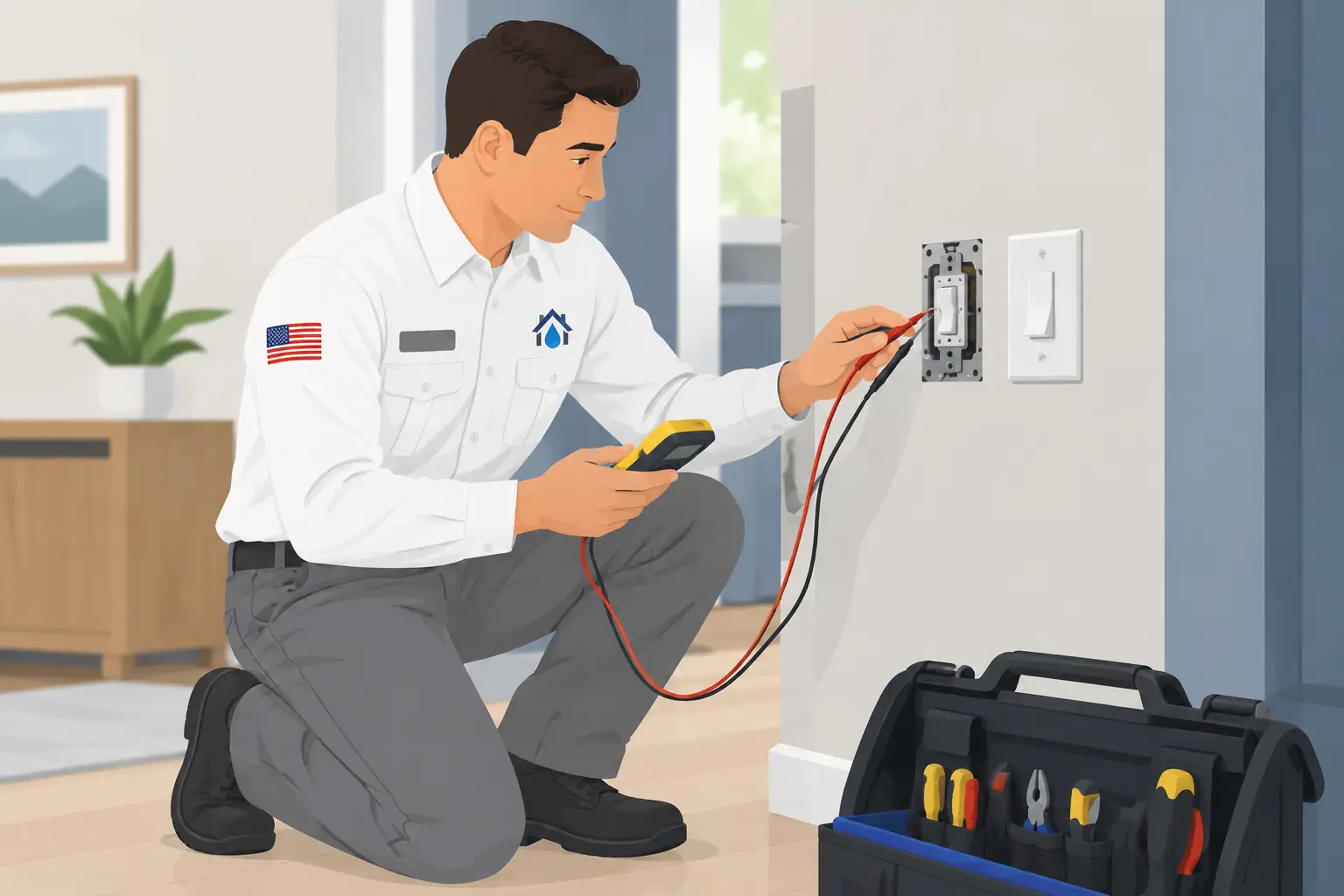
Loose wiring inside a switch box can create resistance and heat. That is not something to diagnose by removing the cover plate and reaching into the box. Turning off a breaker is only one part of safe electrical work. Correct identification of the circuit, proper testing, secure connections, and code-compliant installation all matter.
The fixture, transformer, or light driver is buzzing
Not every “dimmer switch buzz” is actually in the switch. Older low-voltage lighting systems may have transformers that hum under dimmed conditions. Some LED fixtures have built-in drivers that produce noise when the brightness changes. Ceiling fixtures can also amplify a small electrical vibration through metal trim or a glass shade.
A helpful clue is location. Stand near the switch, then near each light fixture while the lights are dimmed. If the sound is clearly louder at one fixture, the fixture or bulb is a more likely source. If the switch itself is loud, warm, or difficult to operate, the dimmer should be inspected.
When a Buzzing Dimmer Is a Safety Concern
Turn the lights off and arrange professional service promptly if you notice a burning smell, discoloration on the switch plate, visible smoke, crackling, sparking, or a switch that feels hot. Do the same if the breaker trips repeatedly, lights flicker throughout the home, or the buzzing continues when the dimmer is at full brightness.
A little warmth can occur with some dimmers because they manage electrical energy, but a hot switch is different. If you cannot comfortably leave your hand on the cover plate, treat it as a warning sign. Do not cover the switch, ignore the issue, or keep raising and lowering the dimmer to test it.
For an active electrical hazard, keep people away from the area and shut off power at the breaker only if you can do so safely. Then call a licensed residential electrician. Fast diagnosis is safer than trying several parts and hoping one fixes the problem.
What You Can Check Without Opening Anything
Homeowners can gather useful information before scheduling service. Notice whether the buzz happens at every brightness level or only at one point. Check whether it affects one bulb, one fixture, or all lights controlled by the dimmer. Also consider whether the issue began after new bulbs, a new fixture, recent remodeling, or a power interruption.
You can also make sure the bulbs are intended for dimming and that none are loose in their sockets. Turn the switch off before touching a bulb, and allow hot lamps to cool first. If the noise remains after checking the obvious external items, do not remove the switch cover or tighten wiring yourself.
These details help an electrician narrow the cause quickly. In many cases, the repair is straightforward: replace an incompatible control, correct the lighting load, repair a connection, or address a noisy fixture component. The important part is identifying the actual source before replacing parts.
Can a Dimmer Be Replaced With a Regular Switch?
Yes, in many situations a dimmer can be replaced with a standard on-off switch if you no longer need adjustable lighting. That can eliminate dimmer-related noise, but it may not solve a buzzing bulb or fixture. It also means giving up the comfort, mood lighting, and energy-saving control that a well-matched dimmer can provide.
For homeowners who want quiet, adjustable lighting, the better fix is often choosing a correctly rated dimmer and compatible bulbs. This matters particularly in bedrooms, nurseries, home offices, and living areas where a persistent hum is hard to ignore.
At Service Right Electric, our employee-owned team helps Southern Utah homeowners get clear answers before work begins. We call, diagnose, and fix – with safe repairs and straightforward communication.
A dimmer should make your home more comfortable, not leave you wondering whether something is wrong behind the wall. If the sound is loud, new, warm, or paired with flickering or burning odors, trust that instinct and have the circuit checked by a qualified electrician.


0 Comments