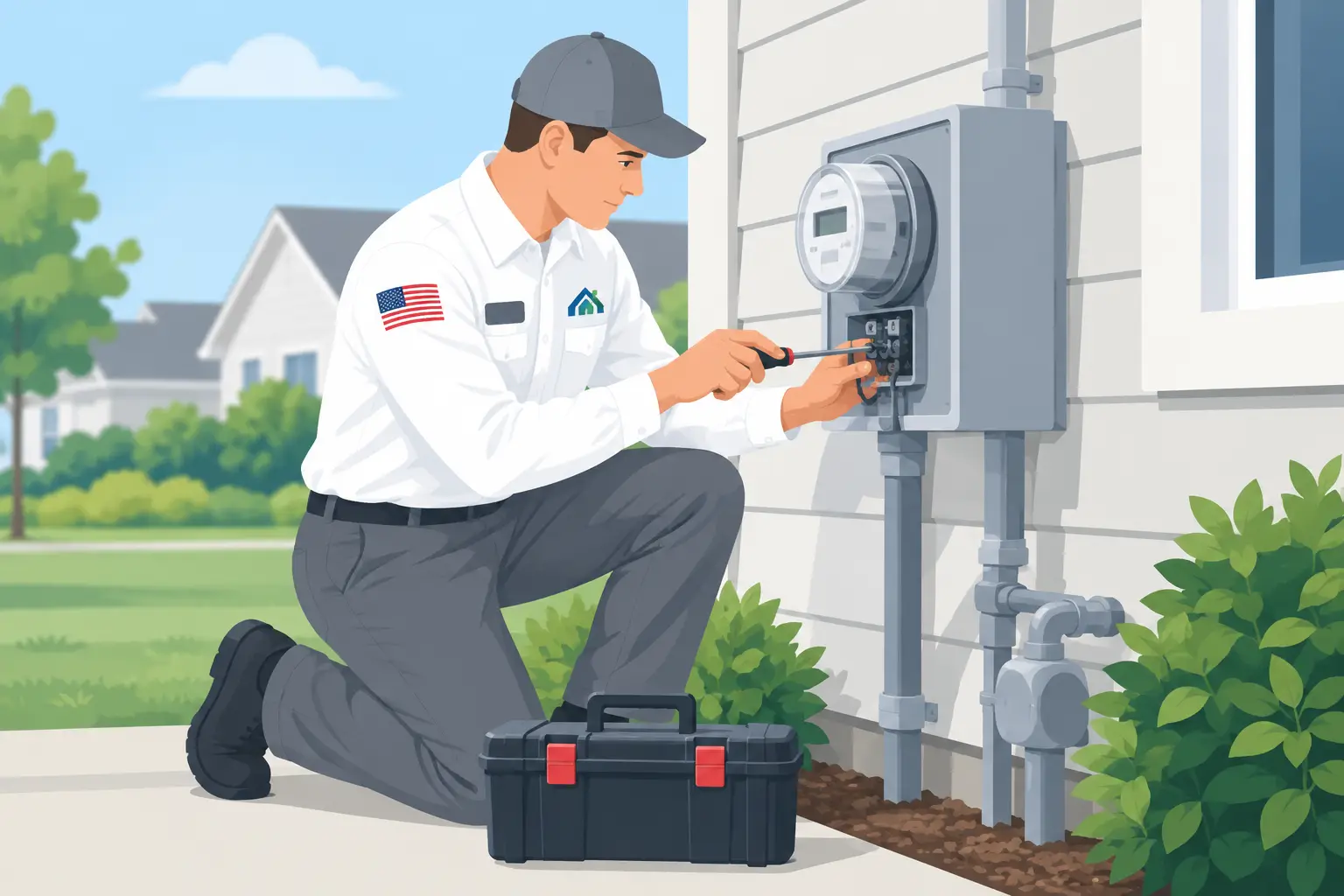
A loose meter base can turn a normal afternoon of running the air conditioner, oven, and laundry into flickering lights, a hot electrical connection, or a partial power outage. These meter equipment repair examples show why the equipment outside your home deserves prompt attention – and why this is not a weekend DIY project.
Your electrical meter records power use, but the surrounding equipment does much more. The meter base, service wires, conduit, weatherhead, grounding components, and main service connections are all part of the path that brings utility power safely into your home. A problem at any point can affect every circuit inside.
What Counts as Meter Equipment?
Homeowners often call the entire assembly “the meter,” but several parts may be involved. The meter itself is typically owned and maintained by the utility. The meter base that holds it, along with certain service entrance equipment on the home, may be the homeowner’s responsibility. The exact division can vary, which is why a licensed electrician coordinates appropriately rather than making assumptions.
A technician starts by identifying where the problem is, who owns that component, and whether the condition presents an immediate hazard. If a repair requires the meter to be removed or power to be disconnected, that work must be planned and handled through the proper process. Never pull a meter, remove a seal, or attempt to tighten connections around live service equipment yourself.
Common Meter Equipment Repair Examples
The symptoms can look small from the ground. The repair behind them may be straightforward, or it may reveal heat damage that needs more extensive correction. Here are situations Southern Utah homeowners commonly encounter.
A loose or damaged meter base
A meter base should sit securely against the exterior wall. If it is pulling away, cracked, corroded, or visibly damaged, moisture and movement can compromise the electrical connections inside. Wind, aging materials, exterior impacts, and long-term exposure to sun can all contribute.
The repair may involve securing or replacing the meter base, correcting the mounting surface, and inspecting the conductors for damage. If heat has affected the terminals, simply tightening the box is not enough. The damaged components need to be evaluated and replaced as needed before service is restored.
Burn marks or heat damage at the meter connection
Discoloration, melted plastic, a burning odor, crackling sounds, or a meter area that feels unusually warm are urgent warning signs. They can point to a loose connection, corrosion, overload, or damaged equipment. Electrical resistance at a poor connection creates heat, and heat can worsen quickly.
A proper repair starts with a safety assessment and controlled shutoff. The electrician inspects the meter socket, lugs, conductors, and related service equipment to determine the source of overheating. Depending on the condition, the solution may include replacing damaged terminals, conductors, or the entire meter base.
If you see smoke, active sparking, or flames, keep clear of the area, call emergency services if necessary, and contact your utility. Do not spray water on electrical equipment.
Water entering the service equipment
Rain does not have to enter the home to cause an electrical problem. Water can reach meter equipment through a damaged cover, deteriorated seal, open conduit, failed flashing, or an issue higher up at the service entrance. Over time, moisture encourages corrosion and can degrade insulation.
Repairs may include replacing weather-damaged equipment, sealing approved entry points, correcting conduit connections, and replacing corroded parts. The goal is not to cover up the problem with caulk. It is to restore an enclosure that protects electrical connections while meeting applicable code requirements.
Damaged service mast, conduit, or weatherhead
The service mast and weatherhead help route overhead utility conductors into the home safely. A bent mast after high winds, a cracked conduit, or a weatherhead that has shifted can strain conductors and expose the system to weather. This is especially concerning when the service wires appear low, loose, or close to a roofline or tree limb.
This type of work often requires coordination because the utility-side conductors may need to be disconnected before repairs can be completed. An electrician can repair or replace the customer-owned service equipment, verify proper support and clearances, and help make sure the installation is ready for the utility’s part of the process.
Corroded or undersized service connections
Older homes sometimes have equipment that was adequate for the original electrical load but is now strained by modern living. Air conditioning, kitchen appliances, pool equipment, workshop tools, hot tubs, and EV charging can add substantial demand. Corrosion can also affect older connections, particularly where water has entered an enclosure.
The right repair depends on the cause. A damaged connection may need targeted replacement. If the service equipment is undersized or the panel is already at its limit, the safer long-term answer may be a planned service or panel upgrade rather than repeated temporary repairs. A professional diagnosis separates a connection problem from a capacity problem.
Signs You Should Call for Meter Equipment Repair
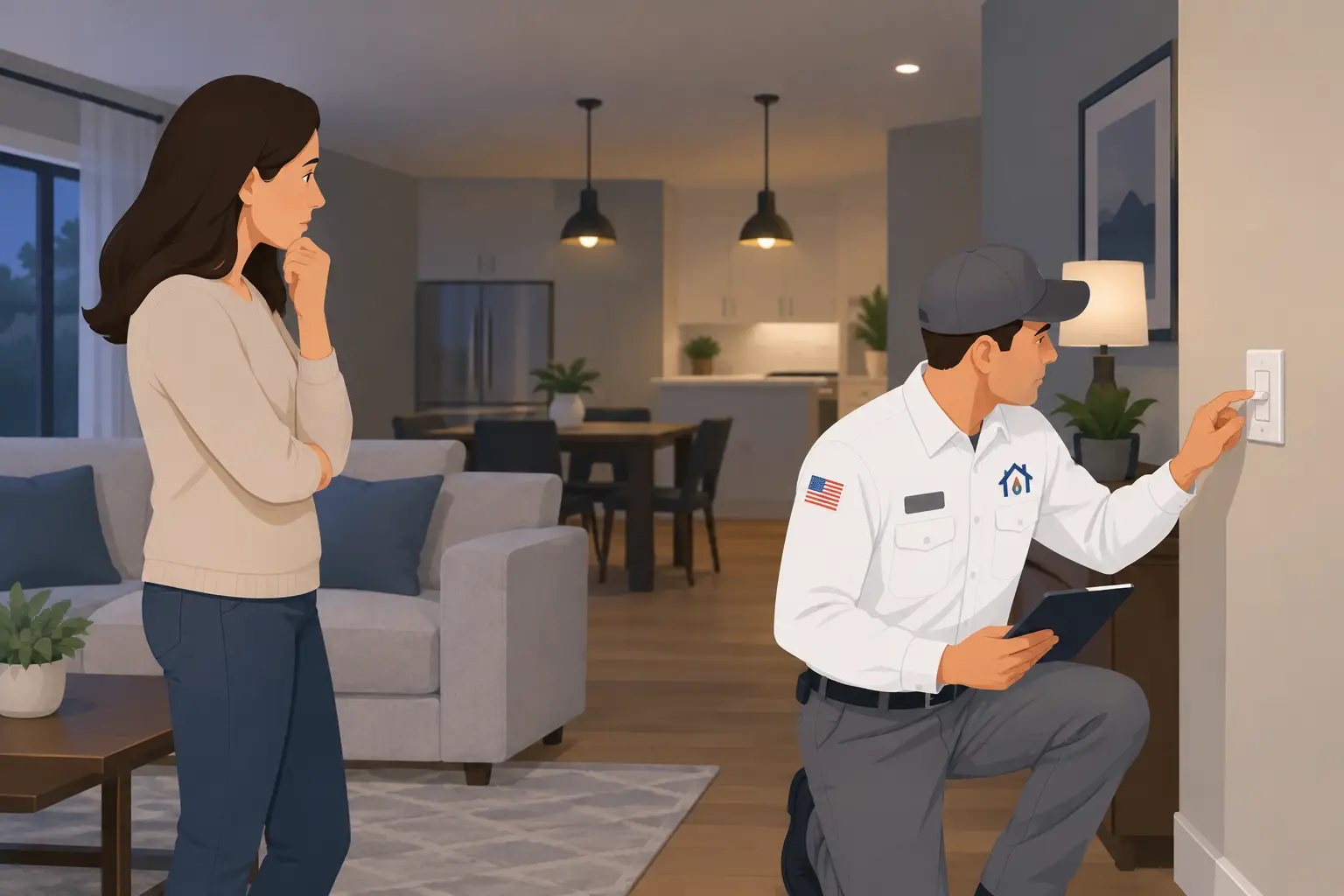
You do not need to diagnose the equipment from the sidewalk. You do need to take unusual electrical behavior seriously. Call for an inspection if you notice repeated flickering throughout the house, lights that brighten and dim when large appliances start, unexplained partial power loss, a tripped main breaker, or corrosion and physical damage around the meter.
Also pay attention after storms, construction work, vehicle impact, roof work, or tree damage near the service line. A meter area can look mostly intact while an internal connection has loosened. If the problem affects several rooms or the entire home, the source may be upstream of individual branch circuits.
A utility outage can cause similar symptoms, so checking whether neighbors have lost power may provide useful context. Still, do not delay a service call when you see heat, arcing, burning smells, or visible equipment damage.
Why Meter Repairs Require a Licensed Electrician
Meter equipment is close to the point where utility power enters the property. Even when the main breaker is off, parts of the service equipment may remain energized. That is a major difference between replacing a light fixture and addressing a damaged meter base.
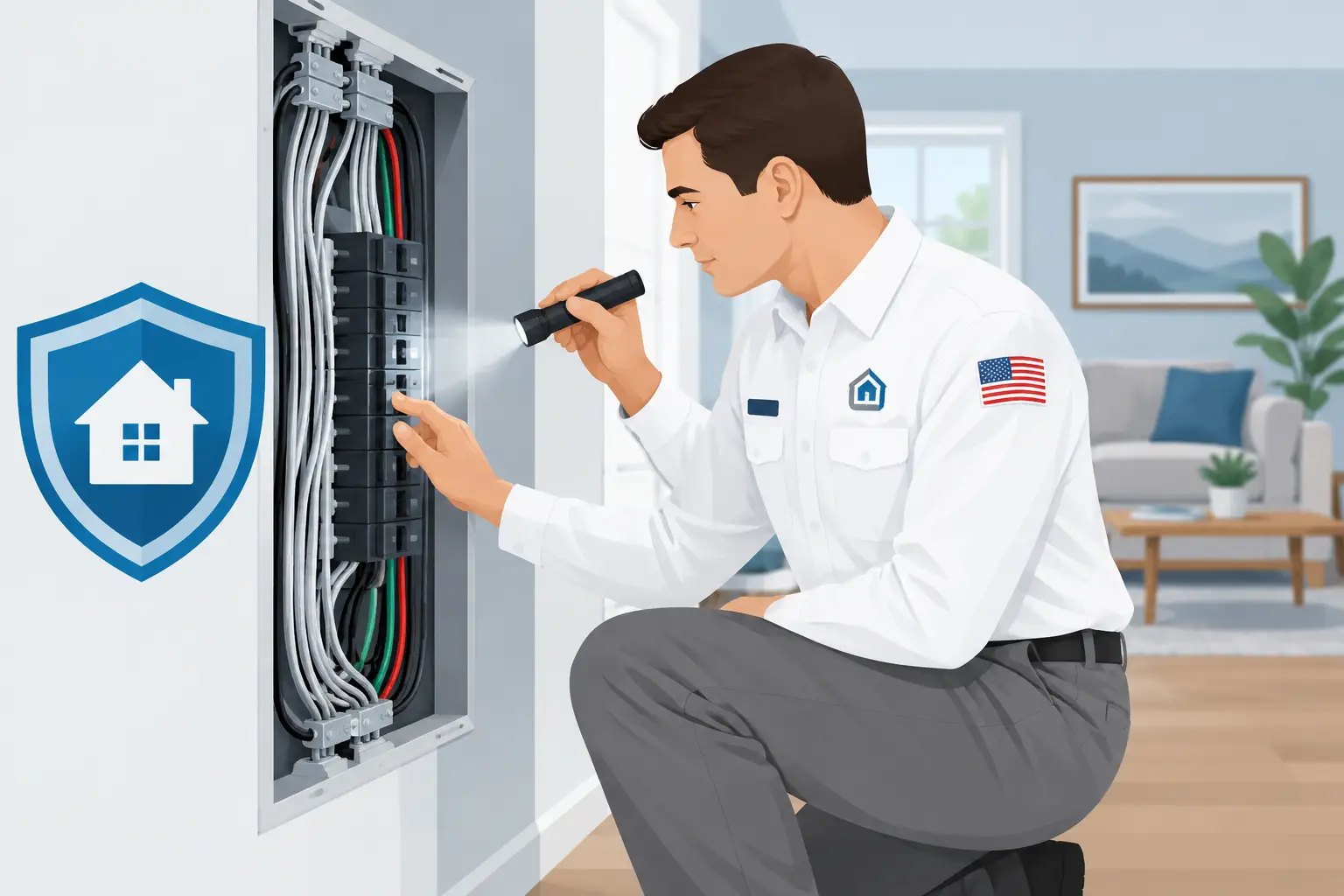
Safe repair work may require utility coordination, service disconnection, code-compliant replacement materials, load calculations, grounding verification, and inspection planning. It also requires the judgment to recognize when a problem belongs to the utility and when it belongs to the home’s electrical system.
At Service Right Electric, our process is simple: Call. Diagnose. Fix. Our licensed residential electricians explain what they find, discuss the repair before work begins, and provide clear upfront pricing. As employee-owners and Southern Utah neighbors, we focus on repairs that protect your home and address the actual cause of the issue.
What to Do While You Wait for Help
Keep people, pets, ladders, and tools away from damaged meter equipment. Avoid touching the meter, conduit, service wires, or anything wet near the area. If lights are flickering or power is unstable, turn off sensitive electronics and avoid running large appliances until the system has been assessed.
If there is no immediate danger, a photo taken from a safe distance can help document visible damage for the electrician. Do not open the meter enclosure to get a better picture. The safest next step is a professional evaluation that identifies the responsible component and returns your home’s service equipment to safe operating condition.
Electrical problems at the meter rarely improve with time. A quick call when you first notice heat, damage, or unstable power can prevent a more disruptive outage and help keep your home safely powered.


0 Comments