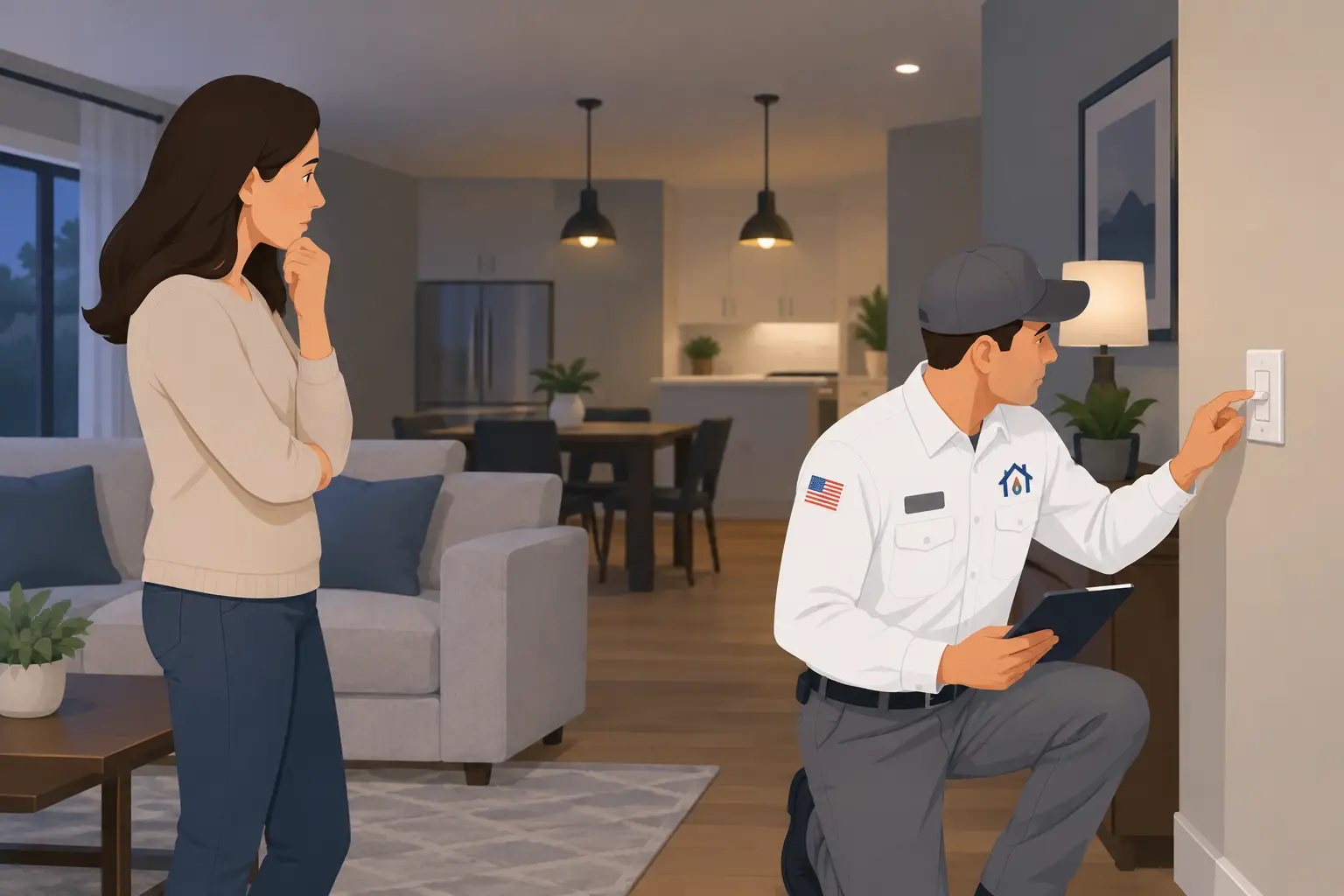
A light that briefly dims when the air conditioner starts may seem like a minor annoyance. But if you are wondering why lights are dimming regularly, in several rooms, or alongside other electrical problems, your home may be telling you something worth checking.
Some dimming is normal. Other patterns point to a loose connection, an overloaded circuit, a failing electrical panel, or a problem outside the house. The key is noticing when it happens, what else is running, and whether any warning signs are present.
When Dimming Lights Are Normal
Most homes experience a small, momentary dip in brightness when a large motor-driven appliance turns on. Air conditioners, refrigerators, washing machines, garbage disposals, well pumps, and similar equipment need a stronger burst of power to start. That startup demand can cause nearby lights to dim for a split second.
A brief dip on the same circuit as the appliance is usually not an emergency. Still, it can be a clue that a circuit is working hard, especially in an older home or a home that has added more electrical demands over time.
The situation deserves more attention when lights dim deeply, stay dim, flicker repeatedly, brighten unexpectedly, or affect rooms throughout the home. Those patterns are not something to solve by replacing bulbs and hoping for the best.
Why Lights Are Dimming: Common Causes
The cause often depends on whether the issue affects one light, one area, or the entire home. An electrician diagnoses the source by looking at the wiring, circuits, panel, fixtures, and service equipment rather than making assumptions from one symptom alone.
A Loose Bulb or Fixture Connection
If one light is flickering or dimming, start with the simple possibilities. A bulb that is not fully seated, a worn-out bulb, or a poor connection within the fixture can cause inconsistent light output.
Turn off power to the fixture before touching anything beyond the bulb. If a new, properly installed bulb does not solve the issue, the fixture wiring, switch, or connection box may need professional attention. Loose electrical connections can create heat, and that is not a weekend DIY project.
An Overloaded Circuit
A circuit has a limited capacity. When too many appliances, devices, and lights share that circuit, voltage can dip as equipment turns on. You may notice lights dimming when you use a microwave, hair dryer, space heater, vacuum, or portable air conditioner.
This is especially common in kitchens, bathrooms, garages, additions, and older homes that were not designed for modern power use. The proper fix may be redistributing loads, adding a dedicated circuit, or upgrading electrical equipment. Repeatedly resetting a breaker or using extension cords to work around the problem only hides the underlying issue.
Loose Wiring Connections
Loose connections can occur at a switch, outlet, light fixture, junction box, breaker, meter equipment, or utility connection. As electricity passes through a loose connection, resistance can build. That may lead to dimming lights, flickering, buzzing, warm outlets, or a burning odor.
This is one of the more serious reasons lights dim. Electrical arcing and overheating can develop where a connection is compromised. Do not remove panel covers or attempt to tighten service connections yourself. Shut off power if it is safe to do so, avoid using the affected area, and call a licensed electrician.
A Failing Breaker Panel or Aging Electrical System
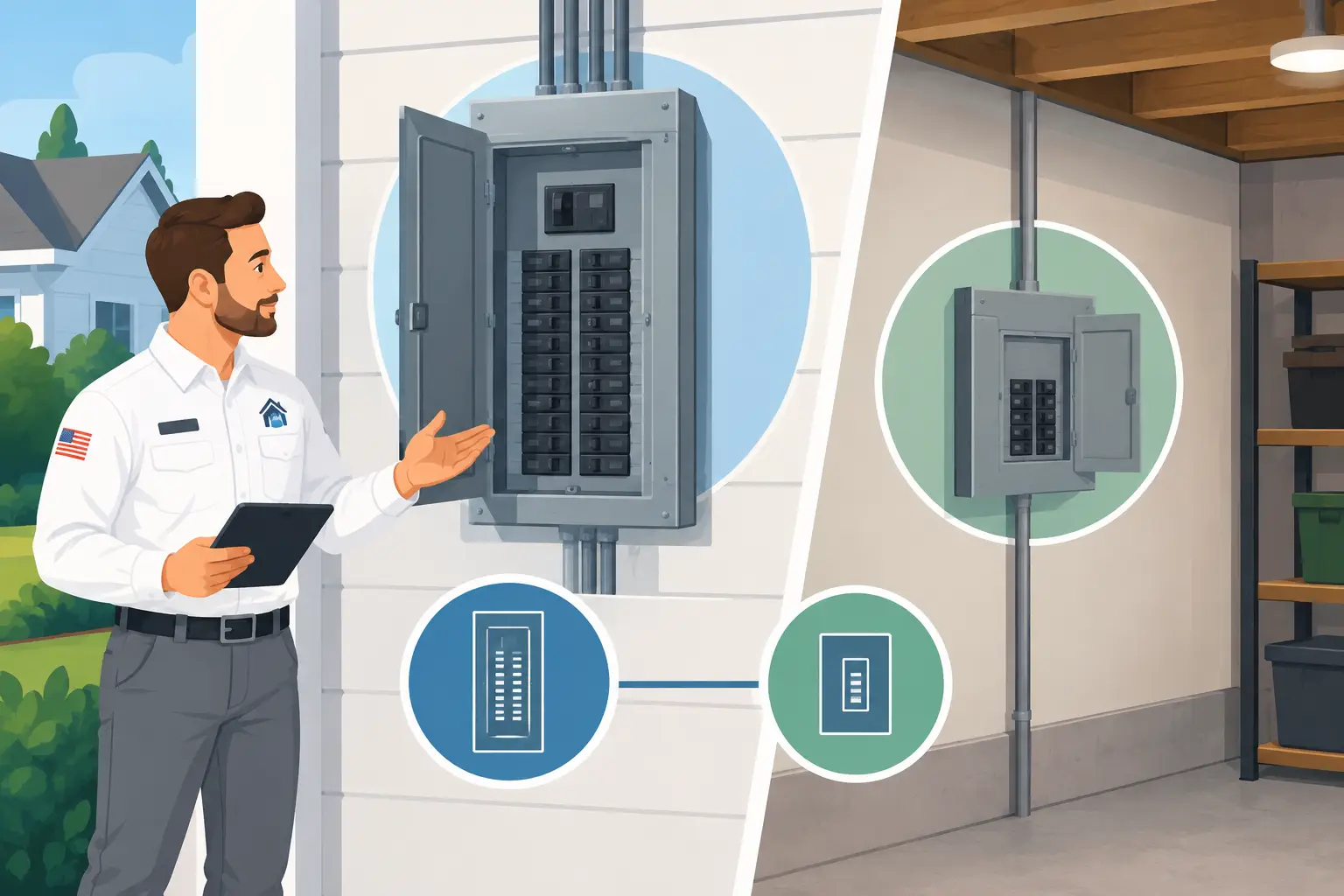
Breakers, bus bars, wiring, and panel connections do not last forever. Older panels may struggle with the electrical load of a home that now includes more electronics, larger HVAC equipment, garage tools, hot tubs, or an EV charger.
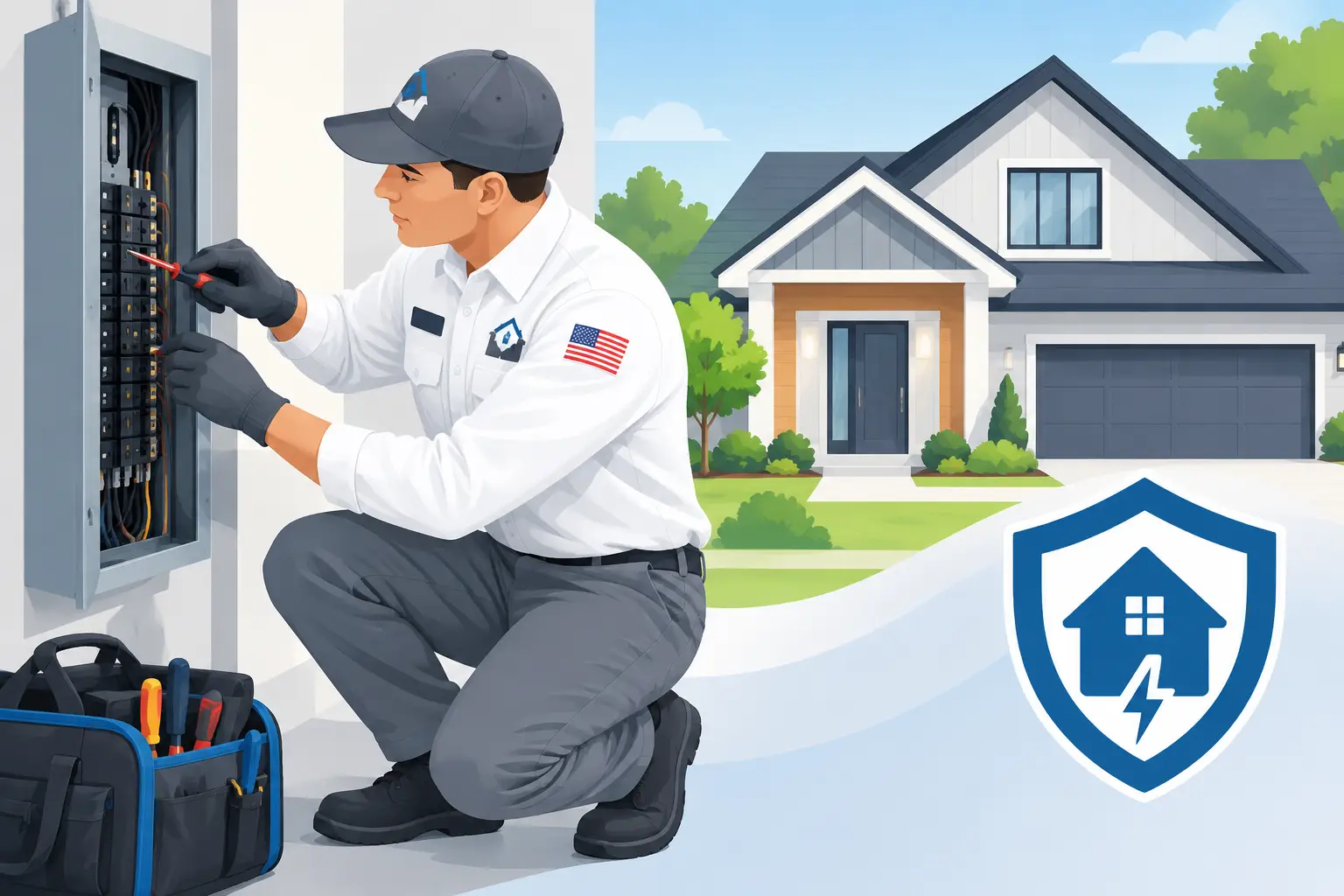
Dimming may appear alongside breakers that trip often, outlets that stop working, or circuits that feel overloaded. An electrical panel assessment can determine whether the concern is a specific breaker or connection, or whether the home needs a broader upgrade to support its current load safely.
Utility Service Problems
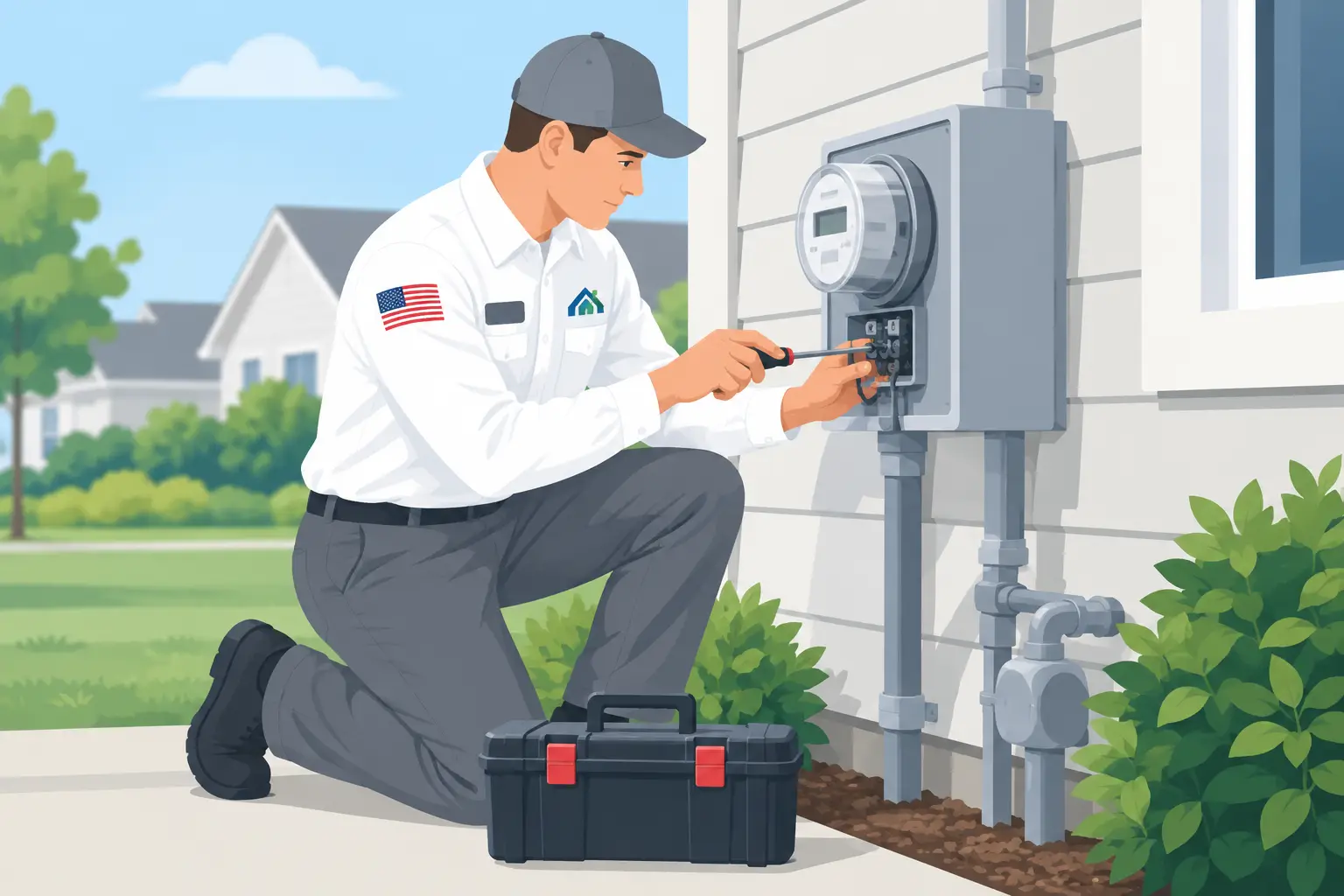
If lights in multiple rooms dim or brighten at the same time, the issue may be connected to the incoming electrical service rather than one branch circuit. A damaged service line, meter connection problem, or utility-side issue can affect the whole home.
Pay close attention if lights become unusually bright as well as dim. Sudden voltage changes can damage sensitive electronics and appliances. An electrician can inspect the home-side equipment and help identify whether the utility provider also needs to be involved.
Large Appliances Starting Up
An appliance that creates a noticeable, repeated dimming event may be drawing more startup current than expected. Sometimes the electrical circuit is undersized or shared improperly. In other cases, the appliance itself may have a motor or electrical component that needs service.
The goal is not to guess which trade is responsible. A qualified electrical diagnosis can confirm whether the voltage drop originates in the home’s wiring and circuits or whether the appliance should be evaluated separately.
Warning Signs That Need a Fast Response
Dimming lights become a safety concern when they appear with signs of heat, damage, or unstable power. Turn off the affected circuit if you can do so safely and arrange professional service promptly if you notice a burning smell, smoke, sparks, buzzing from a panel or outlet, discolored wall plates, warm switches, or frequent breaker trips.
Treat whole-home flickering or lights that brighten and dim unpredictably with urgency. Avoid running major appliances until the issue is assessed. If there is active sparking, smoke, or fire, leave the area and contact emergency services first.
For Southern Utah homeowners, summer heat can add another layer to the problem. When air conditioning systems run heavily, an already strained circuit or aging panel may reveal itself through dimming lights or nuisance breaker trips. The heat is not necessarily the root cause, but high demand can expose an electrical weakness that has been developing quietly.
What You Can Safely Check Before Calling
You do not need to troubleshoot inside electrical boxes to provide useful details to an electrician. Notice whether the problem affects one fixture, one room, or the entire house. Make a note of what is running when the dimming occurs and whether breakers have tripped recently.
You can also replace a questionable bulb with the correct type and make sure it is seated properly, provided the fixture is switched off and cool. Beyond that, stop at the safe boundary. Do not open your electrical panel, remove outlet covers, or try to repair damaged wiring.
A clear description helps speed up the diagnosis: “The kitchen lights dim every time the microwave starts,” for example, is different from “Every room gets brighter and dimmer throughout the day.” Both deserve attention, but they point an electrician toward different possible causes.
The Right Fix Depends on the Diagnosis
There is no single repair for dimming lights. A loose fixture connection may need a straightforward repair. A heavily loaded circuit may need a dedicated circuit. A panel issue may call for replacement components or a larger electrical upgrade. If the problem is at the utility connection, the repair path can involve both an electrician and the power provider.
That is why a professional diagnosis matters. Replacing switches, bulbs, or breakers without finding the actual source can waste time and leave a safety issue unresolved. Service Right Electric follows a simple approach: call, diagnose, fix. You receive a clear explanation of what is found and upfront pricing before repair work begins.
Dimming lights are easy to ignore when they only happen for a second. Pay attention to the pattern instead. A small change in brightness may be normal, but repeated, widespread, or severe dimming is your cue to have a trained residential electrician check the system before a minor symptom becomes a bigger disruption.


0 Comments