A breaker that trips when the microwave, air conditioner, or garage tools run at the same time is more than an inconvenience. It can be a sign your home needs more electrical capacity or a better way to distribute the capacity it already has. The main panel versus subpanel question comes up often during home upgrades, but the right answer depends on your existing electrical system, the new equipment you want to add, and how power is used throughout the house.
For Southern Utah homeowners, this decision often appears alongside practical projects: an EV charger, hot tub, workshop, casita, addition, or standby generator. A licensed electrician can inspect the whole system, explain what is limiting your options, and recommend the safest path forward.
What a Main Electrical Panel Does
Your main electrical panel is the central distribution point for your home’s electricity. Power enters the home from the utility service and reaches this panel first. From there, individual breakers send electricity to branch circuits serving lights, outlets, appliances, heating and cooling equipment, and other electrical loads.
The main panel also contains the main disconnect in many homes. That disconnect allows power to the house to be shut off quickly during an emergency or while electrical work is being completed. Because it is connected to the incoming utility service, work inside or around a main panel carries serious shock, fire, and code-compliance risks. This is not a weekend DIY project.
A main panel has a finite service capacity and a finite amount of physical space for breakers. Those are related, but they are not the same issue. A panel can have empty breaker spaces while the home’s electrical service is already too small for a major new load. On the other hand, a home may have adequate service capacity but no practical room left for additional circuits.
What a Subpanel Does
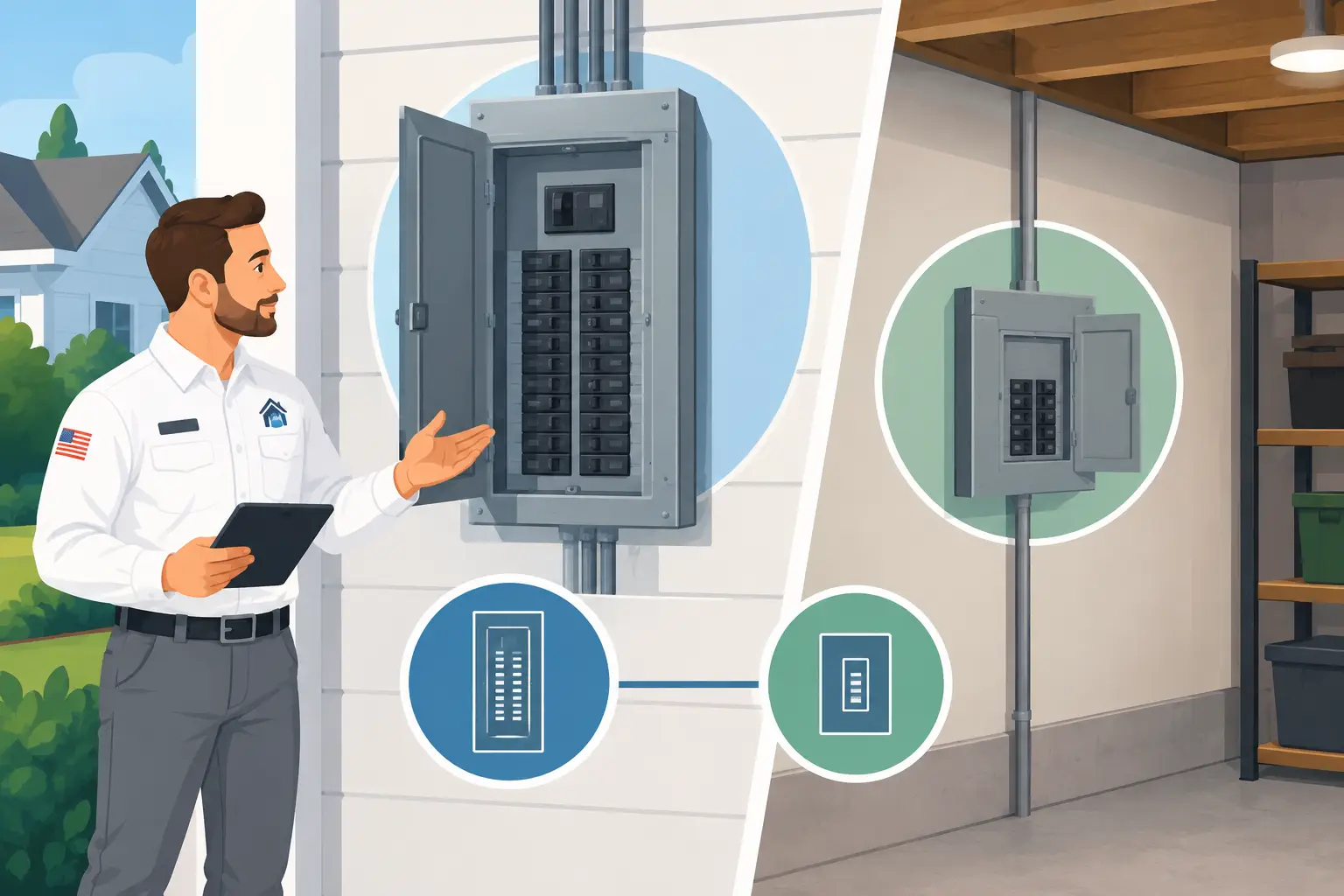
A subpanel is a smaller distribution panel fed from the main panel by a dedicated feeder. It does not receive utility power directly. Instead, it takes power from the main service and divides it into additional circuits closer to where those circuits are needed.
For example, a subpanel may serve a detached garage, workshop, pool area, home addition, or casita. It can also be useful in a large home where several new circuits are planned on one side of the property. Rather than running every new branch circuit all the way back to the main panel, an electrician can run one properly sized feeder to the subpanel and distribute circuits from there.
A subpanel can make a system more organized and more convenient to service. It does not automatically increase the amount of power available to the home. That distinction is the heart of the main panel versus subpanel decision.
Main Panel Versus Subpanel: The Key Difference
Think of the main panel as the home’s electrical headquarters and a subpanel as a well-planned local branch office. The main panel manages the incoming electrical service. A subpanel manages selected circuits that are supplied by the main panel.
If the concern is physical space, circuit organization, or supplying a separate area of the property, a subpanel may be a smart solution. If the concern is that the home does not have enough overall capacity for its current or planned electrical demand, the main service and main panel may need to be upgraded instead.
Sometimes the answer is both. A homeowner may need a larger main service to support new high-demand equipment and a subpanel to distribute circuits efficiently to a garage, addition, or detached structure. The correct design starts with a load calculation and an on-site evaluation, not a guess based on the number of open breaker spaces.
When a Main Panel Upgrade May Be Needed
A main panel upgrade is often considered when an older home has limited electrical service, obsolete equipment, visible corrosion or damage, repeated overload concerns, or a panel that cannot safely support planned improvements. It may also be needed when a homeowner is adding several substantial electrical loads at once.
Common projects that can affect service capacity include EV charging, electric vehicle-ready garages, hot tubs, saunas, electric appliances, larger HVAC equipment, and additions. One new item does not always require a service upgrade. The details matter, including the equipment’s electrical requirements and what else is already running in the home.
Warning signs deserve prompt attention. Call a licensed electrician if you notice breakers that trip repeatedly, a panel that feels unusually warm, buzzing sounds, flickering lights throughout the home, a burning smell, rust or moisture around the panel, or breakers that will not reset. Do not remove the panel cover or attempt to replace a breaker yourself.
When a Subpanel Makes More Sense
A subpanel is often the practical choice when the main panel has adequate service capacity but the home needs additional circuits in a concentrated location. It can reduce long circuit runs and provide a nearby place to shut off power for work in that area.
A detached garage is a common example. If you plan to add lighting, receptacles, a door opener, a mini-split, tools, or future EV charging, a properly designed subpanel can provide room to grow. The same approach can work well for a backyard structure, finished basement, major remodel, or separate living space.
A subpanel can also help when the main panel is full but the home’s calculated demand remains within the available service capacity. However, installing a subpanel is not simply a way to bypass an overloaded main panel. The feeder, breaker, grounding and bonding, wiring method, panel rating, and available capacity must all be sized and installed correctly.
Why Proper Sizing Matters
Electrical panels are not sized by counting appliances or adding up every label in the house. A professional load calculation considers how electrical loads are expected to operate, including the difference between continuous loads, fixed appliances, heating and cooling equipment, and general-use circuits.
This matters because electrical systems must be designed for safe real-world use, not just for what appears to fit on paper. An undersized feeder to a subpanel can create nuisance tripping and overheating concerns. An improperly sized main panel can limit future upgrades or leave a home relying on unsafe workarounds such as overloaded power strips and extension cords.
Southern Utah homes also place unique demands on electrical systems. Long cooling seasons, outdoor living spaces, garage equipment, and growing interest in electric transportation can all change a home’s load profile. Planning for the next project while completing the current one may save disruption later, but oversizing without a clear need is not automatically the best answer either.
Safety and Code Details You Should Not Have to Guess
Panel work involves more than installing a box and adding breakers. Electrical codes govern clear working space around panels, circuit protection, conductor sizing, grounding and bonding, labeling, panel locations, outdoor equipment, and detached buildings. Local permitting and inspection requirements may also apply.
Details that look small can have major safety consequences. In a subpanel, for instance, neutral and ground conductors are handled differently than they are at service equipment. Incorrect bonding can create dangerous conditions. Double-tapping breakers, using incompatible equipment, covering wiring problems with a larger breaker, or crowding a panel beyond its listing are all shortcuts that can put a home at risk.
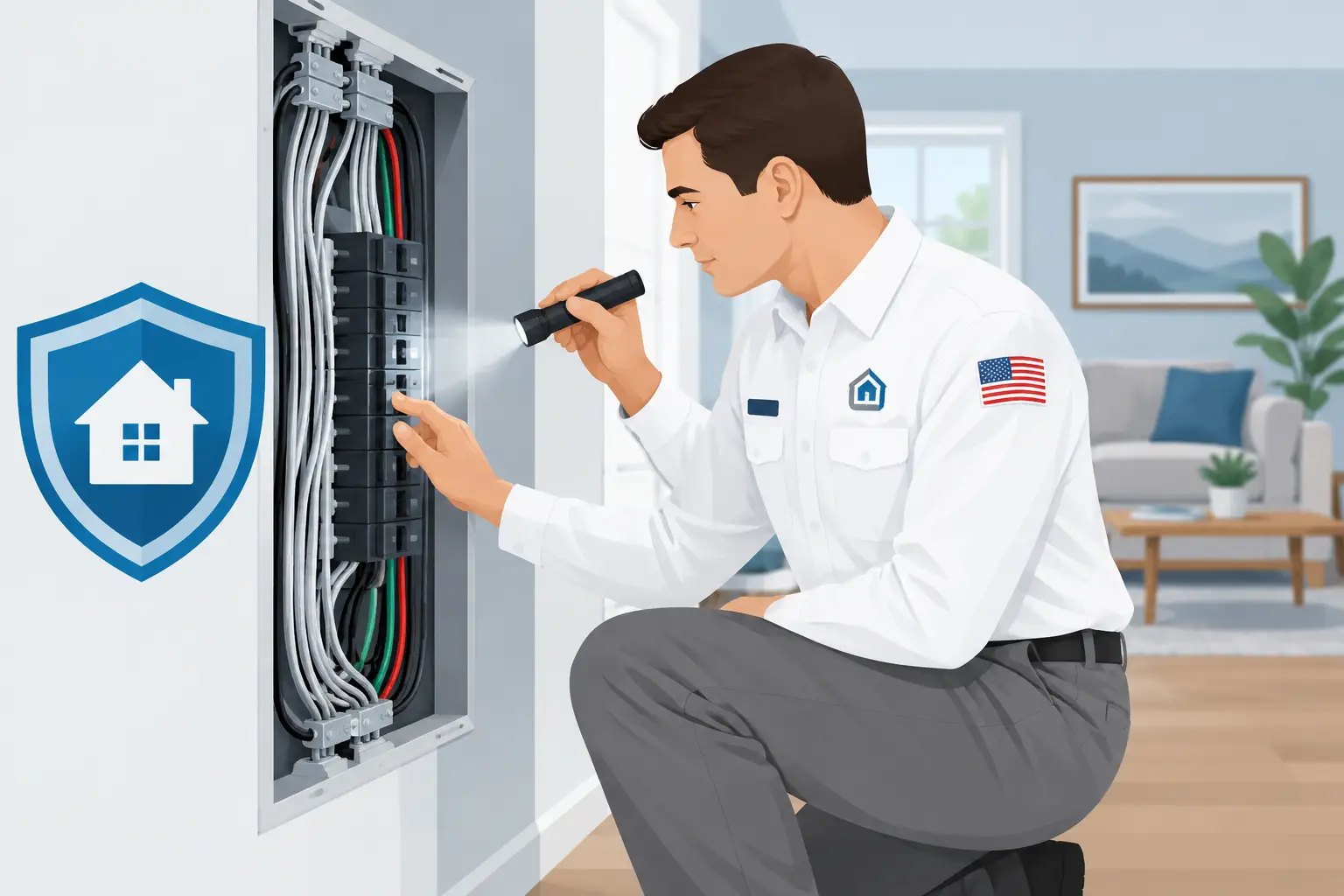
A qualified residential electrician will inspect the condition of the existing equipment before recommending a panel or subpanel. That includes checking for signs of heat damage, loose connections, outdated components, improper previous work, and capacity limits. You should receive a clear explanation of the recommended scope before work begins.
Questions to Ask Before You Add a Panel
Before scheduling an installation, consider what the panel needs to support now and what you may add in the next few years. A garage that needs only lights today may later need an EV charger. A patio project may later include a hot tub. An addition may need more than outlets and overhead lighting.
It also helps to identify your actual problem. Are breakers tripping because of one overloaded circuit? Is the main panel out of spaces? Are you planning a new high-demand appliance? Is a detached building being renovated? These situations can look similar from the homeowner’s perspective, but they can call for very different solutions.
Service Right Electric follows a straightforward process: call, diagnose, and fix. Our licensed technicians assess the system, explain the options in plain language, and provide upfront pricing before work begins. As employee-owners and Southern Utah neighbors, we focus on safe residential electrical work that supports how your home is actually used.
The best panel decision is not necessarily the biggest panel or the quickest workaround. It is the solution that safely supports your household today, leaves room for sensible plans tomorrow, and gives you confidence every time you switch on the power.


0 Comments