
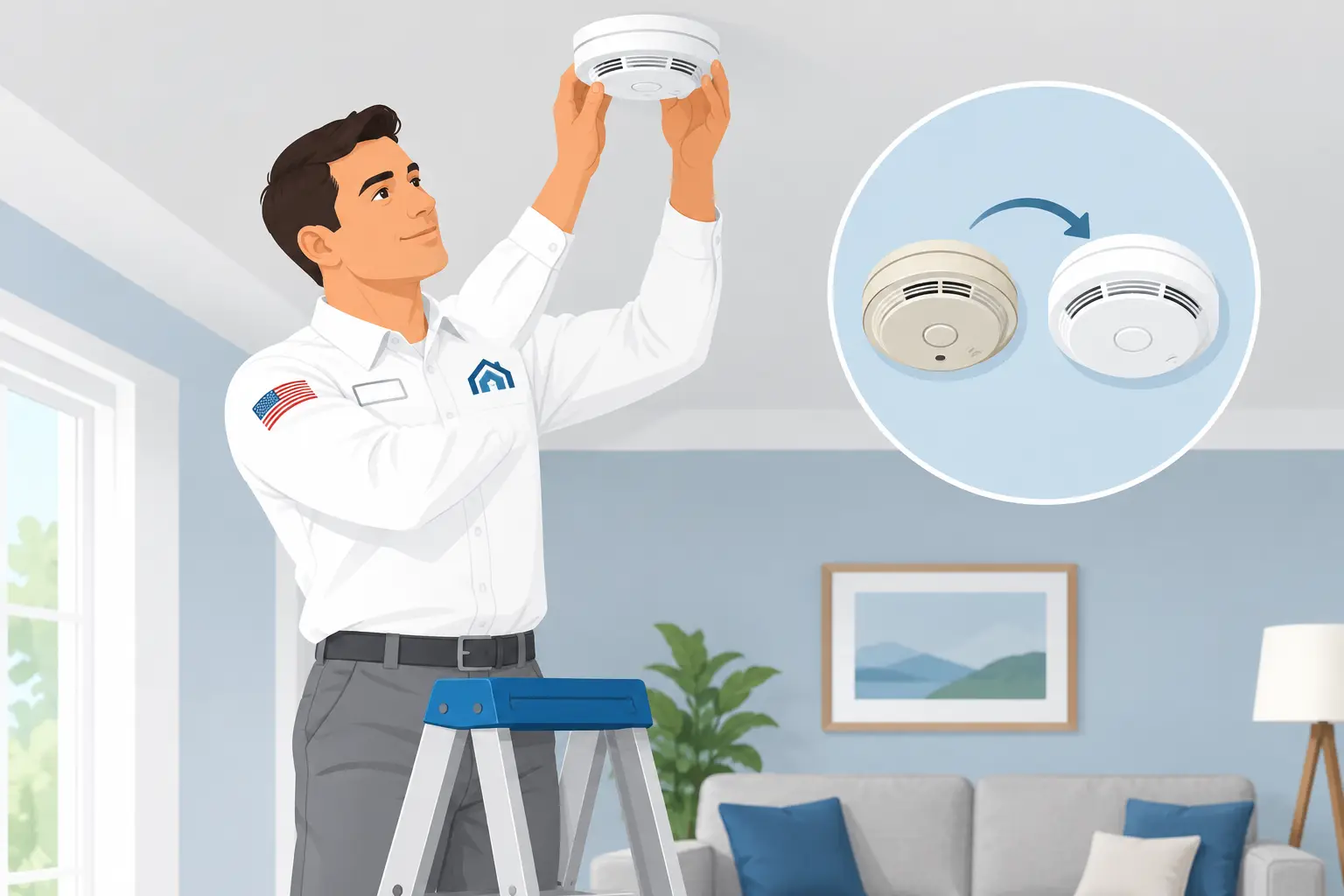
A smoke alarm that chirps at 2 a.m. is frustrating. A smoke alarm that stays silent when it should sound is far more serious. Smoke alarm replacement is one of the simplest ways to protect your family, but it is often put off because the devices are easy to overlook when they appear to be working.
For many Southern Utah homeowners, the question is not whether a smoke alarm still makes noise during a test. It is whether the alarm is old, correctly located, properly powered, and connected to the rest of the home the way it should be. A licensed residential electrician can assess the entire system, explain what needs attention, and complete the work safely.
When Does a Smoke Alarm Need Replacement?
Most residential smoke alarms are designed to be replaced after about 10 years. The sensing components inside the device wear out over time, even when the alarm looks clean and passes a basic button test. Check the manufacture date printed on the back or side of the alarm. If it is approaching or past 10 years, replacement should be scheduled.
Age is not the only reason to act. An alarm that chirps after a fresh battery is installed, goes off randomly, fails its test button, has discoloration, or has visible damage should be evaluated. Dust, insects, paint overspray, humidity, and extreme temperatures can also interfere with performance. In a desert climate, dust buildup and garage heat can be especially hard on devices installed in the wrong place.
If your home has hardwired alarms and one begins behaving unpredictably, the issue may involve more than the alarm itself. A loose connection, failing backup battery, wiring concern, or problem with interconnected units can cause trouble throughout the system. Replacing one device without diagnosing the cause can leave the underlying issue unresolved.
A Test Button Is Helpful, but It Is Not the Whole Test
Pressing the test button is still a good household habit. It confirms that the alarm can receive power and produce sound at that moment. It does not fully prove that the smoke-sensing chamber will respond correctly during a fire.
Homeowners should test alarms regularly, keep them free of dust, and replace batteries when applicable. But routine testing should be paired with a closer look at the age and condition of every alarm in the house. If alarms were installed at different times, do not assume they all have the same remaining life.
It also helps to know the difference between a low-battery chirp and an end-of-life warning. The sound pattern varies by model, which is why the alarm’s instructions matter. Repeated chirping should not be ignored, disabled, or silenced by removing a battery. If the sound continues after basic checks, arrange for a professional inspection.
Why Hardwired Smoke Alarm Replacement Is Different
Battery-only alarms can be straightforward to change when the replacement is the correct type and location. Hardwired smoke alarms are another matter. These units are connected to household electrical wiring and often communicate with alarms elsewhere in the home. When one alarm detects smoke, every connected alarm should sound, giving people in distant bedrooms more time to react.
That connection is valuable, but it also creates compatibility and installation concerns. New alarms may need to work with existing wiring, mounting brackets, interconnect systems, and backup power. Choosing a device that physically fits is not enough. It must be appropriate for the home’s system and installed according to its instructions and applicable electrical requirements.
A qualified electrician can turn off power safely, inspect the electrical box and wiring, replace outdated units, verify the backup batteries, and test the interconnected response. This is not a weekend DIY project when wiring is damaged, alarms are interconnected, or the home has recurring false alarms.
Placement Matters as Much as the Alarm Itself
A working alarm cannot do its job well if it is too far from sleeping areas, blocked by a closed door, or placed where normal cooking steam causes frequent false alarms. When alarms activate for everyday activities, homeowners sometimes remove batteries or disable the device. That creates a much bigger safety risk than the nuisance that started the problem.
A residential smoke alarm evaluation looks beyond a single chirping unit. Your electrician can identify whether the home has reasonable coverage near bedrooms, on each level, and in other areas required by the home’s layout. They can also spot locations that may be exposed to excessive heat, moisture, dust, or cooking fumes.
Every home is different. A compact single-story home, a multi-level property, and a home with a finished basement or converted space may need different alarm placement and wiring solutions. The goal is not to add alarms at random. It is to create reliable notification where your family needs it most.
What to Expect During a Professional Replacement Visit
A good service visit starts with diagnosis, not assumptions. The technician should ask what the alarms are doing, how old they are, whether they are battery-operated or hardwired, and whether the issue affects more than one unit.
From there, the electrical system and alarm locations can be inspected. If replacement is needed, the technician can explain the recommended scope before work begins. That clarity matters when an older home has a mix of alarm types, aging wiring, or devices that no longer work together properly.
After installation, the system should be tested. For interconnected alarms, that means confirming the alarm signal reaches other connected units. The technician should also leave you with a clear understanding of basic testing and maintenance, along with any concerns found during the visit.
Service Right Electric follows a straightforward approach: call, diagnose, and fix. For homeowners, that means you do not have to guess whether a chirp is a dead battery, an expired device, or an electrical problem hidden behind the ceiling.
Do Not Wait for a Convenient Time
Smoke alarms tend to get attention only when they become annoying. The better time to replace them is before they become unreliable. If you recently moved into a home and do not know the age of the alarms, checking their dates is a smart first step. The same is true after a remodel, electrical upgrade, or change in how rooms are used.
Call for help promptly if an alarm is hot, smells burnt, has damaged wiring, repeatedly trips or loses power, or sounds without an obvious cause. If there is smoke, fire, or an immediate emergency, get everyone out of the home and contact emergency services first. Electrical repairs can wait until the home is safe.
For routine concerns, a professional inspection can replace uncertainty with a clear plan. Whether you need one failed alarm replaced or want the entire home’s system reviewed, taking care of it now gives your household one less safety question to carry into the night.



0 Comments