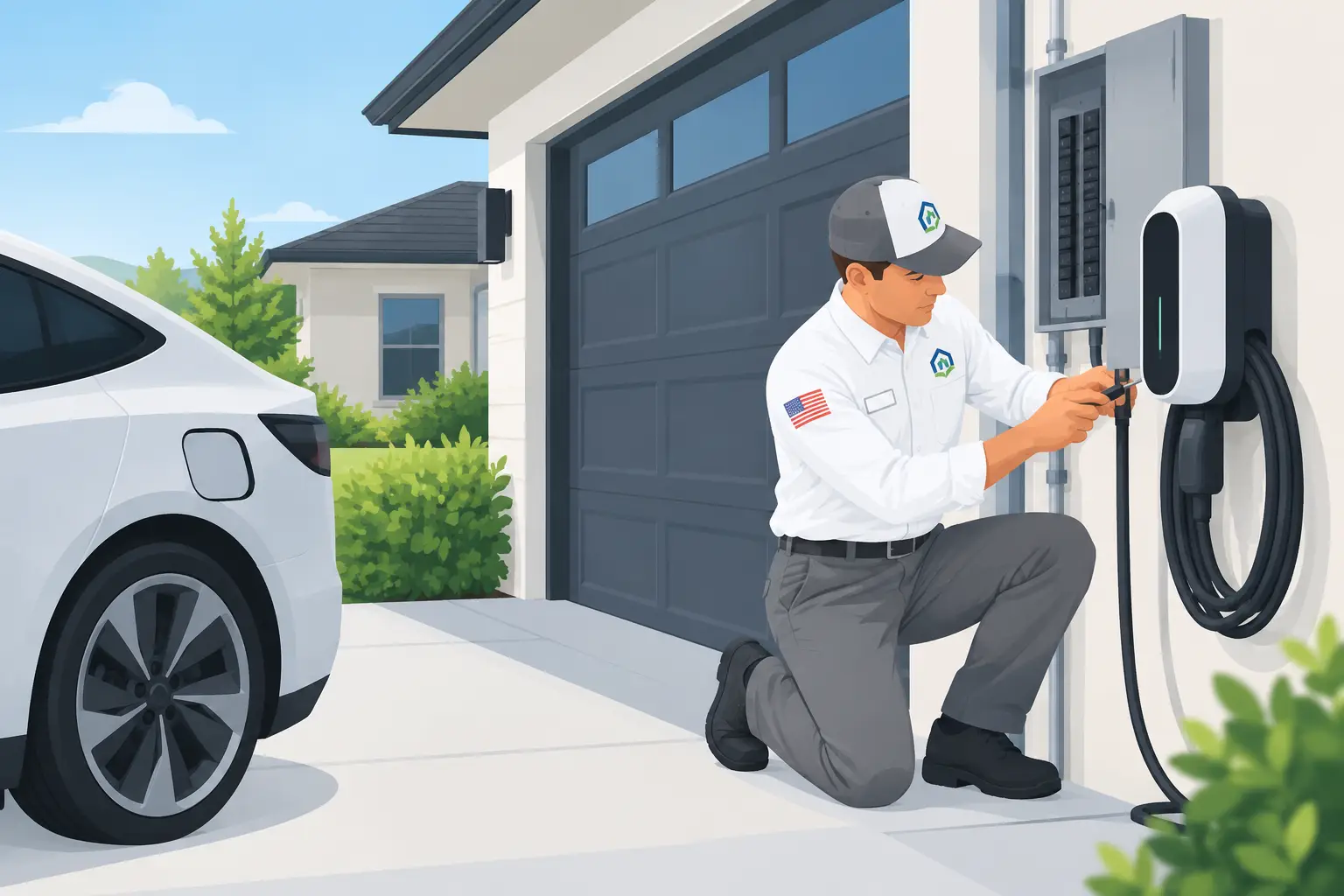
A new electric vehicle changes more than what sits in your driveway. It changes how your home uses power. EV chargers give you the convenience of starting each day with a charged vehicle, but they also place a significant, recurring electrical demand on your system. The right installation begins with your home’s electrical capacity, not with simply mounting charging equipment on a wall.
For Southern Utah homeowners, a professionally installed charging circuit can make daily driving easier while protecting the panel, wiring, and vehicle. This is not a weekend DIY project. Charging equipment must be matched to the home, installed to code, and tested so it performs safely when you need it.
Why Home EV Chargers Need a Careful Electrical Plan
Home charging is different from plugging in a lamp or using a standard garage outlet. An electric vehicle can draw power for hours at a time, often overnight. That is a continuous electrical load, which means the circuit, breaker, wire size, connections, and charging equipment all have to be selected correctly.
A standard household outlet may work for slower charging in some situations. It can be a practical short-term option for homeowners with modest daily driving needs and plenty of time between trips. But it may not restore enough range overnight for a longer commute, an active family schedule, or frequent travel. It also should never be treated as a permanent answer without confirming that the outlet and circuit are in good condition and properly rated for the load.
A higher-capacity home charger provides faster, more predictable charging. It generally requires a dedicated circuit and may require upgrades to the existing electrical system. The goal is not simply to get the highest charging speed possible. The goal is to install a charging setup that fits your vehicle, your driving habits, and what your home can safely support.
Start With Your Electrical Panel
Before an EV charger is selected or installed, a licensed electrician should evaluate the main electrical panel. Many homes have enough capacity for a charger. Others need a load calculation, panel modifications, or a service upgrade before adding another major appliance load.
The panel inspection looks beyond whether there appears to be an empty breaker space. An empty space does not automatically mean the electrical service has room for additional demand. Your electrician considers the home’s service size and the loads already in use, including air conditioning, electric heating, water heating, kitchen appliances, a hot tub, a sauna, or other high-demand equipment.
This assessment matters in Southern Utah, where air conditioning can place a heavy demand on a home’s electrical system during hot weather. A charger may run at night when cooling demand is lower, but the installation still needs to account for the home’s total electrical usage and the possibility that multiple systems operate at once.
Signs Your Panel May Need Attention
A panel upgrade is not always required, but a closer evaluation is especially worthwhile if your home has an older panel, limited breaker space, frequent breaker trips, warm or discolored electrical equipment, or a history of added circuits and remodels. These conditions do not automatically mean there is a serious problem, but they should not be ignored before a high-demand charging circuit is added.
If an upgrade is recommended, it can also create room for future improvements such as better surge protection, a standby generator connection, additional lighting, or other household electrical projects. A clear diagnosis helps you decide what needs to be done now and what can wait.
Dedicated Circuits Protect Your Charging Setup
An EV charger should be installed on a dedicated circuit. In plain terms, the charger gets its own properly sized breaker and wiring rather than sharing power with garage outlets, lighting, appliances, or other equipment.
Dedicated circuits reduce the chance of overloads and nuisance breaker trips. More importantly, they help ensure that every part of the installation is designed for the charging load. A professional electrician will determine the correct circuit size based on the charger’s specifications, continuous-use requirements, wire run length, installation location, and the capacity of the home’s electrical service.
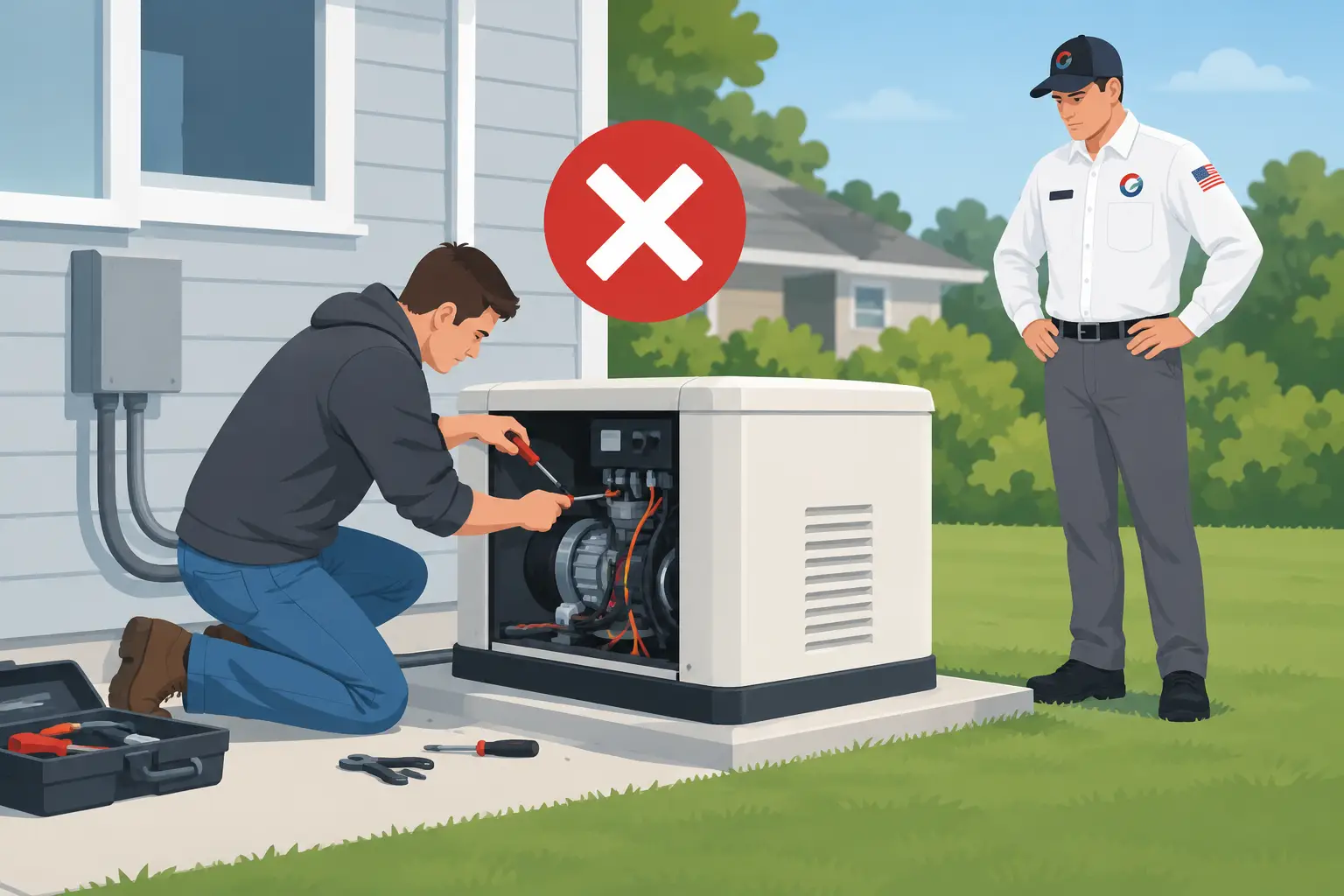
Trying to adapt an existing outlet, use extension cords, or rely on equipment that was not designed for long-term vehicle charging can create overheating and fire risks. A charger may seem to work at first, but electrical problems often build gradually at weak connections, undersized wiring, worn outlets, or overloaded circuits.
Choosing the Right Charging Speed
The best charging speed depends on how you actually use your vehicle. Faster is useful, but it is not automatically the best value or the best fit for every household.
If your vehicle sits in the garage for many hours each night and your daily driving is limited, a moderate charging setup may be more than enough. If you drive long distances frequently, have a short overnight charging window, or share charging equipment between more than one vehicle, a higher-capacity setup may make more sense.
Your electrician can help translate those daily needs into an electrical plan. This is also the time to think ahead. If you expect to add another electric vehicle later, it may be wise to plan the wiring route, panel space, and equipment location for that possibility. Planning ahead can reduce disruption later, even if you only install one charging circuit today.
Placement Matters More Than Most Homeowners Expect
Charging equipment needs a location that is convenient, protected, and code-compliant. The shortest route from panel to charger is not always the best route. Your parking position, garage layout, cable reach, wall construction, weather exposure, and vehicle access all affect where the equipment should go.
For an indoor installation, the charger should be positioned where the cable reaches the vehicle without becoming a trip hazard or being stretched across a walkway. For outdoor installations, equipment must be suitable for exterior conditions, installed at the appropriate height, and protected from avoidable damage.
Southern Utah’s heat, dust, sun exposure, and occasional intense weather make placement particularly important. An electrician can identify a location that supports convenient use without placing equipment where it is likely to be bumped, exposed unnecessarily, or difficult to service.
Permits and Inspection Are Part of Doing It Right
Electrical permitting and inspection requirements exist to protect homeowners. Depending on the project and location, an EV charger installation may require permits and an inspection. Proper permitting helps verify that the circuit, wiring methods, grounding, equipment, and panel work meet applicable safety standards.
It can also matter when you sell your home, make an insurance claim, or need future electrical work. A professionally documented installation gives you a clearer record of what was added and how it was completed.
When an Outlet Installation May Be the Better Option
Some charging equipment plugs into a correctly installed receptacle instead of being hardwired. This can be a good choice in certain homes, especially when the equipment is designed for that arrangement and the receptacle, circuit, and wiring are installed specifically for vehicle charging.
Hardwired equipment eliminates one connection point and may be preferred for a permanent garage installation. A receptacle-based option can offer flexibility if your needs may change. Neither option is universally better. The right choice depends on the equipment, the vehicle, the electrical design, and how you want to use the space.
What should not change is the need for a dedicated, professionally installed circuit. A standard outlet that happens to be nearby is not necessarily ready for the continuous demand of EV charging.
A Straightforward Installation Process
A good electrical service visit should leave you with answers, not more uncertainty. At Service Right Electric, the process is simple: call, diagnose, and fix. A licensed technician evaluates the panel and installation area, explains the options in plain language, and provides upfront pricing before work begins.
Once the scope is clear, the technician installs the circuit and charging equipment connection correctly, tests the system, and reviews basic operation with you. If the home needs panel work or another upgrade first, you should know why and what that work involves before moving forward.
The best time to plan for home charging is before you are relying on it every night. Whether you are buying your first electric vehicle or replacing an aging charging setup, a properly designed installation gives you dependable power without asking your home’s electrical system to do more than it can safely handle.




0 Comments