A phone charger stops working after a storm. A microwave clock resets when the power comes back on. A television suddenly will not turn on, even though the outlet still has power. These are frustrating moments, but they also raise a fair question: what causes power surges, and when should a homeowner be concerned?
A power surge is a brief increase in voltage moving through your home’s electrical system. Most surges last only a fraction of a second, but that can be long enough to damage sensitive electronics, shorten the life of appliances, or expose an electrical issue that needs professional attention. Some are small and unnoticed. Others can leave clear evidence behind.
What Causes Power Surges Outside the Home?
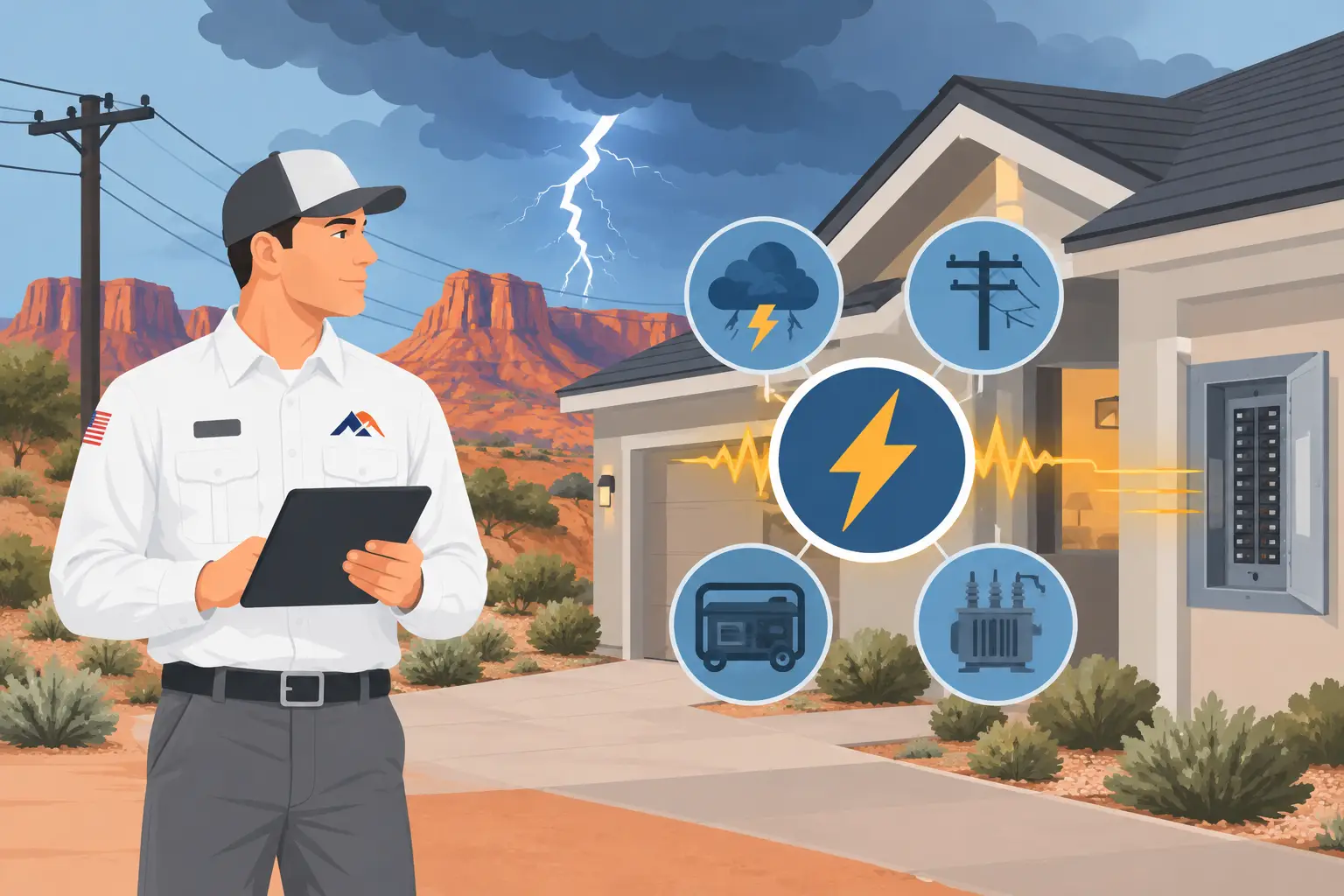
Many homeowners first think of lightning, and for good reason. A lightning strike near power lines or utility equipment can send a powerful surge through the electrical grid. A direct strike is rare, but even a nearby strike can create enough disturbance to affect electronics inside a home.
Southern Utah’s storm season can bring sudden lightning, high winds, and utility interruptions. When a storm damages a line, a tree contacts equipment, or the utility restores power after an outage, voltage can shift quickly. Those changes may create a surge that travels through the service line and into connected electrical systems.
Utility-related surges are not limited to storms. Switching operations on the electrical grid, accidents involving utility poles, and equipment problems can all produce voltage spikes. In many cases, you may only notice a flicker in the lights or a clock that needs to be reset. In other cases, a surge protector may fail, an appliance may stop working, or a breaker may trip.
A surge can also occur when power returns after an outage. Restored power is not automatically dangerous, but the transition can be hard on devices that were left plugged in and running. This is one reason it is wise to unplug sensitive electronics during a major storm or extended outage when it is safe to do so.
Power Surges Can Start Inside Your Home
Not every power surge comes from outside. In fact, many small surges are created inside the home as motors and high-demand equipment turn on and off.
Equipment such as air conditioners, refrigerators, freezers, washing machines, dishwashers, garage door openers, pumps, and power tools can create a brief electrical disturbance when their motors cycle. Usually, a properly designed and maintained electrical system handles these small events without trouble. But repeated minor surges can wear down sensitive electronics over time, particularly older devices or equipment connected to an unprotected outlet.
A larger concern is an electrical system that is no longer suited to the home’s demands. Older wiring, an overloaded circuit, a failing outlet, damaged connections, or an undersized panel can make electrical performance less reliable. Adding high-demand equipment without the right dedicated circuit can also create problems. EV chargers, hot tubs, large appliances, and newer HVAC equipment should be evaluated and installed correctly for the home’s existing capacity.
Loose connections deserve special attention. A loose wire or failing neutral connection can cause inconsistent voltage in parts of a home. Lights may brighten or dim unexpectedly, appliances may behave strangely, and electronics can be at greater risk. This is not a wait-and-see situation. It requires a licensed electrician to diagnose the source safely.
Signs a Surge May Have Damaged Something
A single power surge does not always leave an obvious clue. Sometimes the damage is gradual. Electronics may become less reliable, fail to charge correctly, or begin shutting down without warning.
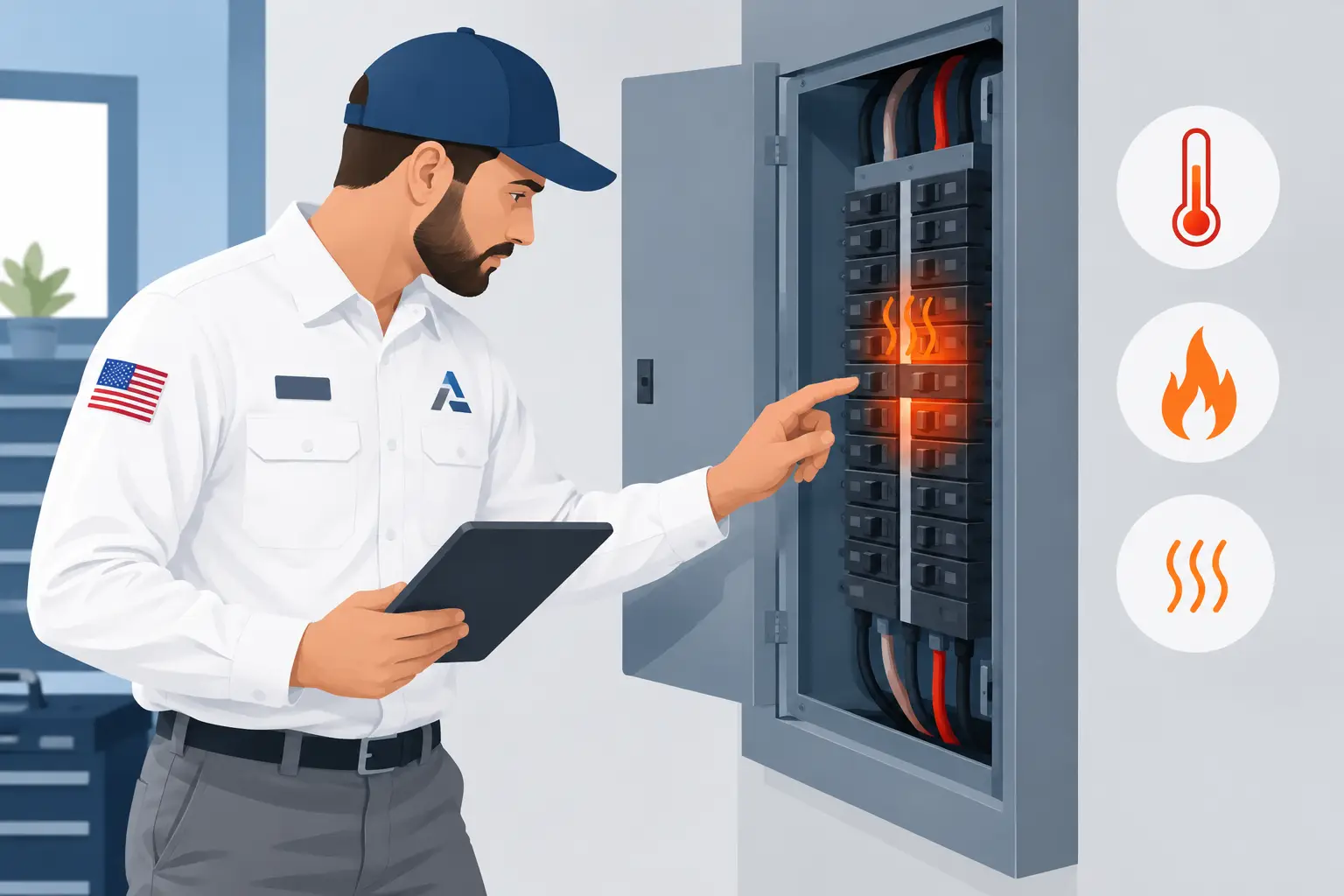
Watch for lights that flicker when large appliances start, outlets that feel warm, repeated tripped breakers, buzzing from switches or outlets, and devices that fail after a storm or outage. A burning smell, discoloration around an outlet, or visible damage at the electrical panel are more urgent warning signs. Avoid using the affected equipment and arrange for professional help right away. If there is smoke, sparking, or an active fire risk, move to safety and call emergency services.
It is also worth separating a surge problem from a power-quality problem. Flickering lights may be caused by a loose connection, a failing fixture, an overloaded circuit, or a utility issue. A breaker that trips repeatedly is doing an important safety job, but it is also telling you something needs attention. Replacing a breaker or resetting it again and again without finding the cause is not a safe repair strategy.
How to Protect a Home From Power Surges
Effective surge protection usually works in layers. A plug-in surge strip can help protect individual electronics, but it is not a complete solution for the home. It may be appropriate for a television, computer, or entertainment setup, provided it is used as intended and replaced when it shows signs of failure or reaches the end of its service life.
Whole-home surge protection is installed at or near the electrical panel and is designed to reduce the impact of surges entering through the home’s electrical service. It can help protect hardwired equipment as well as connected appliances and devices throughout the home. It does not make a home invulnerable to a direct lightning strike, and it cannot correct faulty wiring or an overloaded circuit. Still, it is a valuable layer of protection for many homes, especially those with modern electronics, smart appliances, HVAC equipment, or home office devices.
The right approach depends on the home. A newer panel may be ready for a surge protection upgrade, while an older panel or damaged electrical service may need repair or modernization first. A licensed electrician can inspect the panel, grounding, wiring condition, and circuit loads before recommending a clear path forward.
Good grounding is part of the picture as well. Grounding gives excess electrical energy a safer path away from connected equipment. If grounding components are damaged, missing, or improperly connected, surge protection may not perform as it should. Because grounding is tied directly to the service equipment and electrical safety of the home, it is not a weekend DIY project.
What to Do After a Suspected Power Surge
Start by checking for obvious safety concerns. If an outlet, cord, appliance, or electrical panel shows heat damage, scorch marks, a burning odor, or sparking, stop using it. Do not remove panel covers or attempt to repair damaged wiring yourself.
If the power is on but certain outlets, lights, or appliances are not working correctly, write down what happened and which areas of the home are affected. Did the issue begin during a storm? Did lights flicker before equipment failed? Does a breaker trip when a specific appliance runs? Those details help an electrician diagnose the issue efficiently.
For homeowners in St. George and throughout Southern Utah, Service Right Electric can inspect the system, explain what is happening in plain language, and provide upfront options before work begins. The goal is not just to replace a damaged part. It is to find the source of the problem and fix it right.
A surge may be a one-time event, or it may be the first visible sign of an aging or strained electrical system. Paying attention early can protect the equipment you rely on every day and help keep your home safer when the next storm or outage arrives.



0 Comments