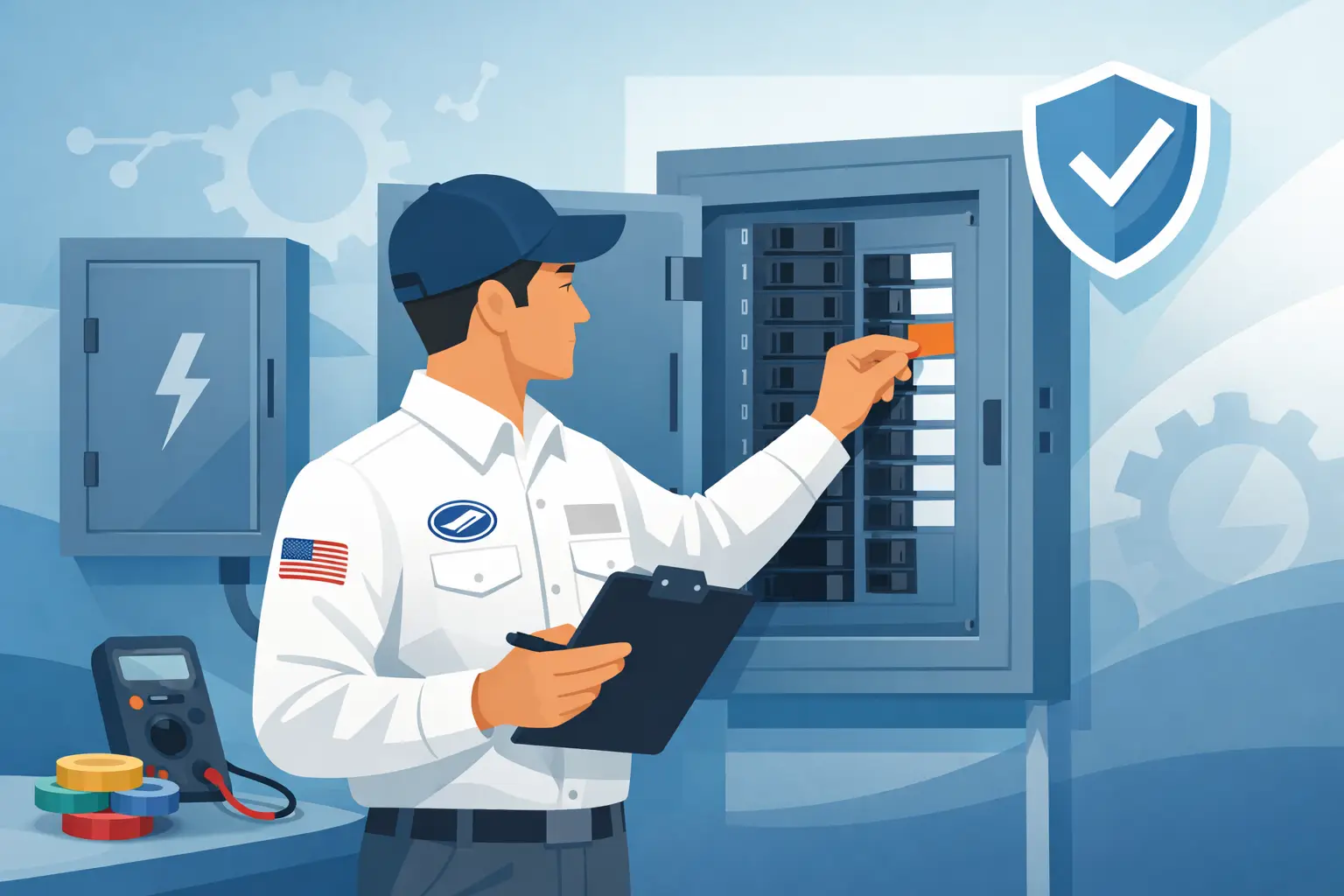
A breaker panel label is easy to overlook until a circuit trips at night, an outlet starts sparking, or you need to shut off power fast. Knowing how to label electrical panels gives your household a clearer path during an electrical problem, but accuracy matters more than simply filling every blank on the panel door.
A good panel directory tells you exactly what each breaker controls. A poor one creates confusion, delays repairs, and can lead someone to turn off the wrong circuit. For Southern Utah homeowners, especially in homes with additions, remodeled rooms, pool equipment, hot tubs, EV charging, or outdoor lighting, keeping that directory current is a practical safety step.
Why an accurate panel label matters
Your electrical panel is the control center for power throughout your home. Each breaker protects a circuit by shutting off power when it detects an overload or fault. When the breakers are labeled clearly, you can identify the right circuit before changing a light fixture, resetting a tripped breaker, or responding to a problem.
Clear labels also help an electrician diagnose an issue faster. If a technician can see that a breaker serves the kitchen countertop outlets, garage receptacles, or an upstairs bedroom, they start with better information. That can make a service visit more efficient and reduce the guesswork that comes with older or incomplete directories.
Panel labels are especially valuable in an emergency. Everyone in the home should be able to find the main disconnect and understand what it shuts off. A separate label for critical equipment, such as a furnace, well pump, medical device circuit, or refrigerator, can also help you make calm decisions during an outage.
Before you start, know the safety boundary
You can inspect the panel directory on the outside of the door and update readable circuit descriptions without touching wiring. You should not remove the panel cover, reach inside the panel, loosen breakers, or try to trace circuits by handling electrical components. Even with the main breaker off, parts of many panels may remain energized.
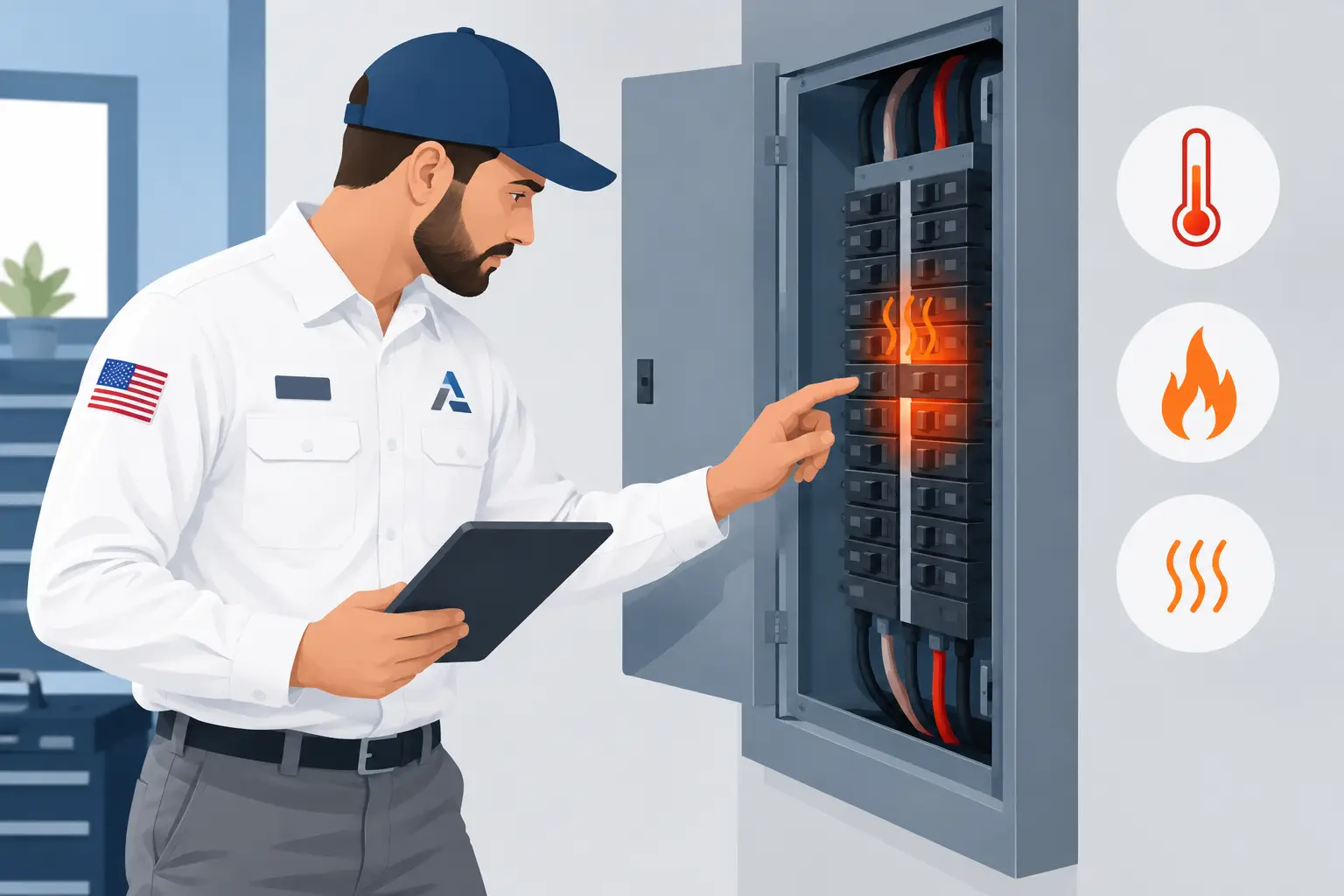
If you see scorch marks, moisture, rust, a warm panel cover, buzzing, a burning smell, breakers that will not reset, or missing breaker labels on a crowded panel, stop there. Those are reasons to call a licensed electrician, not reasons to investigate further.
For a straightforward directory update, gather a flashlight, a permanent marker or printed labels, painter’s tape, a phone or notebook, and a helper if possible. Keep children and pets away from the panel while you work. You will only be operating breakers from the front of the panel, one at a time.
How to label electrical panels accurately
The basic process is simple: turn off one breaker, find what lost power, record the result, and turn the breaker back on. The details make the difference.
Start with the main breaker and panel location
First, identify the main breaker or main disconnect. It may be inside the panel or located nearby. Label it clearly as “Main Disconnect” if it is not already marked. Do not test it by turning it off unless there is a reason to do so, since it will shut down the entire home.
If your home has a second panel, often called a subpanel, label the relationship between the two. For example, the main panel may have a breaker marked “Garage Subpanel,” while the subpanel should identify the rooms or equipment it serves. This avoids the common mistake of looking for a circuit in the wrong panel.
Test one breaker at a time
Begin with a single branch breaker. Turn it fully off, then walk through the home to determine what no longer works. Test lights by switching them on. Check outlets with a plug-in lamp, charger, or outlet tester. Look for appliances, garage door equipment, outdoor receptacles, bathroom lights, and hardwired items that may be on that circuit.
Avoid assuming that one room equals one breaker. A single breaker might serve several bedrooms, portions of a hallway, and a smoke detector circuit. Conversely, a kitchen, laundry room, garage, or bathroom often has multiple circuits because those areas have higher electrical demand or special safety requirements.
Write down every item you confirm before turning the breaker back on. Then move to the next breaker. Painter’s tape can help temporarily mark outlets, switches, or equipment as you test. Take your time. A rushed directory is often no better than a blank one.
Use specific, useful descriptions
The best label combines a location with what the circuit serves. “Kitchen” is too broad. “Kitchen counter outlets – east wall” is much more useful. “Bedroom 2 lights and outlets” gives a homeowner or technician a practical starting point.
Use plain language that anyone in your household can understand. Good examples include:
- Kitchen counter outlets
- Primary bedroom lights and outlets
- Garage door opener and ceiling outlets
- Upstairs bathroom GFCI outlets
- Outdoor patio lighting
- Laundry washer outlet
- Electric water heater
- EV charger
For equipment that has a dedicated circuit, name the equipment directly. If a circuit serves a hot tub, sauna, air conditioner, or other major appliance, that should be obvious at a glance. These circuits may be larger, double-pole breakers, and they should never be treated like a standard lighting circuit.
Watch for shared or unexpected circuits
Some circuits are not intuitive. A hallway light may share a breaker with a bedroom. A garage outlet may also feed an exterior receptacle. In older homes, prior remodeling work can create circuit layouts that do not follow a clean room-by-room pattern.
If a breaker controls outlets or lights in several areas, list each area. Do not force a vague one-word label just to make the directory look tidy. “Living room outlets, entry light, front porch outlet” is longer, but it is accurate.
If two breakers must be turned off together to stop power to one appliance or circuit, or if you find a breaker that seems to control nothing, do not make assumptions. A licensed electrician should evaluate it. The circuit may be unused, improperly identified, connected to hidden equipment, or part of a configuration that needs professional attention.
Keep the directory readable and current
Once you have identified every accessible circuit, transfer your notes to the panel directory. Use dark, legible writing or durable printed labels. Keep the descriptions aligned with the actual breaker positions, and include the panel location if your home has more than one.
Avoid labels such as “miscellaneous,” “spare maybe,” or “unknown.” If you truly cannot identify a breaker, leave a clear note that it needs professional verification. An inaccurate label can be more dangerous than an incomplete one.
Update the directory after electrical work, a remodel, a panel upgrade, or the addition of major equipment. New dedicated circuits for an EV charger, hot tub, workshop equipment, or standby power system should be documented as part of the finished installation. Ask the electrician to walk you through the panel before the job is complete.
It also helps to take a clear photo of the finished directory and store it with your home records. If the paper label fades, gets damaged, or is replaced during future work, you will have a reference to compare against.
When a professional should verify your labels
A homeowner can often improve a simple, outdated breaker directory. But there is a line between documenting what you can safely observe and diagnosing electrical conditions. Call a professional if the panel is unlabeled and confusing, breakers trip repeatedly, the panel has signs of damage, circuit testing reveals unexpected results, or your home has had significant additions or renovations.
A licensed residential electrician can trace circuits, identify overloaded or improperly configured wiring, check breaker and panel condition, and provide a directory that matches the home’s actual electrical layout. That is particularly worthwhile before a major upgrade or when buying an older home.
Service Right Electric helps homeowners throughout Southern Utah diagnose panel concerns, update aging electrical systems, and complete repairs safely with clear communication before work begins. Electrical panels are not a weekend DIY project when something does not look or act right.
A clean, accurate panel directory gives your home one small but meaningful layer of readiness. Take care of the labels while everything is working normally, and you will be better prepared when power needs to be shut off quickly.



0 Comments