
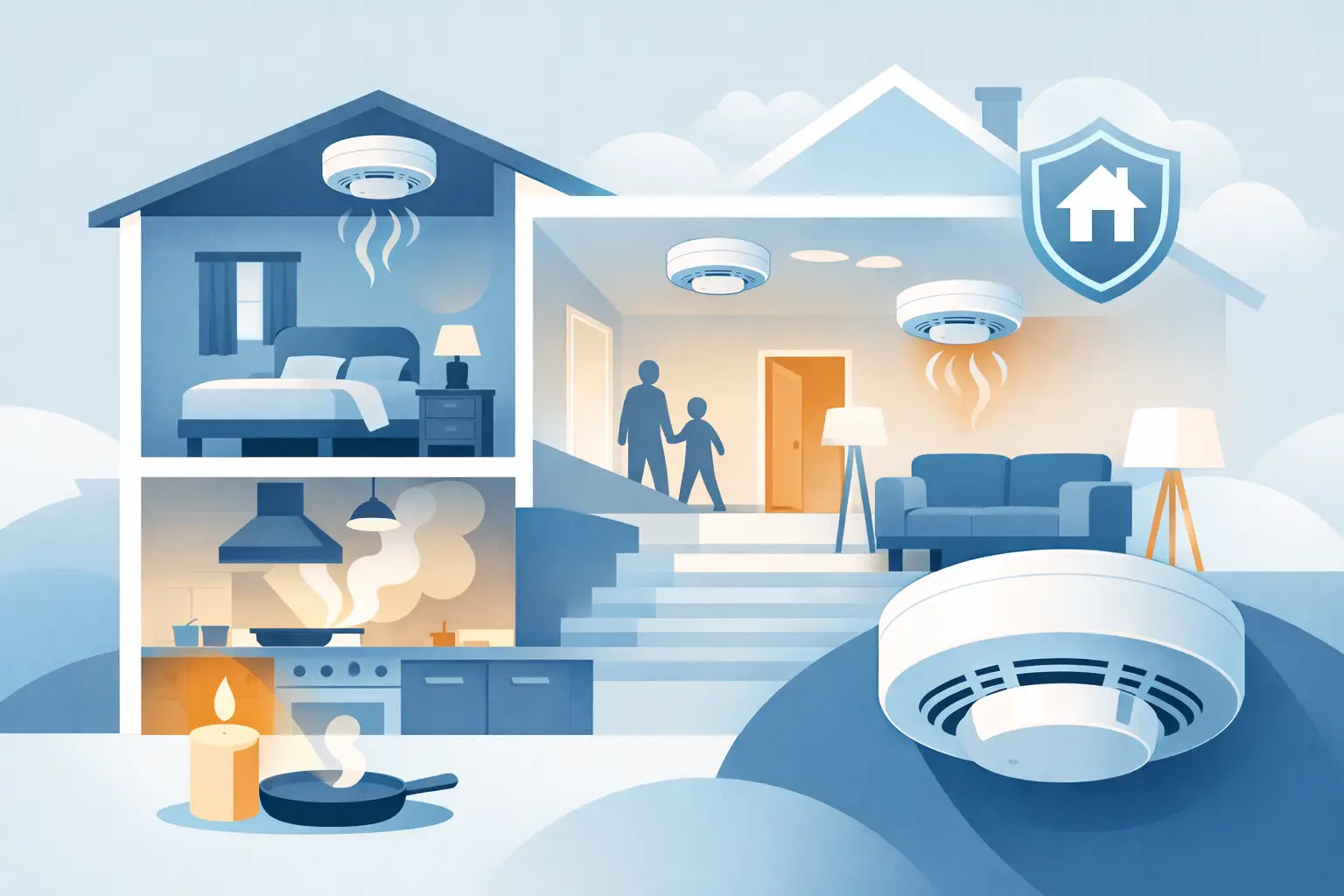
A smoke detector cannot protect your family well if it is installed in the wrong place. The best smoke detector placement puts early warning where people sleep, where smoke can travel, and on every level of the home. It also avoids locations that create nuisance alarms, since a detector that gets silenced or disabled is not doing its job.
For Southern Utah homeowners, this is especially worth checking in older homes, remodeled spaces, additions, and houses with high ceilings or open floor plans. A licensed electrician can assess your layout, verify proper power and interconnection, and make sure your devices are positioned for dependable protection.
Best Smoke Detector Placement: The Essential Locations
Start with coverage on every finished level of the home, including the basement. Smoke rises, but a fire can begin anywhere. A detector on each level gives occupants more time to respond, particularly when bedrooms are separated from the main living areas.
Smoke detectors should also be installed inside every bedroom. This is one of the most meaningful improvements a homeowner can make, because closed bedroom doors can delay the sound of an alarm. A detector in the hallway alone may not provide enough warning for someone sleeping behind a closed door.
Place another smoke detector outside each separate sleeping area. If your home has bedrooms on opposite sides of the house, or a primary suite separated from other bedrooms, each sleeping area needs nearby coverage. Hallways near bedroom doors are common locations, provided the detector is not too close to a bathroom, kitchen, or supply vent.
For a typical one-story home, that often means detectors in every bedroom, one in the hallway near those bedrooms, and one in a central living area if needed to cover the level properly. A two-story home generally needs that same bedroom and hallway coverage plus a detector on the second level and one near the bottom or top of the stairway, based on the home’s layout.
Ceiling Placement and Wall Placement
Smoke moves upward, so ceilings are usually the preferred installation surface. Position the detector at least 4 inches away from the wall where the ceiling and wall meet. That edge area can hold still air, sometimes called a dead-air space, which may slow smoke from reaching the sensor.
If ceiling installation is not practical, a wall-mounted smoke detector should be installed high on the wall. Keep it within 12 inches of the ceiling, but not in the corner itself. The exact placement should follow the detector manufacturer’s instructions and applicable local requirements.
Vaulted and peaked ceilings need more thought. Smoke may collect near the peak, but placing a detector directly at the highest point can put it in another dead-air area. In many cases, the device belongs within 3 feet of the peak, measured horizontally. Large great rooms, open lofts, and high ceilings can have airflow patterns that make placement less obvious. This is a good time to have a residential electrician evaluate the space instead of guessing.
Where Smoke Detectors Should Not Go
The wrong location can cause repeated false alarms, encourage people to remove batteries, or reduce detection performance. Avoid installing smoke detectors directly in or immediately next to kitchens. Cooking smoke, steam, and normal heat can trigger alarms. A detector can still be needed near the kitchen, but it should be located far enough away to prevent nuisance alarms while maintaining required protection.
Bathrooms are another poor choice because steam can set off a smoke alarm. Keep devices away from showers and tubs. Similarly, avoid placing them close to heating and cooling registers, ceiling fans, windows, exterior doors, or other spots with strong moving air. Airflow can push smoke away from the sensor or bring in dust that affects operation.
Garages, unfinished attics, and very hot or cold areas may require a different type of life-safety device. Depending on the space and local requirements, a heat alarm may be more appropriate than a standard smoke detector. Heat alarms respond to rapid temperature increases or high temperatures, not smoke, so they do not replace smoke alarms in bedrooms and hallways.
Do not place a smoke detector near a furnace, fireplace, wood stove, or gas appliance without considering the manufacturer’s clearance guidance. These areas may need carbon monoxide protection as well. Smoke alarms and carbon monoxide alarms do different jobs, even when they are combined in one unit.
Use Interconnected, Hardwired Protection When Possible
A smoke detector is most effective when every alarm in the house activates together. If a detector senses smoke in the garage-adjacent hallway or downstairs living area, interconnected alarms can alert someone sleeping upstairs right away.
Many newer homes use hardwired smoke detectors with battery backup. These devices receive normal power from the home’s electrical system while retaining battery power during an outage. Hardwired, interconnected protection is especially valuable in larger homes, homes with multiple stories, and homes where bedrooms are far from common areas.
Wireless interconnected alarms can be a practical option in some existing homes where adding new wiring would be disruptive. The right choice depends on the home’s construction, age, current equipment, and code requirements. What matters most is that the alarms communicate reliably and provide coverage where your family needs it.
Replacing an old hardwired unit is not always as simple as swapping devices. Compatibility between models, wiring configuration, connector type, and interconnection method can all matter. This is not a weekend DIY project when electrical wiring or life-safety devices are involved. A trained electrician can identify the existing system and install compatible equipment correctly.
Smoke Alarms and Carbon Monoxide Alarms Work Together
Smoke alarms warn of fire. Carbon monoxide alarms warn of a colorless, odorless gas that can be produced by fuel-burning appliances, fireplaces, vehicles, and generators. A home may need both types of protection, especially if it has natural gas, propane, a fireplace, an attached garage, or backup power equipment.
Combination smoke and carbon monoxide alarms can simplify coverage in certain locations, but they are not automatically the right answer everywhere. Bedrooms still need smoke detection, and carbon monoxide alarm placement should account for fuel-burning sources, attached garages, and sleeping areas. Your home’s equipment and floor plan determine the best setup.
For homes in Southern Utah, generator installations, gas appliances, and attached garages are common reasons to review carbon monoxide coverage at the same time as smoke detector placement. A professional assessment can identify gaps without adding unnecessary devices.
Test, Clean, and Replace Your Devices
Correct placement is only part of the safety plan. Test each smoke detector monthly using its test button. Everyone in the home should recognize the alarm sound and know what to do when it activates. Create and practice a home fire escape plan with two possible exits from each room whenever possible, then choose a meeting place outside.
Replace batteries according to the manufacturer’s instructions. Do not assume a chirping detector only needs a new battery. Chirping can also signal an expired unit, dust buildup, a power issue, or a device fault. Never remove a battery just to stop the noise.
Smoke alarms do not last forever. Many need replacement after about 10 years, though the date printed on the back of the unit and the manufacturer’s instructions should control. If your alarms are yellowed, damaged, frequently chirping, failing tests, or past their replacement date, schedule service promptly.
Dust and insects can also interfere with sensors. Light cleaning with a vacuum attachment may help if permitted by the manufacturer, but do not paint over a detector, spray cleaners into it, or open a sealed unit. Those shortcuts can compromise a device designed to protect lives.
When to Call a Residential Electrician
Call for professional help if you are renovating, adding bedrooms, converting a garage, finishing a basement, replacing aging alarms, or dealing with detectors that activate randomly. The same applies when hardwired alarms have lost power, do not all sound together, or appear to have been installed without proper coverage near bedrooms.
Service Right Electric helps homeowners identify the right smoke detector locations, install or replace hardwired devices, and address wiring issues with clear upfront pricing. You get a residential-focused technician who can explain what is needed before work begins.
A properly placed, working smoke detector gives your household something valuable: more time to wake up, get out, and call for help. If you are unsure whether your current alarms cover every bedroom, sleeping area, and level of the home, having them checked is a simple step toward a safer home.




0 Comments