A new appliance should make life easier, not create tripped breakers, warm outlets, or a question mark over whether your home’s electrical system can handle it. Dedicated circuit installation for appliances gives high-demand equipment a power supply designed for its load, helping it run reliably without competing with the rest of the house.
For Southern Utah homeowners, this often comes up during practical upgrades: adding an EV charger in the garage, replacing a gas range with an electric model, installing a hot tub, or updating an aging laundry room. The appliance may be new, but the wiring, panel capacity, and receptacle serving it may not be ready. That is where a licensed residential electrician can diagnose the full picture and provide a clear, upfront path forward.
What Is a Dedicated Circuit?
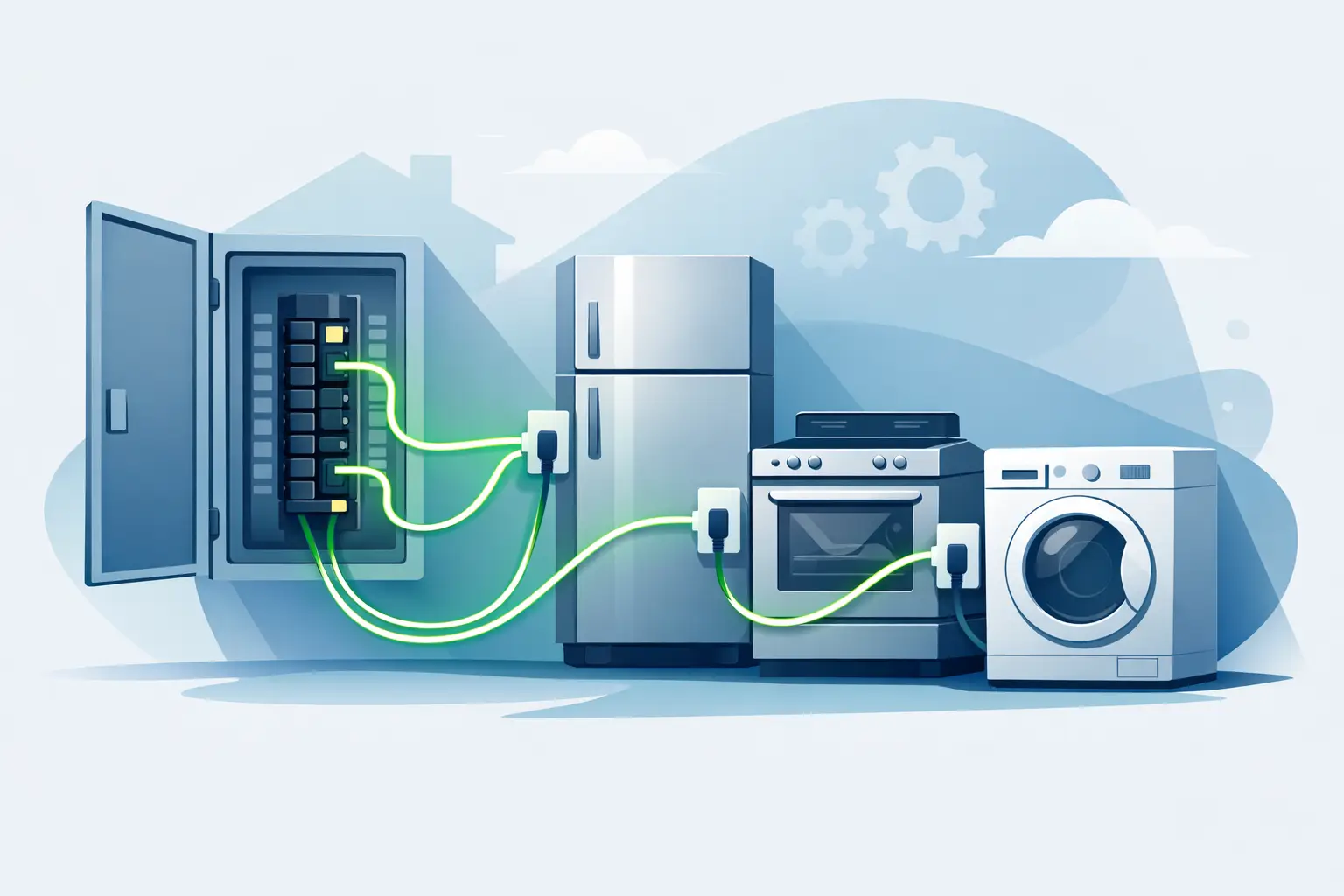
A dedicated circuit supplies one appliance or one specific piece of equipment from the electrical panel. It has its own breaker and wiring, so the appliance does not share available power with kitchen outlets, bedroom lights, or another major load.
That separation matters. When a large appliance shares a circuit with other devices, normal operation can push the circuit beyond its rated capacity. The breaker may trip to prevent the wiring from overheating. Repeated tripping is inconvenient, but it is also a signal that should not be ignored or solved by installing a larger breaker. A breaker must match the wire size, circuit design, and equipment requirements.
Not every appliance needs a dedicated circuit, and a dedicated circuit is not automatically a 240-volt circuit. A dishwasher may use a 120-volt dedicated circuit, while an electric range, dryer, heat pump, or EV charger commonly needs 240 volts. The correct setup depends on the appliance’s nameplate rating, manufacturer instructions, local electrical requirements, and the condition of your existing electrical system.
Appliances That Often Need Their Own Circuit
Major fixed appliances and high-demand equipment are the most common reasons homeowners call for dedicated circuit installation. Electric ranges and cooktops, clothes dryers, water heaters, HVAC equipment, hot tubs, saunas, and EV chargers often require a properly sized dedicated circuit. Some appliances have a special receptacle, while others are hardwired directly into a disconnect or junction box.
In kitchens, dishwashers, garbage disposals, built-in microwaves, wall ovens, and refrigerators can also have dedicated-circuit requirements depending on the installation. Modern kitchens carry more electrical demand than older homes were designed to support. If you are remodeling, replacing appliances, or adding an island, it is the right time to evaluate circuits instead of waiting for nuisance trips after the work is finished.
Laundry rooms deserve the same attention. An electric dryer needs a correctly sized 240-volt circuit. A washing machine may need a separate 120-volt circuit, especially in a newer installation. Plugging a dryer into an adapter, using an extension cord for a fixed appliance, or relying on an outlet that looks similar to the new appliance’s plug is not a safe workaround.
Garages are another frequent trouble spot. An EV charger can add a substantial continuous electrical load, particularly if you want faster Level 2 charging. The installation may require a new circuit, a panel upgrade, load calculation, or all three. A qualified electrician can help you understand what your home can support before you purchase equipment or schedule installation.
Signs Your Appliance Circuit Needs Attention
A breaker that trips once after an obvious overload may not mean there is a major issue. A breaker that trips repeatedly when the dishwasher heats water, the dryer starts, or the hot tub turns on needs professional attention. Do not keep resetting it and hoping the problem goes away.
Other warning signs include a burning odor, discoloration around an outlet, buzzing from a panel or receptacle, a plug that feels unusually warm, flickering lights when a major appliance starts, or an appliance that cannot run while other devices are in use. These symptoms may point to an overloaded circuit, loose connection, damaged wiring, a failing breaker, or an appliance fault. Diagnosis matters because the right repair depends on the actual cause.
Older homes can present an additional challenge. A home may have enough breaker spaces on the panel face but still lack adequate service capacity for another large load. Conversely, a panel may have capacity but no physical space for a new breaker. A residential electrical assessment identifies whether you need a new dedicated circuit alone, a subpanel, panel work, or a broader upgrade.
Why Dedicated Circuit Installation Is Not a DIY Project
Installing a circuit involves more than running a cable from the panel to a new outlet. The electrician must calculate the load, select the correct wire type and size, use the appropriate breaker, confirm grounding and bonding, protect wiring where it passes through walls or attics, and install the correct receptacle or disconnect. Some locations also require GFCI or AFCI protection, depending on the appliance, room, and current electrical rules.
The work inside an electrical panel carries real shock and fire risk. It also affects the safety of every person who uses the appliance afterward. An incorrect breaker size can allow wiring to overheat. A loose termination can create damaging heat over time. A poorly planned route may leave cable unprotected in a garage, crawl space, or exterior location.
Permitting and inspection requirements may also apply, particularly for new circuits, major appliances, EV charging, hot tubs, and panel upgrades. Professional installation helps ensure the completed work is safe, code-conscious, and suitable for the appliance you are adding. It also gives you a clear answer about what was installed and why.
What to Expect From a Professional Installation
The first step is a diagnosis, not a guess. Your electrician should review the appliance specifications, inspect the intended location, look at the existing panel, and evaluate the available electrical capacity. If you already have the appliance, its nameplate or installation manual provides useful information. If you are still shopping, bring the model details when possible so the circuit can be planned correctly.
Next comes a clear scope of work. A straightforward project may involve installing a new breaker, running properly sized wiring, adding a receptacle, and testing the completed circuit. More complex work may require routing wire through finished walls, adding a disconnect, correcting old wiring issues, or upgrading the panel before the appliance can be energized safely.
The best choice is not always the lowest initial price. A cheaper installation that skips load evaluation, uses the wrong receptacle, or leaves unfinished wall and panel work can lead to more expense later. Ask what the price includes, whether permits are needed, how the circuit will be protected, and whether the electrician will test the appliance connection when the work is complete.
Service Right Electric provides residential dedicated circuit work with licensed technicians, transparent upfront pricing, and a simple process: call, diagnose, and fix. Whether your project is urgent or part of a planned upgrade, you deserve an explanation in plain language before work begins.
Plan Ahead When Replacing Appliances
Appliance replacement is often the easiest time to correct an electrical limitation. Before delivery day, confirm the voltage, amperage, plug type, and location requirements for the new unit. Do not assume the old outlet is suitable just because the previous appliance used it. Building standards, appliance efficiency, and manufacturer requirements change over time.
If you are planning several upgrades, such as an electric range, heat pump water heater, and EV charger, schedule one electrical evaluation before starting the projects. Coordinating the work can be more practical than adding circuits one at a time, especially if your panel is nearing capacity. It also helps you make decisions based on the long-term needs of your home rather than the next immediate purchase.
A dedicated circuit is quiet work when it is done right: the appliance powers on, the breaker stays on, and your home has the capacity it needs. If a new appliance is waiting in the garage, delivery is scheduled, or an existing breaker keeps tripping, arrange a professional evaluation before a small electrical issue becomes a disruption.




0 Comments