
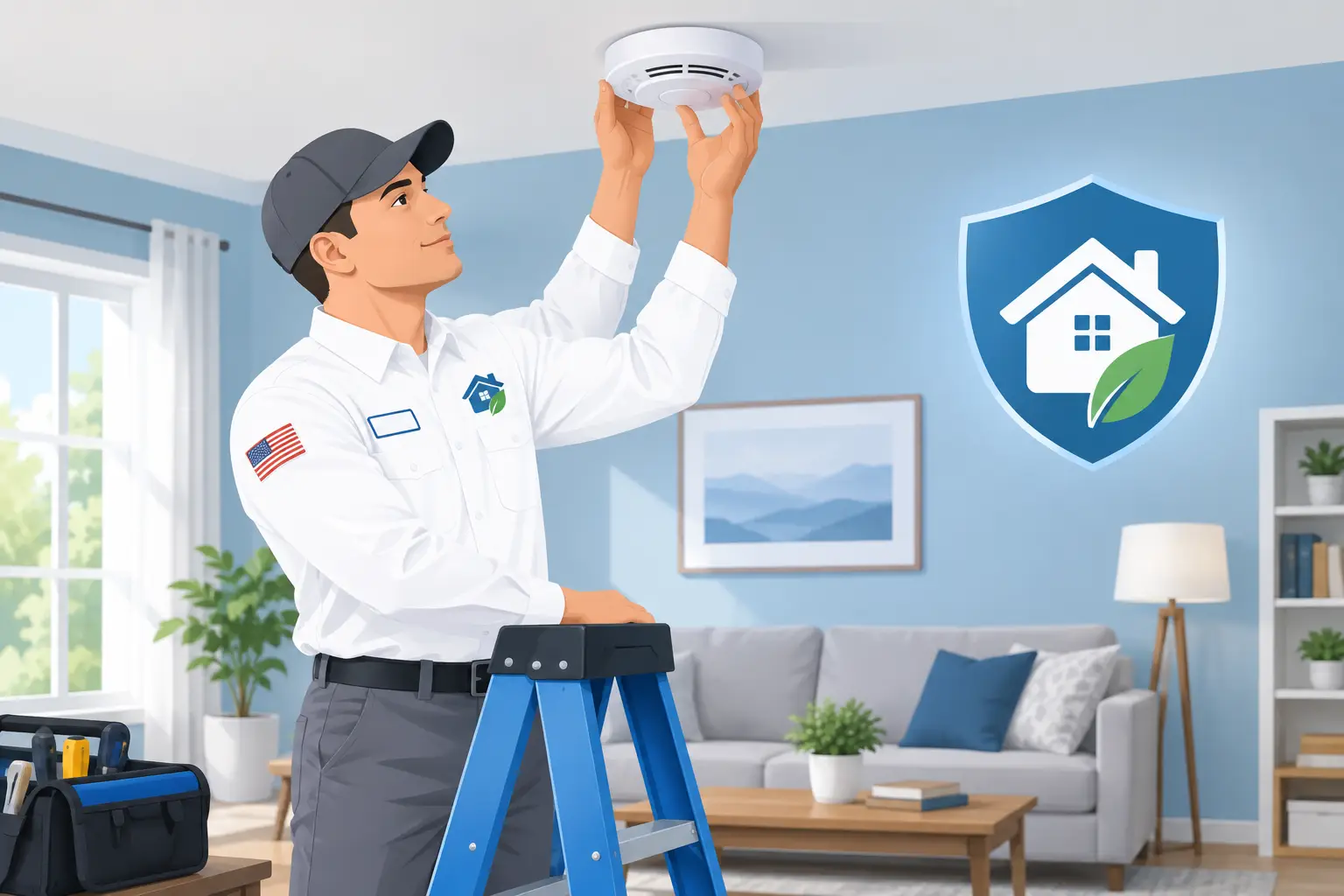
A smoke alarm can give your family the few minutes that matter most during a house fire. But that protection depends on more than having a device on the ceiling. Smoke alarms need the right locations, dependable power, regular testing, and timely replacement. A chirping, painted-over, disconnected, or poorly placed alarm may not provide the warning you expect.
For homeowners, this is one of those small maintenance items with very high stakes. Whether you have recently moved, remodeled, added a bedroom, or simply cannot remember when your alarms were installed, a quick review of your home can reveal problems before an emergency does.
Where Smoke Alarms Should Be Installed
Modern home-safety standards generally call for smoke alarms inside every sleeping room, outside each separate sleeping area, and on every level of the home, including the basement. That coverage matters because smoke can move quickly through hallways and stairwells, while a closed bedroom door can delay the sound reaching someone who is asleep.
A large Southern Utah home may have split bedroom wings, a basement suite, or a detached living area. Each layout needs to be considered on its own. One hallway alarm may not adequately cover a guest room on the opposite side of the home, and an older home may have fewer alarms than current safety practices recommend.
Placement also affects performance. Alarms should be mounted according to their manufacturer instructions and applicable electrical code, away from areas where steam, dust, or normal cooking fumes regularly trigger nuisance alarms. Kitchens still need fire protection, but an alarm placed too close to the stove can become so frustrating that someone disables it. That creates a much bigger risk than an occasional false alarm.
Bathrooms, unconditioned garages, and extremely hot attic spaces can also be poor locations for standard smoke alarms. Heat, humidity, and airborne particles can shorten device life or cause unwanted activation. A licensed electrician can assess the layout and recommend the appropriate equipment and placement for each area of the home.
Why Interconnected Alarms Matter
When smoke alarms are interconnected, one activated alarm causes the others to sound as well. If a fire starts in the garage, laundry area, or basement, the alarm near the bedrooms can alert everyone sooner. For families, especially those with children, older adults, or bedrooms spread across multiple levels, that added warning can make a meaningful difference.
Many newer homes have hardwired, interconnected alarms with battery backup. The household electrical system powers the alarms during normal operation, while the backup battery helps keep them operating during an outage. Older homes may rely on individual battery-powered units, and some may have a mix of old and new devices that do not communicate correctly.
Hardwired smoke alarm work is not a weekend DIY project. The wiring must be properly connected, compatible devices need to be selected, and the finished installation must meet current requirements. If an alarm keeps chirping, fails to sound during testing, or was disconnected during a remodel, have the system evaluated rather than assuming a new battery will solve the issue.
Test Your Alarms Before You Need Them
Press the test button on every alarm at least once a month. The sound should be loud and immediate. If it is weak, inconsistent, or absent, address the problem right away. Testing is also a good opportunity to make sure everyone in the household recognizes the alarm and knows what to do when it sounds.
A short alarm chirp is different from a full alarm. It often signals a low battery, a device fault, or the end of the alarm’s service life. Replacing a removable battery may solve the issue, but not always. Sealed long-life battery models are designed differently and should not be opened. If the chirp continues after basic troubleshooting, the unit may need replacement.
Keep alarms free of dust, paint, and cobwebs. A gentle exterior cleaning with a soft brush attachment can help, provided you follow the manufacturer instructions. Never paint an alarm or cover its openings. Paint can interfere with the sensor, and a covered alarm cannot do its job.
Know When an Alarm Is Too Old to Trust
Smoke alarms do not last forever. Most should be replaced about every 10 years, even if they still appear to work during a button test. The test button confirms that the alarm can produce sound and has power. It does not prove that the internal sensor can still detect smoke accurately.
Check the date printed on the back of each unit. If the date is missing, unreadable, or more than a decade old, replacement is the safer call. It is also wise to replace an alarm that has been exposed to water damage, heavy smoke, repeated false alarms, physical damage, or pest activity.
Do not assume that a recently changed battery means the alarm itself is current. In homes that have changed owners several times, it is common to find alarms that are far beyond their intended service life. Replacing the full set at the same time can simplify future maintenance and help ensure compatible operation.
What to Do When a Smoke Alarm Sounds
Treat an unexpected alarm as a possible emergency. Get everyone outside using your planned escape route, call 911 from a safe location, and do not go back inside until first responders say it is safe. Do not spend precious time trying to identify whether the alarm is a false alert if there is visible smoke, a burning smell, or any doubt.
Once everyone is safe, a professional can help identify electrical concerns that may have contributed to the issue. Burning odors, hot outlets, discolored switches, repeatedly tripped breakers, or flickering lights deserve prompt attention, even if there is no active fire. Smoke alarms are an early warning system, not a substitute for maintaining safe wiring and electrical equipment.
If cooking smoke triggers an alarm but there is no fire, ventilate the area and use the alarm’s hush feature only if your model provides one. Do not remove the battery or disable the device. The next alarm could be the one that warns you about a real emergency.
A Simple Home Smoke Alarm Check
Walk through your home and confirm that every bedroom, sleeping-area hallway, and floor has an alarm. Then test each unit, check its manufacture date, and listen for chirps or weak sound. Finally, consider whether the alarms are interconnected and whether recent renovations changed the home’s layout or sleeping areas.
If anything is uncertain, it is worth having a licensed residential electrician take a look. Service Right Electric can assess alarm placement, diagnose hardwired system problems, and complete code-conscious replacements with clear communication before work begins. We are employee-owned, locally rooted, and focused on helping Southern Utah homeowners keep their homes safe.
A working smoke alarm is easy to overlook on an ordinary day. Take a few minutes to check yours now, while that ordinary day is still quiet.



0 Comments