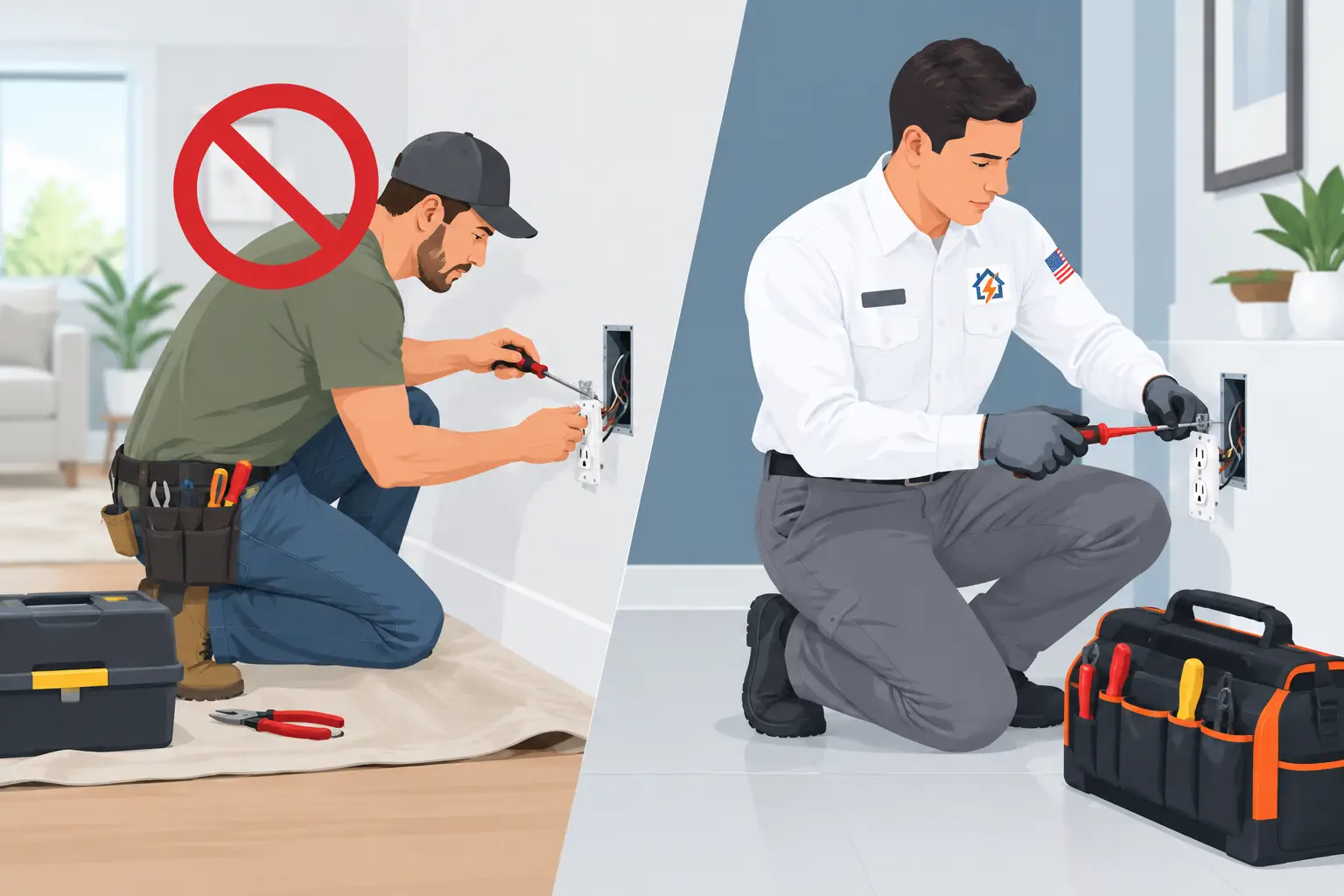
A new outlet that works for a few days, a ceiling fan that wobbles after installation, or a breaker that keeps tripping may look like a small repair gone wrong. In reality, these can be signs of a wiring problem that needs a trained eye. That is why you shouldn’t have a handyman do your electrical work, even when the job appears simple or the quote sounds convenient.
A handyman may be skilled at many home repairs. Patching drywall, replacing trim, assembling fixtures, and handling minor maintenance are valuable abilities. Electrical work is different because the finished result can look perfectly fine while hidden connections, overloaded circuits, or incorrect grounding create a real safety issue behind the wall.
Why You Shouldn’t Have a Handyman Do Your Electrical
Your electrical system is not a collection of independent switches and outlets. It is a connected system that starts at the panel and runs through circuits, junction boxes, devices, grounding paths, and safety equipment throughout the home. A change in one place can affect performance and safety somewhere else.
A qualified residential electrician is trained to diagnose the full condition of that system before making a repair or installation. That means looking beyond the failed outlet or requested fixture. Is the circuit overloaded? Is the wiring the correct type and size? Is there a loose connection upstream? Does the panel have capacity for a new dedicated circuit? Are protective devices operating as they should?
Those questions matter in every home, but especially in Southern Utah homes where additions, remodels, aging wiring, hot tubs, garage equipment, and newer high-demand appliances can put new demands on an existing electrical system.
Electrical problems are often hidden
Unlike a leaky faucet, electrical mistakes do not always announce themselves right away. A loose wire connection can heat up gradually. An improperly installed outlet may work until a high-load appliance is plugged in. A circuit that seems adequate for lighting may not safely support added equipment.
The risk is not limited to a complete power failure. Poor electrical work can lead to damaged devices, repeated breaker trips, shocks, overheating, and fire hazards. It can also make future troubleshooting harder because the original issue is concealed behind a wall plate, inside an attic, or at the panel.
A professional electrician is not simply there to make power turn on. The goal is to identify why the problem occurred, correct it safely, and leave the system in a condition that can be serviced confidently later.
Electrical Codes Are a Safety Baseline
Electrical codes can feel like paperwork until you understand what they address. Requirements for box fill, wire protection, grounding, circuit sizing, outlet placement, and safety devices were developed to reduce known household risks.
A handyman may know how to physically replace a switch or hang a light fixture. That does not necessarily mean they are qualified to determine whether the wiring method, electrical box, circuit protection, and load calculation meet current requirements. Small details matter. For example, a fixture may need the right support box, a bathroom or outdoor outlet may need specific protection, and a new appliance may require its own dedicated circuit.
Code requirements can also change over time. Homes built decades ago may have electrical components that were acceptable when installed but need careful evaluation when they are modified. A trained electrician understands when an existing condition can remain and when a repair or upgrade needs a different approach.
This is not about making a straightforward project complicated. It is about making sure the fix is safe for the way your family uses the home now.
Diagnosis Matters More Than the Visible Repair
One of the biggest differences between a handyman repair and professional electrical service is diagnosis. If a breaker trips, replacing the breaker without identifying the cause can leave the real problem in place. The issue could be an overloaded circuit, damaged wiring, a failing appliance, a loose connection, or a fault somewhere on the branch circuit.
The same is true of a dead outlet. The outlet itself may be worn out, but it may also have lost power because of a tripped safety device, a failed connection at another outlet, or a problem in the panel. Replacing the face of the problem is not the same as repairing the source of it.
A professional diagnosis gives homeowners useful answers: what failed, why it failed, what needs immediate attention, and what can be planned for later. That clarity prevents the frustrating cycle of paying for a quick fix, then calling again when the issue returns.
The Cost of a Shortcut Can Show Up Later
Hiring a handyman can seem like a way to save money on a small project. Sometimes the work may appear successful at first. The trade-off is that a mistake may not show up until later, when correcting it can require opening finished walls, replacing damaged wiring, repairing drywall, or addressing a safety concern during a remodel or home sale.
Electrical work also affects the people who service your home in the future. Clear, properly completed work makes inspection, maintenance, upgrades, and troubleshooting safer. Improvised connections, hidden junction boxes, undersized wiring, or mislabeled circuits create uncertainty for everyone who comes after.
There are reasonable exceptions. A homeowner may hire a handyman to paint around a new light fixture, patch drywall after electrical work is complete, or install non-electrical decorative items. But when a task requires changing wiring, adding a circuit, opening an electrical box, modifying the panel, or connecting fixed equipment, it is time to call an electrician.
Projects That Need a Licensed Electrician
Some electrical jobs are obvious candidates for professional service, such as panel upgrades, standby generator connections, EV charger circuits, hot tub wiring, and service equipment repairs. Other jobs are commonly underestimated because they are part of a home improvement project.
A new ceiling fan, for example, may need a properly rated box and secure mounting. A kitchen appliance may need a dedicated circuit. Outdoor lighting needs wiring and protection suitable for its environment. Adding outlets in a garage or workshop requires more than extending power from the nearest receptacle.
The following projects should be evaluated and completed by a qualified electrician:
- Breaker panel repairs, upgrades, or added breakers
- New circuits for appliances, garages, EV chargers, hot tubs, or saunas
- Wiring for ceiling fans, indoor lighting, outdoor lighting, and smoke detectors
- Repeated breaker trips, flickering lights, warm outlets, buzzing, or burning odors
- Outlet, switch, or wiring problems that are not clearly limited to a simple device replacement
If you notice sparks, smoke, a burning smell, a hot electrical panel, or a damaged meter or service component, treat it as urgent. Turn off power only if it is safe to do so, keep people away from the area, and get professional help promptly.
What Professional Electrical Service Should Feel Like
Homeowners should not have to choose between safety and a clear, practical service experience. A good residential electrician explains what was found, outlines the repair options, provides upfront pricing before work begins, and leaves the work area clean when the job is complete.
That process also respects your time. The right technician arrives prepared to diagnose the issue instead of guessing, communicates in plain language, and focuses on the repair that solves the problem. For planned upgrades, they can help you understand what your home needs now and what may be worth preparing for later.
Service Right Electric follows a straightforward approach: call, diagnose, and fix. Our employee-owned team focuses on residential electrical work, from urgent repairs to practical upgrades that make your home safer and more convenient.
Your home deserves more than a repair that simply looks finished. If wiring, circuits, electrical devices, or the panel are involved, choose a professional who can find the cause, explain the options, and fix it right.



0 Comments