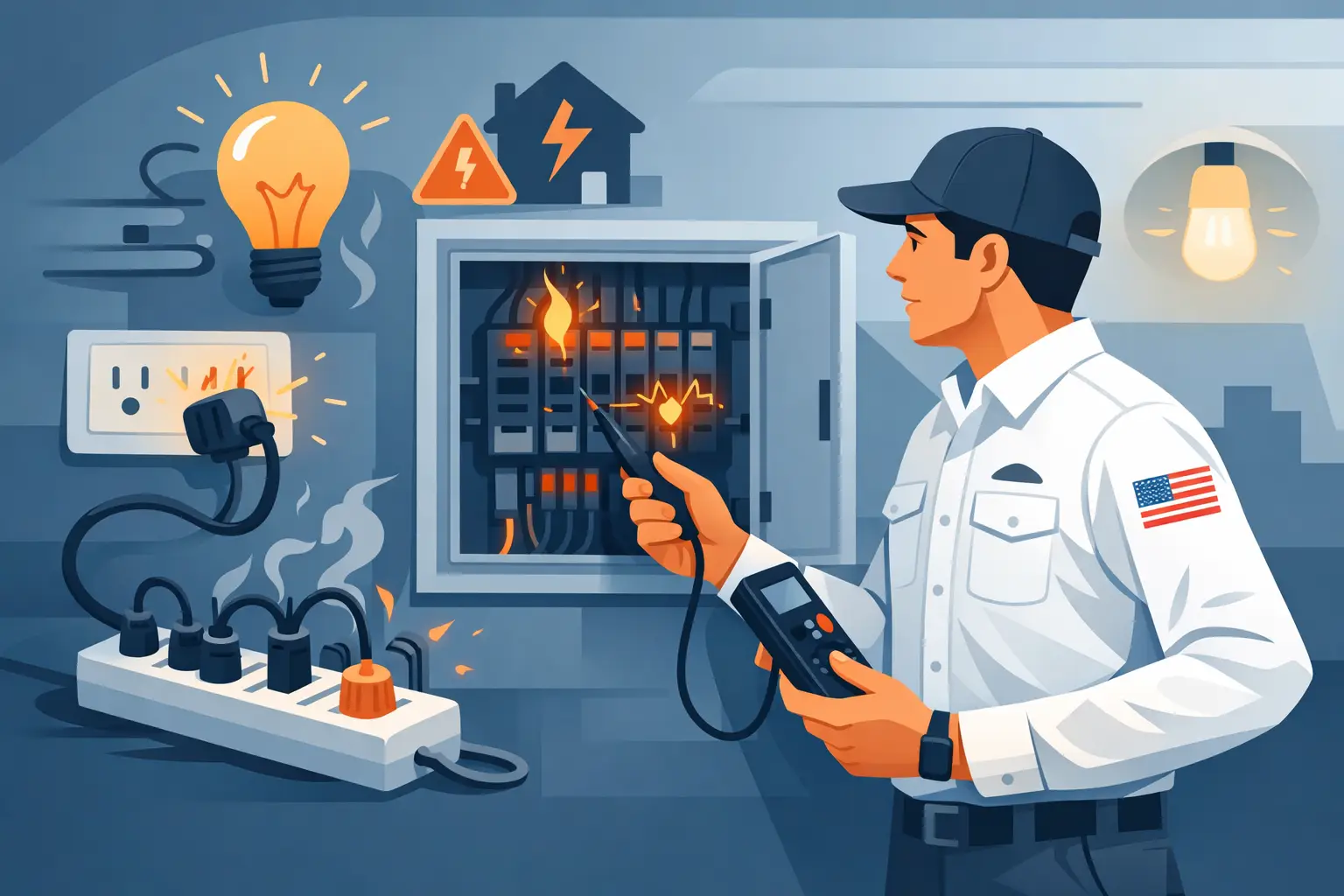
A breaker that trips once after a storm may be a simple interruption. A breaker that trips every time the microwave, space heater, or hair dryer runs is different. Circuit overload signs are your home’s way of telling you that more electricity is being demanded than part of the system can safely handle.
Ignoring that warning can lead to damaged wiring, failed appliances, and, in serious cases, an electrical fire. The good news is that many overload problems show clear symptoms before they become an emergency. Knowing what to watch for helps you act early and gives a licensed electrician useful information when diagnosing the problem.
What Does a Circuit Overload Mean?
Every circuit in your home is designed to carry a limited amount of electrical current. That circuit includes the breaker in the panel, the wiring behind the walls, and the outlets, lights, or hardwired equipment it serves. When the demand exceeds the circuit’s safe capacity, the breaker should shut off power.
That shutdown is not the problem. It is a safety feature doing its job. The concern is repeated tripping or other warning signs that show the circuit is routinely being pushed past its limit.
Overloads often happen in older homes with fewer circuits, but age is not the only factor. A newer home can also have an overloaded circuit if a high-demand appliance was added without a dedicated circuit, a room’s use changed, or too many devices share the same outlets.
Common Circuit Overload Signs at Home
Some symptoms are obvious. Others can be easy to dismiss until they become more frequent. Pay attention to patterns, especially when the same appliances or rooms are involved.
Breakers Trip Repeatedly
A breaker that trips again and again is one of the clearest circuit overload signs. If it shuts off only when several items are operating at once, the circuit may simply be carrying too much load. For example, running a portable heater, television, game console, and vacuum from one living room circuit can exceed what that circuit was built to handle.
Still, a tripping breaker does not automatically mean an overload. A short circuit, damaged appliance cord, loose connection, or failing breaker can create similar behavior. Do not keep resetting it to see if it will hold. Leave it off and arrange for a professional diagnosis if the problem repeats.
Lights Dim or Flicker When Equipment Starts
A brief, slight dimming when a large appliance starts can occur in some homes. Noticeable flickering or lights that dim every time equipment turns on deserves attention. This is especially true if it happens with ordinary household equipment rather than one major appliance.
The cause may be an overloaded circuit, but it could also be a loose electrical connection or an issue at the panel. Because loose connections can generate heat, this is not a symptom to troubleshoot by opening outlets or panel covers yourself.
Outlets, Switches, or Plugs Feel Warm
An outlet or switch should not feel hot during normal use. Warmth around a plug, a discolored faceplate, buzzing, crackling, or a burning odor can indicate excessive heat at a connection. Stop using that outlet right away.
Turn off the breaker if you can identify it safely, and avoid plugging anything back in until a licensed electrician has inspected the circuit. A warm outlet is not a situation for a temporary fix or a heavier-duty extension cord.
Power Cuts Out in One Area of the House
If several outlets or lights in one bedroom, kitchen, garage, or living area go dead together, they may be on the same circuit. Think about what was running just before the power went out. A coffee maker, air fryer, toaster oven, and other countertop equipment can add up quickly when used on the same circuit.
The same principle applies to garages and outdoor outlets, where power tools, compressors, chargers, and other equipment may share limited capacity. Repeated outages in the same area point to a circuit that needs evaluation, not repeated breaker resets.
Extension Cords and Power Strips Have Become Permanent
Power strips can be useful for low-demand electronics, but they do not create more circuit capacity. Plugging one power strip into another, using extension cords as permanent wiring, or relying on adapters to serve more equipment is a warning that the room does not have enough properly located outlets or circuits.
This is especially relevant for home offices, entertainment centers, workshops, and bedrooms. The safer long-term answer may be new outlets, a dedicated circuit, or a wiring upgrade based on what the space actually needs.
High-Demand Devices Need Extra Attention
Not every device places the same demand on a circuit. Small electronics generally use far less electricity than equipment that produces heat or drives a motor. Portable heaters, hair dryers, microwaves, countertop cooking equipment, window air conditioners, power tools, and some garage equipment can draw substantial power.
The issue is often not one device by itself. It is the combination. A bedroom circuit might work fine for lamps and phone chargers, then trip when a portable heater is added. A kitchen outlet circuit can become overloaded when multiple heat-producing appliances run at once.
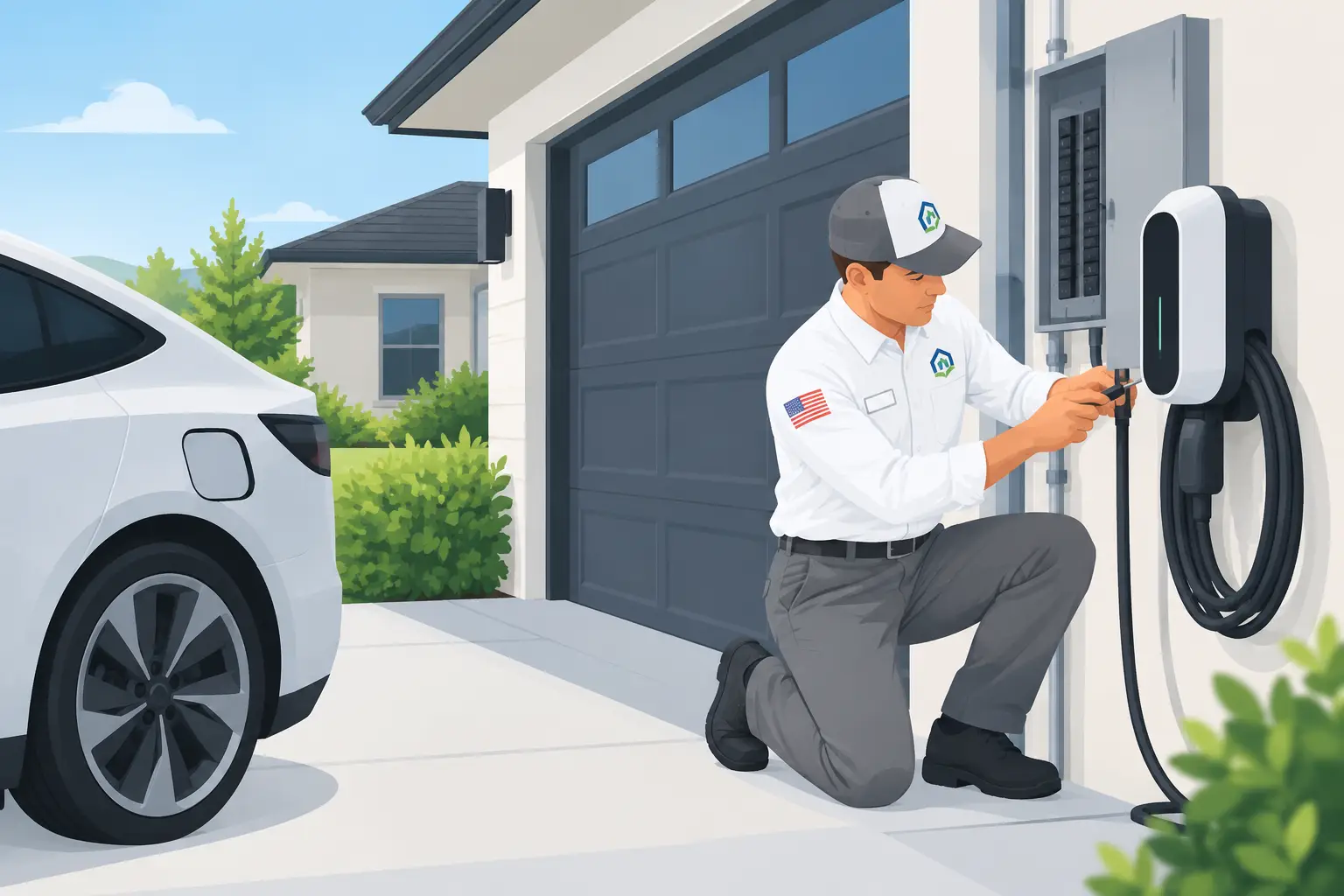
Certain home upgrades also need planning. EV chargers, hot tubs, saunas, and larger appliances typically require properly designed dedicated circuits. Trying to use existing general-purpose outlets for equipment that needs more capacity can create ongoing safety problems and unreliable operation.
What to Do When You Notice an Overload
Start by reducing the load. Unplug or turn off the devices that were running when the breaker tripped, then reset the breaker once. If it stays on after you remove those items, avoid running that same combination on the circuit again.
If the breaker immediately trips, will not reset, or you notice heat, smoke, a burning smell, sparking, or buzzing, do not continue testing. Keep people away from the affected area and contact a licensed electrician promptly. If there is smoke or fire, leave the home and call emergency services.
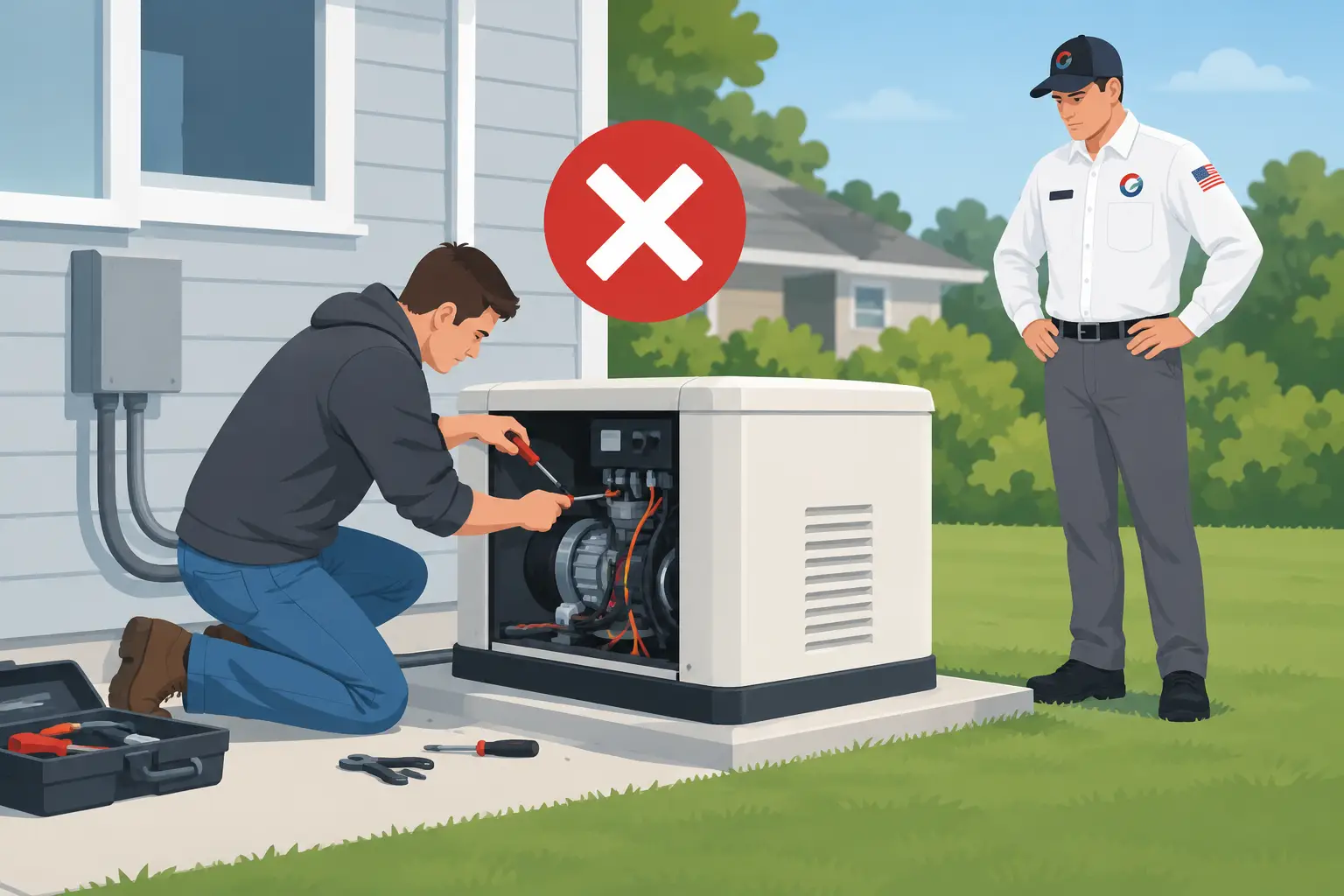
Do not replace a breaker with a larger one in an attempt to stop tripping. Breaker size must match the wiring and circuit design. Installing an oversized breaker can allow wires to overheat before the breaker shuts power off. It is also not safe for homeowners to remove a panel cover or work inside an electrical panel.
The Difference Between an Overload and a Larger Electrical Problem
An overload is usually tied to what is plugged in and when it is used. Remove enough load, and the breaker may remain on. But repeated electrical symptoms can also point to a broader issue, including aging wiring, a damaged outlet, loose connections, moisture exposure, a failing breaker, or an undersized panel.
That is why a professional diagnosis matters. A licensed electrician can identify the circuit involved, inspect the panel and connections, test the affected equipment when appropriate, and explain whether the right repair is a new dedicated circuit, outlet upgrade, breaker repair, wiring correction, or panel improvement.
For Southern Utah homeowners, electrical demand can also change with the season. Temporary cooling or heating equipment, garage projects, holiday lighting, and visiting family can all put extra strain on circuits that usually seem fine. The goal is not to avoid using your home. It is to make sure the electrical system supports how you use it.
Get the Right Fix Before the Problem Grows
A breaker that keeps tripping is inconvenient, but it is also valuable information. Your electrical system is signaling that something needs attention. Acting on circuit overload signs early can protect your home, reduce frustrating outages, and prevent a small issue from becoming a dangerous one.
Service Right Electric can diagnose the cause, explain your options clearly, and complete the repair or upgrade correctly. If a circuit is repeatedly tripping or an outlet feels warm, schedule professional service rather than hoping the next reset solves it.


0 Comments