A power outage can turn from inconvenient to stressful fast – especially when it affects refrigeration, medical equipment, well pumps, air conditioning, garage access, or the ability to work from home. When comparing standby versus portable generators, the right choice depends on what must stay powered, how long you expect outages to last, and how much hands-on work you want during an emergency.
For many Southern Utah homeowners, the decision is not simply about buying the largest generator. It is about creating a safe, reliable plan for the home and family. A portable generator can be a practical short-term solution. A permanently installed standby generator can provide automatic backup power with far less effort. Each has real advantages, along with limitations worth understanding before you invest.
Standby Versus Portable Generators: The Main Difference
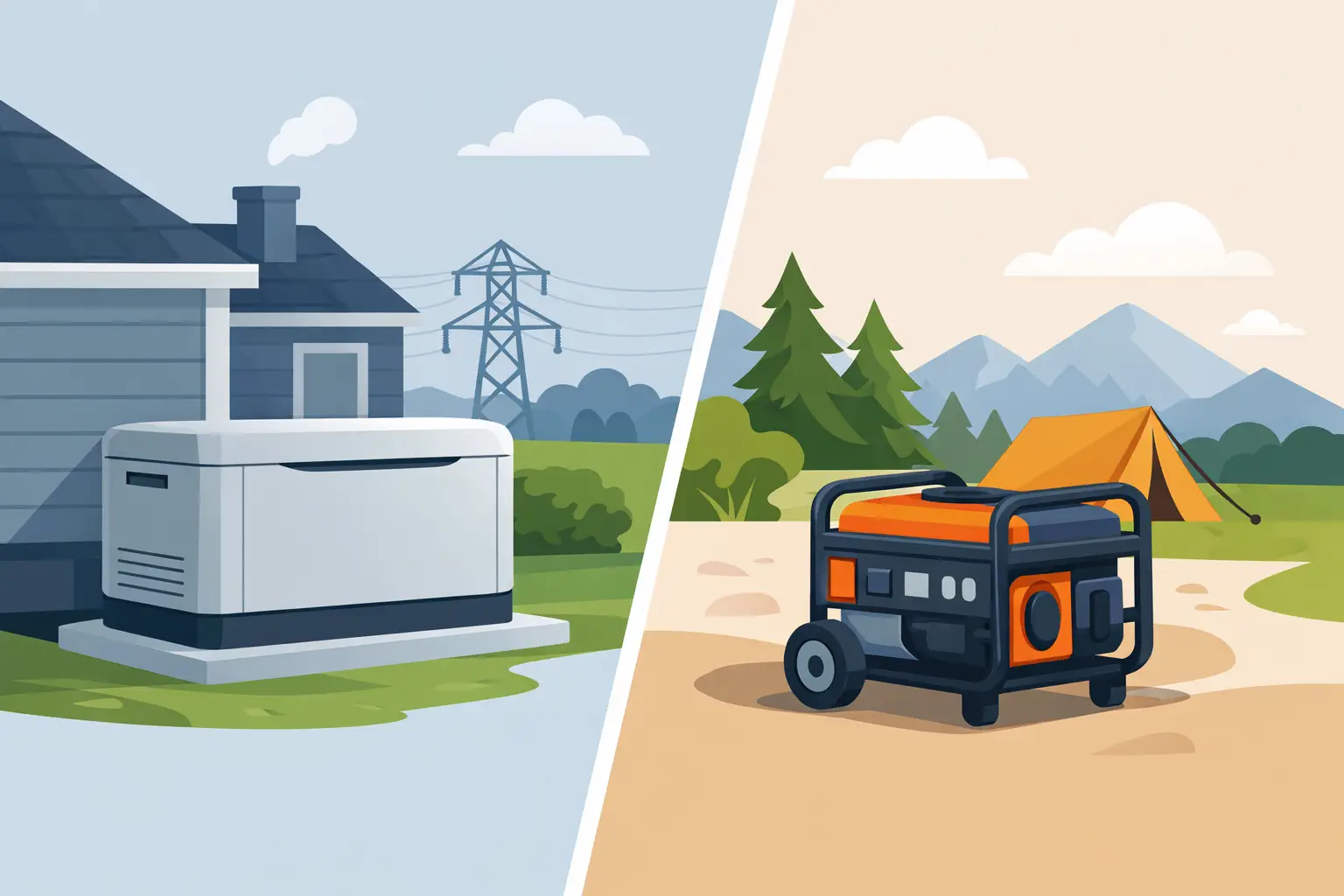
A portable generator is a movable, engine-powered unit that you bring out when utility power fails. It typically runs on gasoline, propane, or dual fuel, and you start it manually. Homeowners may plug appliances directly into the generator or connect selected home circuits through properly installed generator equipment.
A standby generator is permanently installed outside the home, much like an air-conditioning unit. It is connected to a fuel source, usually natural gas or propane, and works with an automatic transfer switch. When the utility power goes out, the system detects the outage, starts the generator, and transfers the home’s selected electrical load to backup power. When utility power returns, it transfers back and shuts down automatically.
That difference in operation matters most when no one is home, when an outage happens at night, or when a family member cannot safely move equipment, run cords, or manage fuel.
When a Portable Generator Makes Sense
Portable generators are often the lower-cost entry point for backup power. They can work well for homeowners who experience occasional, short outages and only need to keep a few essentials running. A properly sized portable unit may support a refrigerator, freezer, a few lights, internet equipment, phone charging, and perhaps a small window air conditioner or furnace blower, depending on its capacity.
They are also flexible. You can take one to a campsite, a jobsite, or another property. If your goal is limited emergency power rather than whole-home coverage, that flexibility can be valuable.
However, portable power requires preparation and active management. You need a safe outdoor location, a supply of fresh fuel, heavy-duty cords rated for the load, and a clear plan for which appliances will be connected. Gasoline storage also requires care, particularly during long hot Southern Utah summers.
The most serious risk is carbon monoxide. A portable generator must always operate outdoors, far from doors, windows, vents, and attached garages. It should never run inside a garage, carport, shed, crawl space, or other partially enclosed area. Carbon monoxide cannot be seen or smelled, and exposure can become deadly quickly.
Never Power a Home Through an Outlet
One unsafe shortcut deserves a clear warning: never plug a generator into a standard wall outlet or attempt to energize the home through a dryer outlet. This practice, often called backfeeding, can send electricity onto utility lines and endanger utility workers, neighbors, and your own home. It can also damage electrical equipment and create a fire risk.
If you want a portable generator to power selected circuits safely, have a licensed electrician install the correct inlet and transfer equipment. This keeps generator power separated from utility power and gives you a controlled way to run the circuits that matter most.
When a Standby Generator Is Worth It
A standby generator is built for homeowners who want backup power to happen without a scramble. It starts automatically, even if you are away from home, and can keep essential systems running through an extended outage. Depending on the system design and generator size, that may include refrigeration, lighting, internet, security systems, sump or well pumps, HVAC equipment, garage doors, and selected kitchen circuits.
For some homes, a standby system can be designed for near whole-home coverage. For others, the sensible choice is an essential-load system that prioritizes the circuits your family truly needs. The right answer depends on the home’s electrical panel, installed equipment, fuel availability, and budget.
Standby generators are particularly helpful for homeowners with frequent travel schedules, older residents, young children, medically necessary equipment, or homes that depend on electric pumps for water or wastewater. They can also offer peace of mind for vacation properties, where an outage may go unnoticed until frozen food spoils, pipes are affected by cold weather, or a security system loses power.
The trade-off is upfront cost and installation complexity. A standby generator requires a properly sized unit, a concrete or composite pad, fuel connection, transfer switch, electrical connections, permits where required, and professional startup. It is not a weekend DIY project.
Capacity Is More Than a Wattage Number
Generator sizing is where many homeowners run into trouble. A generator may have enough running watts for several devices but not enough starting capacity for motors. Air conditioners, refrigerators, pumps, and some power tools draw a higher surge of electricity when they start.
A portable generator that seems adequate on paper may bog down or trip when a refrigerator compressor and a pump start at the same time. Likewise, installing a standby generator without a careful load calculation can lead to disappointing limitations during an outage.
A professional assessment looks at more than square footage. It considers your panel capacity, heating and cooling equipment, water systems, appliances, EV charging, hot tubs, medical equipment, and the specific circuits you want available. You may not need to power every load in the house. In fact, selecting priorities can reduce generator size and project cost while still protecting the things that matter most.
Fuel Supply Changes the Conversation
Portable generators commonly use gasoline, propane, or both. Gasoline is easy to obtain but must be stored safely, rotated, and replenished during a longer outage. Propane stores longer, but the tank size and available supply determine how long you can run.
Standby units typically run on natural gas or propane. Natural gas can provide extended operation when service remains available during an outage. Propane can be an excellent option in areas without natural gas, though run time depends on generator load and tank capacity. A qualified installer can help coordinate the electrical plan with the fuel requirements so the system is ready when it is needed.
Maintenance Is Part of Reliable Backup Power
Neither type of generator should be installed and forgotten. Portable generators need routine oil changes, air filter checks, battery attention where applicable, and periodic test runs. Fuel should not sit unused for long periods without proper storage practices.
Standby generators generally exercise themselves on a schedule, but they still need maintenance. Oil, filters, batteries, electrical connections, and error codes should be checked according to the manufacturer’s recommendations. A generator that has not been serviced may fail at the exact moment you expect it to protect the home.
It also helps to test your outage plan. Know which circuits are backed up, where the transfer equipment is located, and what high-demand appliances should stay off during generator operation. Clear expectations prevent avoidable overloads and make an outage less disruptive.
Choosing the Right Backup Plan for Your Home
Choose a portable generator if your outages are infrequent, your budget is limited, and you are comfortable setting up and monitoring the unit safely. It can be a smart way to cover essentials, provided the connection method is professionally installed and carbon monoxide safety is never compromised.
Choose a standby generator if you want automatic operation, longer-term backup, dependable coverage while away, or support for critical household systems. The initial investment is higher, but so is the convenience and confidence during a power interruption.
Service Right Electric can assess your home’s electrical needs, explain the options in plain language, and provide upfront pricing before work begins. The goal is not to sell more generator than you need. It is to build a safe backup-power plan that works when the lights go out.
Before the next outage tests your household, take a look at what you truly cannot afford to lose power to. That answer is the best place to start.



0 Comments