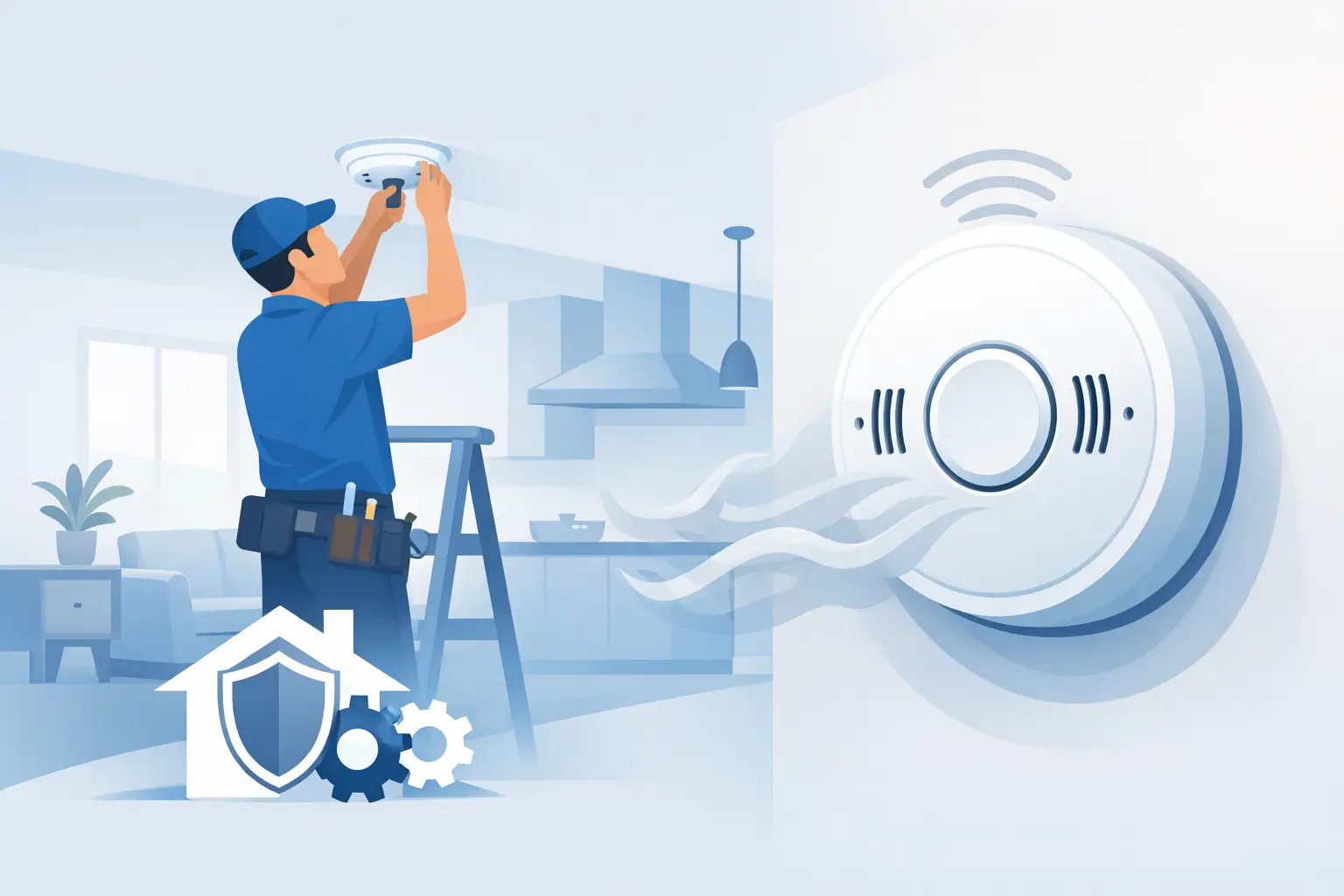
A furnace can be running normally, a fireplace can look fine, and a garage door can be closed – yet carbon monoxide can still build to a dangerous level without a smell, color, or warning. Carbon monoxide detector installation gives your household the alert it needs before exposure becomes an emergency. For Southern Utah homeowners with gas appliances, fireplaces, attached garages, or fuel-burning heating equipment, properly placed and working alarms are a basic part of home safety.
Why Carbon Monoxide Alarms Belong in Every Home
Carbon monoxide, often called CO, is produced when fuel does not burn completely. Natural gas furnaces, water heaters, fireplaces, wood stoves, gas ranges, and vehicles can all create it. The concern is not that these appliances exist – properly installed and maintained equipment can operate safely. The concern is a venting failure, cracked heat exchanger, blocked flue, appliance malfunction, or vehicle left running in an attached garage.
Because CO is invisible and odorless, people may not realize they are being exposed. Early symptoms can resemble the flu: headache, dizziness, nausea, weakness, or confusion. At higher concentrations, carbon monoxide can quickly cause loss of consciousness and death.
A CO alarm does not prevent a leak or repair a combustion appliance. It does provide the critical warning that tells everyone to leave the home and call for help. That makes placement, power source, age, and testing just as important as having an alarm on the shelf.
Carbon Monoxide Detector Installation: Where Alarms Go
The best placement depends on your home’s layout, sleeping areas, fuel-burning appliances, and local code requirements. In most homes, CO alarms should be located outside each separate sleeping area so the alarm can wake occupants at night. Homes with more than one floor generally need protection on every level, including the basement when applicable.
An alarm is also a good idea near, but not directly beside, an attached garage. Exhaust can enter the home after a car is started or idled in the garage, even if the garage door is open. Never run a vehicle in an attached garage, and do not rely on an alarm as permission to do so.
Avoid placing alarms immediately next to fuel-burning appliances, in humid bathrooms, or where cooking steam and routine appliance operation may create nuisance alarms. The manufacturer’s instructions matter here. Required clearance distances, mounting orientation, and suitable locations can vary by model.
Bedrooms deserve special attention. A detector placed in a distant hallway may not provide the same warning for a closed bedroom door at the far end of the house. A professional can evaluate the layout and recommend locations that provide practical coverage without creating avoidable false alarms.
Ceiling or Wall Mounting?
Unlike smoke alarms, carbon monoxide alarms are not installed based on the idea that CO simply rises or falls. Carbon monoxide mixes with air. Many listed alarms can be mounted on a wall or ceiling, but the correct location is the one specified by the manufacturer and compatible with the home’s layout.
Do not install an alarm behind curtains or furniture, inside a cabinet, near a supply vent, or in a spot where airflow is blocked. An alarm needs open air around it to detect a developing problem.
Battery, Plug-In, or Hardwired CO Alarms
Homeowners can choose from battery-powered, plug-in, and hardwired carbon monoxide alarms. Each can be appropriate, but the right choice depends on the home and the desired level of protection.
Battery-powered units are useful where adding wiring is impractical. They continue operating during a power outage, provided the batteries are fresh. The trade-off is simple: batteries must be checked and replaced when required. A removed or dead battery leaves the home unprotected.
Plug-in alarms are easy to use when an outlet is in a suitable location. Some include battery backup. However, the outlet still needs to be clear, available, and located where the alarm can do its job. A plug-in detector is not a substitute for proper coverage throughout the home.
Hardwired alarms are connected to the home’s electrical system, often with battery backup. In many newer homes, alarms may also be interconnected. When one alarm detects danger, the others sound as well. This can be especially helpful in larger homes, homes with split floor plans, and homes where family members sleep behind closed doors.
Hardwired carbon monoxide detector installation is not a weekend DIY project. It can involve safely extending circuits, meeting applicable code requirements, selecting compatible devices, and verifying that interconnected alarms communicate correctly. An experienced residential electrician can diagnose the existing setup, explain your options and pricing up front, and complete the work cleanly.
Combination Smoke and CO Alarms: Useful, With One Caveat
Combination smoke and carbon monoxide alarms can be a smart way to add protection without filling every ceiling with separate devices. They are often a practical choice when an existing smoke alarm location also makes sense for CO coverage.
Still, a combination unit is only effective if it is placed correctly for both hazards. Smoke alarm locations and CO alarm locations do not always line up perfectly. A home may need a combination alarm in one area and a separate CO alarm near another sleeping area or level. The goal is adequate protection, not simply fewer devices.
When replacing existing alarms, check whether they are interconnected and whether the replacement is compatible with the system. Mixing incompatible hardwired devices can prevent interconnection from working as intended.
Test, Replace, and Respond to the Alarm
Press the test button on each CO alarm regularly, following the manufacturer’s schedule. Testing confirms that the horn and basic electronics respond, but it does not prove the sensor will accurately detect carbon monoxide. That is why replacement dates matter.
Most carbon monoxide alarms have a limited service life, commonly five to 10 years depending on the model. Look for a manufacture date or replacement date printed on the unit. If an alarm chirps, displays an end-of-life message, is damaged, or has passed its listed replacement date, replace it promptly. Do not assume a new battery will solve an expired sensor.
If a CO alarm sounds, treat it as real. Get everyone, including pets, outside into fresh air immediately. Call 911 or your local fire department from outside, particularly if anyone feels ill. Do not reenter the home until emergency responders say it is safe. Once the immediate danger has been addressed, have the suspected fuel-burning appliance, venting system, or garage-related source inspected by the appropriate qualified professional.
Do not silence an alarm and go back to sleep. Likewise, do not try to locate a possible CO source by staying inside. The alarm is there to tell you to leave first.
When to Call a Residential Electrician
Call an electrician when your home needs hardwired or interconnected alarms, when existing alarms fail to communicate, or when you are unsure whether your current locations provide enough coverage. It is also worth scheduling an evaluation after a renovation, basement finish, bedroom addition, panel upgrade, or change to the home’s heating equipment.
For older Southern Utah homes, alarm systems are often pieced together over time. One room may have a battery unit, another a hardwired smoke alarm, and a third no CO protection at all. Service Right Electric can assess the existing devices, identify practical improvements, and install a system that fits your home rather than forcing a one-size-fits-all answer.
A professional visit also gives you a clear chance to ask about smoke alarms, dedicated circuits, surge protection, and other safety upgrades while the technician is on site. You should know what work is recommended, why it is recommended, and what it will cost before work begins.
A carbon monoxide alarm is a small device with a serious job. Give it a proper location, reliable power, regular attention, and a replacement schedule. That quiet preparation can give your family the time to get outside when every second counts.



0 Comments