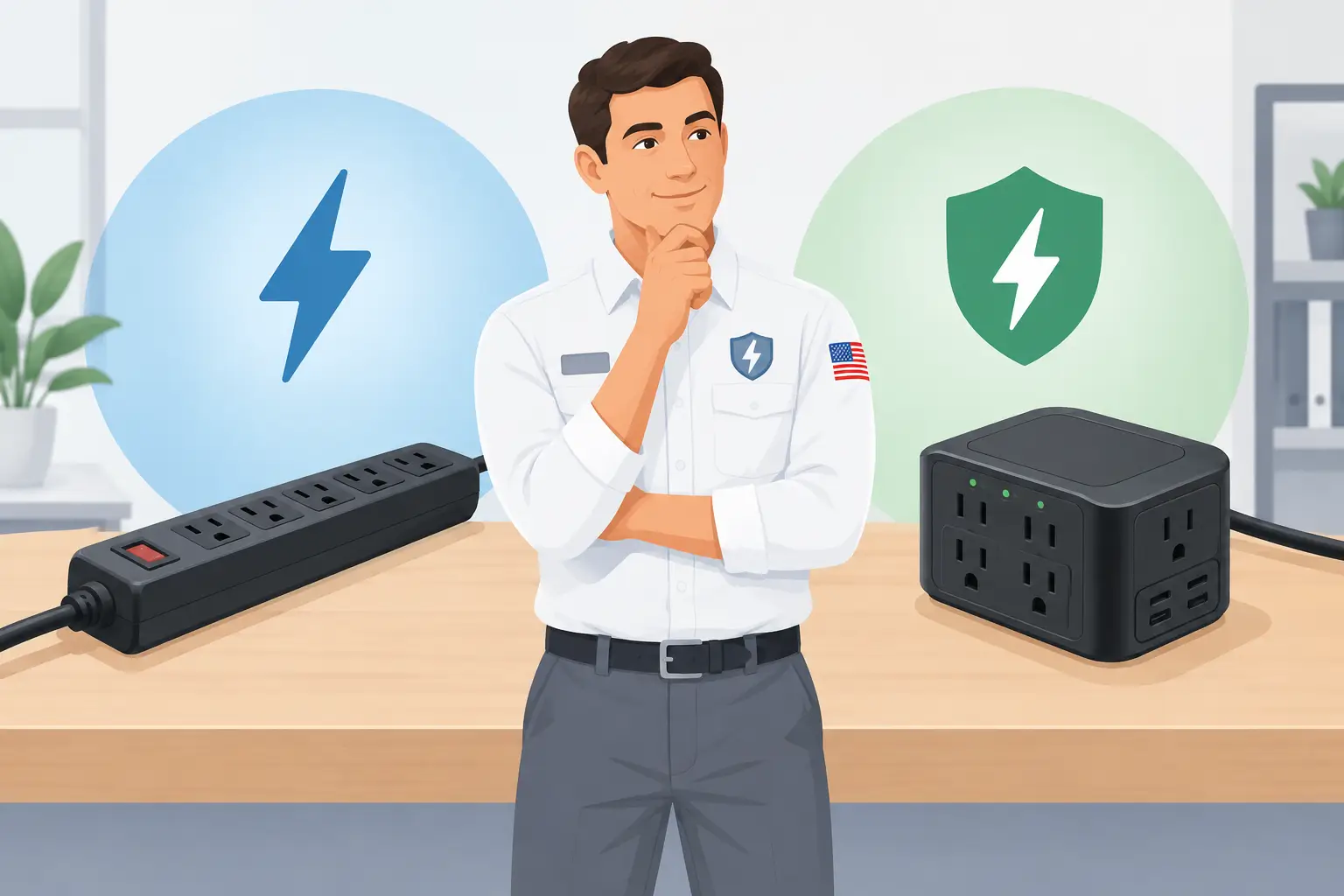
A power strip can make one outlet more convenient, but convenience is not the same thing as protection. When homeowners compare surge strips versus protectors, the confusing part is that the terms are often used interchangeably. The real question is whether the device can actually limit a damaging voltage spike – and whether it protects enough of your home.
A sudden electrical surge can damage more than a television or computer. It can affect appliances, smart-home controls, garage-door equipment, HVAC components, charging equipment, and other electronics connected throughout the house. A good protection plan starts with knowing what the equipment at each outlet can and cannot do.
What Is a Surge Strip?
A surge strip is usually a multi-outlet power strip that includes internal surge-suppression components. It allows you to plug in several low-power electronic devices while adding some protection from temporary voltage spikes.
That makes surge strips useful behind a desk, entertainment center, or charging station. A quality unit may help protect connected electronics from smaller, everyday disturbances caused by appliances cycling on and off or normal fluctuations on the electrical system.
But not every strip with multiple outlets is a surge protector. A basic power strip simply divides one receptacle into several outlets. It does not automatically provide surge protection. Look for clear labeling that says it provides surge protection, along with a protection indicator light and a listed electrical safety certification.
Even a true surge strip has limits. Its protection components wear down as they absorb surges. After a significant event, it may still provide power while no longer providing meaningful protection. If its protection light is off, or if the unit is old, damaged, discolored, hot to the touch, or has a loose cord, replace it.
Surge Strips Versus Protectors: The Key Difference
In everyday conversation, people often use “surge protector” to describe a plug-in strip. Technically, though, a surge protector can take several forms. A plug-in surge strip protects the devices connected directly to it. A whole-home surge protective device is installed at the electrical panel and helps reduce surges entering or traveling through the home’s electrical system.
That difference matters. A strip behind the TV cannot protect the refrigerator on the other side of the house. It cannot protect hardwired equipment, such as many heating and cooling components, from every electrical disturbance. And it cannot replace protection at the main electrical panel.
Think of a plug-in strip as localized protection and a panel-mounted device as the first line of defense for the home. One does not make the other unnecessary. For many homes, especially those with valuable electronics and modern appliances, layered protection is the practical choice.
What plug-in surge strips do well
A properly selected strip is a smart addition for sensitive, low-power electronics grouped in one place. Computers, monitors, networking equipment, televisions, game systems, audio equipment, and phone chargers are common examples.
Use the strip only as directed. Keep it accessible so you can inspect its indicator lights, and do not cover it with rugs, furniture, or bedding where heat can build up. Plug it directly into a properly grounded wall outlet.
Where plug-in strips fall short
A surge strip cannot correct an overloaded circuit, a loose outlet, poor grounding, damaged wiring, or a failing electrical panel. It also should not be used to run high-demand equipment that needs its own dedicated circuit.
Avoid plugging one power strip into another. This practice, often called daisy-chaining, can overload the strip, the outlet, or the circuit and create a fire risk. Extension cords and power strips are not permanent wiring solutions for a room that simply does not have enough outlets.
If you regularly rely on strips because outlets are scarce, hot, loose, or inconveniently located, an electrician can assess whether additional receptacles or a circuit upgrade would provide a safer long-term answer.
Why Whole-Home Surge Protection Matters
Whole-home surge protection is installed at or near the electrical panel by a licensed electrician. It is designed to divert or limit excess voltage before it reaches circuits throughout the home.
Surges do not only come from lightning. Utility switching, power restoration after an outage, and large electrical loads inside a home can all create voltage disturbances. In Southern Utah, storm activity can be a concern, but the more common issue is often the accumulation of smaller surges over time. Those repeated events can gradually shorten the life of sensitive electronic components.
A whole-home device can help protect equipment that is not practical to plug into a strip, including major appliances and hardwired systems. It also provides a broader level of protection for outlets throughout the home. Still, it does not make every plug-in strip obsolete. Sensitive electronics can benefit from point-of-use protection as an added layer.
The right device depends on your panel, service configuration, grounding system, and the electrical loads in your home. Installation is not a weekend DIY project. Panel work exposes live components, and proper installation requires the correct device selection, breaker arrangement, wiring method, and verification of the home’s grounding and bonding.
How to Choose a Plug-In Protector
When you need a surge strip for electronics, start with the equipment you are protecting rather than the number of outlets you want. A strip for a computer workspace has different needs than one used for a television setup.
Look for a unit specifically identified as a surge protective device, not merely a power strip. A protection-status light is useful because it can alert you when the strip no longer has active protection. A grounded plug is also essential for equipment that requires grounding.
The joule rating is commonly used to describe how much surge energy a device may absorb under test conditions. Higher is generally better when comparing similar products, but it is not the only factor. A strip’s design, safety listing, clamping performance, outlet spacing, cord condition, and age all matter.
Do not treat a surge strip as a solution for every device. Refrigerators, microwaves, portable heaters, window air conditioners, and other high-draw appliances should not share a typical power strip. Equipment that repeatedly trips a breaker, flickers, smells hot, or loses power needs diagnosis – not a larger strip.
Surge Protection Does Not Fix Electrical Problems
Surge protection addresses temporary excess voltage. It does not fix the underlying problems that cause many household electrical concerns.
A breaker that trips often may indicate an overloaded circuit, a damaged appliance, a loose connection, or a fault that needs professional attention. Flickering lights can point to a loose connection or circuit issue. A two-prong outlet, an ungrounded outlet, or an outlet that will not hold a plug may limit the protection a strip can provide and may be a safety concern on its own.
Ground-fault and arc-fault protection are separate safeguards as well. They are designed to help reduce shock and fire risks from certain fault conditions. They do not perform the same job as surge protection, and a surge strip cannot substitute for them.
If your home has an older panel, frequent power issues, recent appliance damage, or a new EV charger, hot tub, generator, or major appliance installation, it is a good time to ask about whole-home surge protection. A trained electrician can evaluate the panel and explain the options before work begins.
When to Call an Electrician
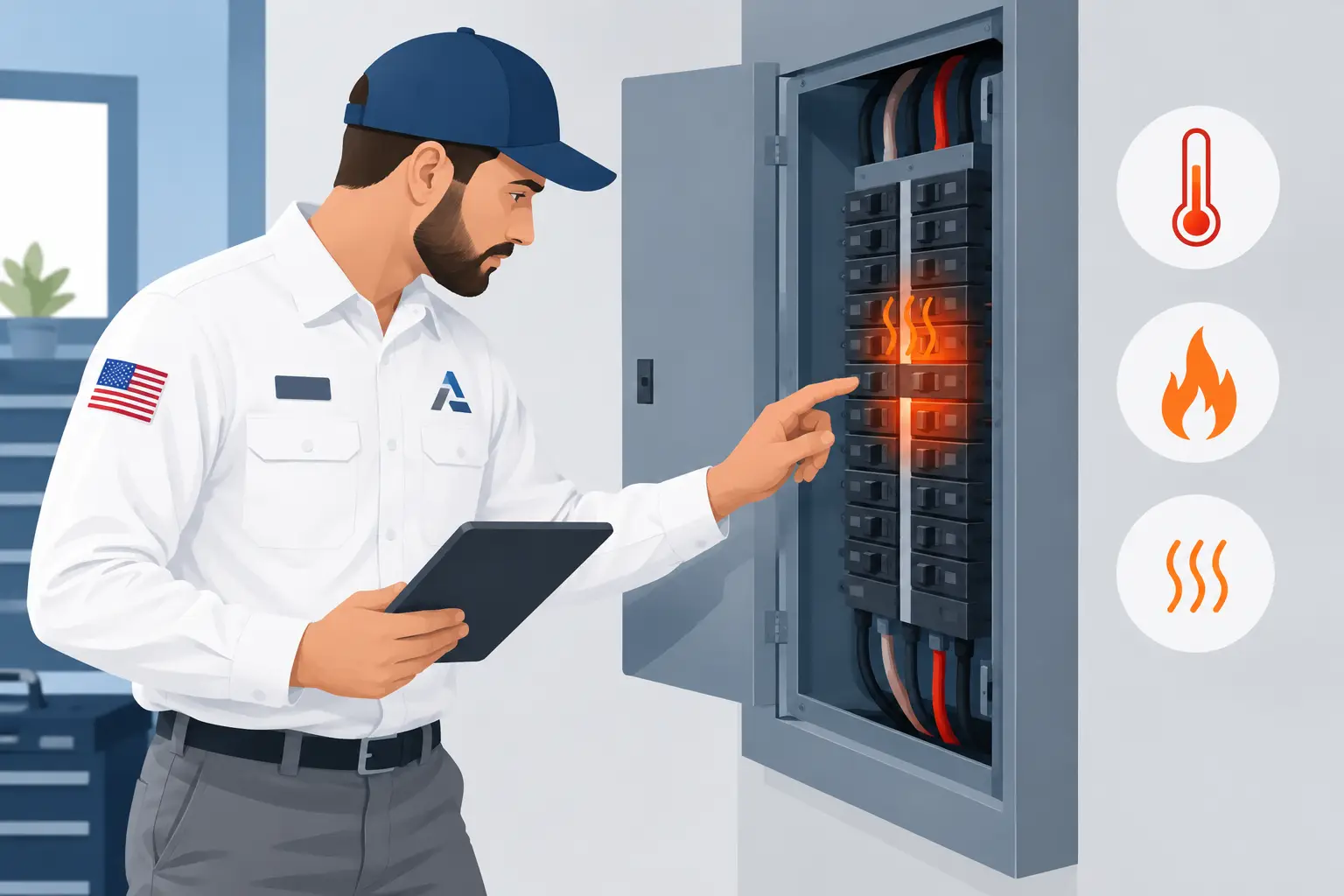
Call for professional help if you see burn marks around outlets, smell burning plastic, feel heat at a receptacle or power strip, hear buzzing, experience repeated breaker trips, or notice a surge protector’s status light has failed after a major power event. Unplug affected equipment if it is safe to do so, but do not open outlets or panel covers yourself.
Service Right Electric can diagnose the condition of your electrical system, check whether your panel and grounding are ready for whole-home protection, and install the right solution with clear communication before the work starts. For homeowners, the goal is simple: safer power and fewer unpleasant surprises when the next disturbance reaches the line.
A good surge strip is useful at the desk or behind the television. A well-installed whole-home protector helps look after the rest of the house. When your protection plan matches your home instead of relying on one overloaded strip, your electronics have a much better chance of staying online when power conditions change.



0 Comments