
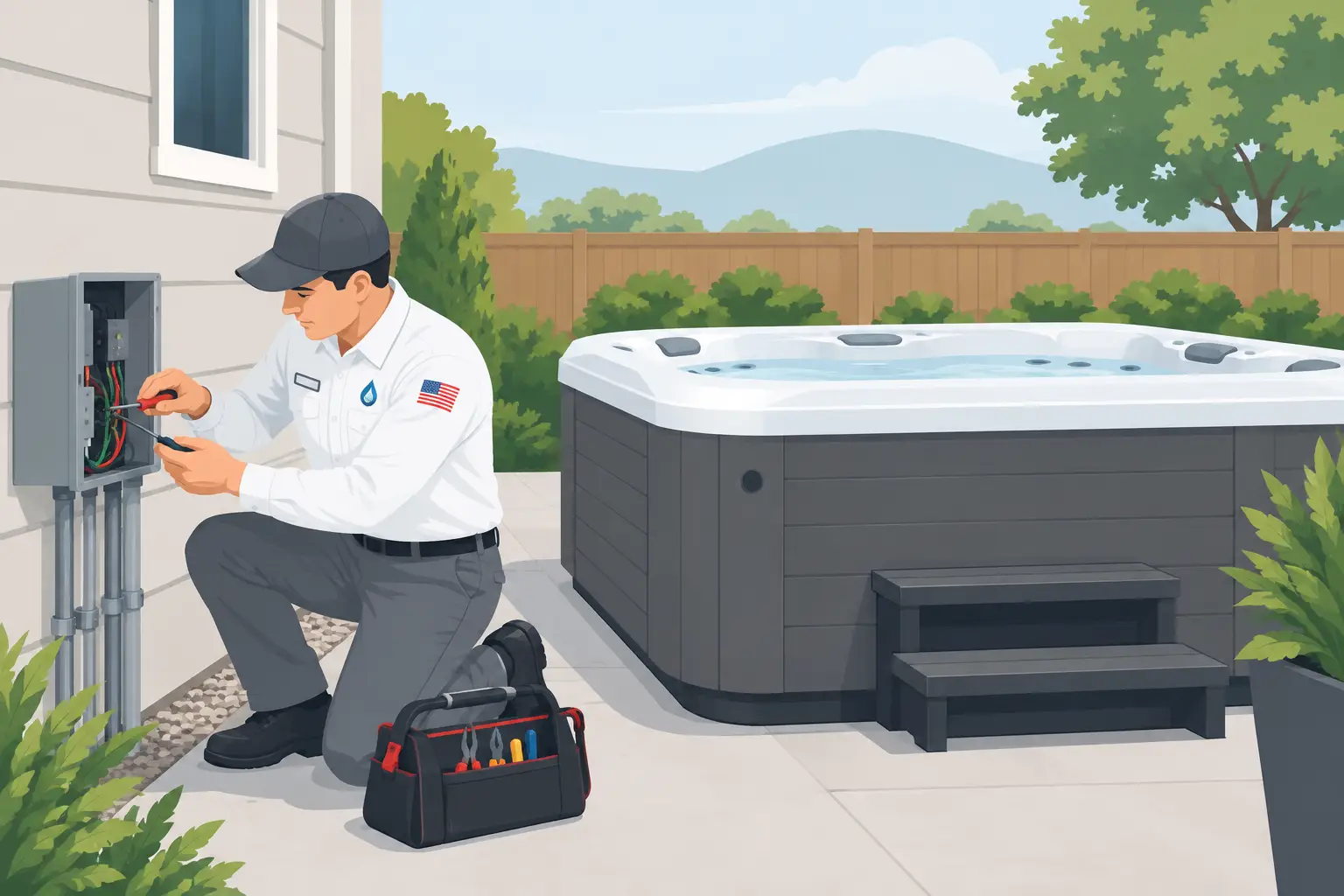
A new hot tub should feel like a relaxing upgrade, not a source of tripped breakers, unsafe cords, or failed inspections. Proper hot tub wiring gives the equipment the steady, protected power it needs while helping protect the people enjoying it. Because this installation combines electricity, water, outdoor exposure, and substantial power demand, it is not a weekend DIY project.
For homeowners in Southern Utah, planning the electrical side before the hot tub arrives can prevent frustrating delays. A licensed residential electrician can evaluate your panel, verify the manufacturer requirements, explain the scope of work clearly, and complete the installation to applicable code.
Why Hot Tub Wiring Requires Its Own Plan
Most full-size hot tubs require a dedicated circuit. That means the circuit serves the spa only, rather than sharing power with patio lights, an outdoor receptacle, a garage, or other household equipment. The heater and pumps can draw significant power, especially when the spa is heating and circulating water at the same time.
Many permanent hot tubs use 240-volt power, although smaller models may have different requirements. The correct circuit size, wiring method, and protective equipment are determined by the unit’s data plate and installation instructions, not by a guess based on the tub’s size or appearance.
Using an existing outlet or an extension cord for equipment that was designed for a dedicated circuit can create overheating, nuisance tripping, equipment damage, and shock hazards. The goal is not simply to get the hot tub running. It is to give it a safe electrical foundation that will hold up through regular use, changing weather, and years of outdoor exposure.
What a Safe Hot Tub Electrical Installation Includes
A professional installation begins with the hot tub’s exact electrical specifications. From there, the electrician determines what your home can support and what needs to be installed or upgraded.
A properly sized dedicated circuit
The circuit must match the manufacturer’s required voltage and electrical load. An undersized circuit may trip repeatedly or allow conductors and connections to run hotter than they should. An oversized circuit is not a shortcut either. Electrical protection has to be selected for the equipment and wiring it serves.
Ground-fault protection
Water and electricity demand additional safeguards. Hot tubs generally require ground-fault circuit interruption, commonly called GFCI protection. This equipment is designed to disconnect power quickly when it detects a ground fault condition that could indicate current is taking an unintended path.
A GFCI is not optional convenience equipment. It is a critical layer of protection for a wet environment. If a hot tub trips its GFCI, do not bypass it or repeatedly reset it without finding the cause. The issue could involve moisture, a damaged component, a wiring fault, or the hot tub itself.
An accessible outdoor disconnect
A hot tub installation typically needs a local disconnecting means that allows power to be shut off safely for service. Its location and installation must meet electrical code requirements for visibility, accessibility, and safe distance from the water. This is one reason placing a spa first and figuring out the electrical details later can complicate the project.
Correct grounding and bonding
Grounding and bonding are related, but they are not the same thing. Grounding helps provide a path for fault current, while bonding helps keep conductive parts at the same electrical potential. Both are particularly important around a hot tub, where metal components, water, wet surfaces, and people come together.
This work needs to follow the manufacturer instructions and the electrical code adopted in your area. It is not a place for improvised connections or assumptions based on another backyard project.
Outdoor-rated wiring methods
The route from the panel to the spa may travel through walls, an attic, crawlspace, garage, or exterior areas. Each portion needs appropriate conductors, conduit or other protection where required, secure connections, and equipment rated for its environment. Southern Utah heat, sun exposure, windblown dust, and occasional heavy rain all make durable outdoor workmanship matter.
Will Your Electrical Panel Support a Hot Tub?
A hot tub may be the first major electrical load added to a home in years. Even if there is room for another breaker, the panel and service still need to be evaluated for overall capacity. A panel can have physical breaker spaces available without having enough calculated capacity for another significant continuous or intermittent load.
An electrician will look at the panel’s rating, existing circuits, large appliances, heating and cooling equipment, and other recent upgrades. EV charging, electric cooking, workshop equipment, additional HVAC, and pool equipment can all affect the calculation. Older homes may also have outdated panels, crowded wiring, or other conditions that should be addressed before adding a spa circuit.
Sometimes the installation is straightforward: add the correct dedicated circuit and outdoor safety equipment. Other times, a subpanel, panel upgrade, or a different wiring route may be the safer long-term solution. Clear diagnosis upfront is how you avoid discovering a capacity problem after the hot tub is already sitting in the yard.
Plan Before the Delivery Truck Arrives
Hot tub delivery, pad preparation, and electrical work should be coordinated. The final location affects circuit length, trenching or conduit needs, disconnect placement, access for service, and clearances around the equipment.
Before scheduling electrical work, have the spa model information available and confirm where the unit will sit. Consider how the electrician will reach the panel and the spa location, whether the route crosses landscaping or hardscape, and whether the area is accessible for future maintenance. A beautiful patio layout can still create an expensive wiring route if those details are overlooked.
It also helps to think about how you will use the space after dark. If you are already opening up landscaping, adding safe pathway lighting or patio lighting may make sense as part of the same project. Those additions should still be planned on their own appropriate circuits rather than tied into the hot tub circuit.
Common Hot Tub Wiring Problems Homeowners Should Not Ignore
Electrical problems around a spa deserve prompt attention. Turn off power at the disconnect or breaker if it can be done safely, keep people out of the water, and call a qualified electrician when you notice a burning smell, heat at an electrical box, damaged conduit, corrosion, flickering nearby lights, or a breaker that trips repeatedly.
A breaker trip is a safety signal, not an inconvenience to defeat. Resetting it again and again can mask a developing issue. The cause may be as simple as a failed component, but it can also involve a damaged conductor, water intrusion, loose termination, or a problem inside the spa equipment.
Homeowners should also be cautious with older installations. If the hot tub was inherited with the property, moved from another location, or connected by an unknown installer, it is worth having the circuit inspected. A working hot tub is not proof that the wiring is correct or currently compliant.
What to Expect From a Professional Hot Tub Wiring Visit
The right process is straightforward: call, diagnose, fix. During the evaluation, the electrician should review the hot tub specifications, inspect the service panel, assess the planned route, and identify any code or capacity concerns. You should receive a clear explanation of the recommended work before installation begins.
At Service Right Electric, our employee-owned team focuses on residential electrical work, including safe hot tub and sauna wiring for Southern Utah homes. We believe homeowners deserve direct answers, clean workmanship, and upfront pricing instead of vague promises or rushed shortcuts.
Once the installation is complete, the electrician should test the circuit and safety devices, confirm the disconnect operates correctly, and leave you with a clear understanding of what was installed. If permits or inspections apply to the project, they should be handled as part of a code-conscious installation plan.
A hot tub is meant to be where your family slows down at the end of the day. Start with electrical work that lets you enjoy that time with confidence, knowing the power behind it was installed safely and built to last.




0 Comments