A loose outlet may seem minor. A breaker that trips once in a while may feel easy to ignore. But those small warning signs can point to worn connections, overloaded circuits, aging wiring, or equipment that is no longer protecting your home the way it should. An electrical safety inspection St George homeowners schedule with a licensed professional gives you clear answers before a concern turns into a disruption or a serious hazard.
Southern Utah homes range from older properties with original electrical components to newer homes carrying a growing number of power demands. EV chargers, hot tubs, home offices, large TVs, kitchen appliances, outdoor lighting, and modern HVAC equipment all place real demands on a home’s electrical system. A professional inspection helps identify where your system is working well, where it needs attention, and what repairs or upgrades should come first.
What Happens During an Electrical Safety Inspection in St. George?
An electrical inspection is not a quick look at your breaker panel. A qualified residential electrician evaluates the parts of the system that affect safety, reliability, and everyday use. The scope can vary based on the home’s age, its known problems, and whether you are planning an upgrade, but the goal stays the same: find hazards, explain them plainly, and recommend the right repair.
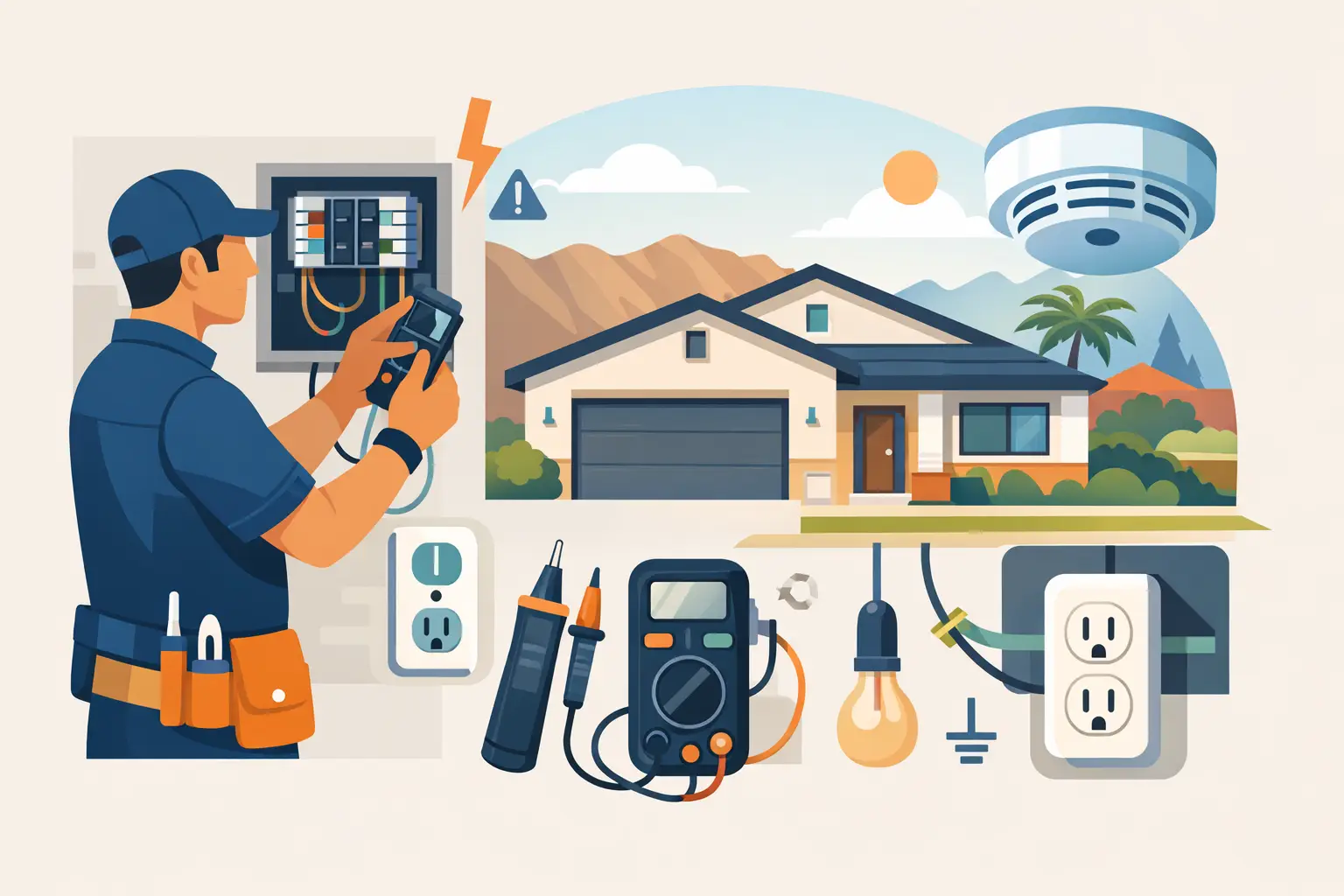
Your electrician may inspect the main electrical panel, breakers, visible wiring, outlets, switches, smoke detectors, grounding, surge protection, and electrical equipment connected to the home. They will also look for signs of overheating, moisture intrusion, damaged insulation, improper wiring methods, loose devices, and circuits that are carrying more load than they should.
The inspection is especially useful because many electrical problems are not obvious from the outside. A receptacle can still power a lamp while its internal connections are loose. A panel may appear normal while a breaker, bus connection, or circuit has signs of wear. Finding those issues early is usually simpler and less expensive than waiting for a complete failure.
Signs Your Home Should Be Inspected Soon
Electrical concerns deserve prompt attention when they affect safety or create uncertainty. If you smell burning near an outlet, panel, switch, or appliance connection, turn off power to the area if it is safe to do so and call a licensed electrician right away. The same applies to a buzzing panel, visible sparks, a warm outlet cover, or water near electrical equipment.
Other signs are less urgent but still worth scheduling. Frequent breaker trips, lights that flicker or dim, outlets that no longer hold plugs securely, and switches that feel hot or make unusual noises can all indicate a problem. So can the growing use of power strips and extension cords because the home does not have enough properly placed outlets or dedicated circuits.
An inspection is also a smart move after a renovation, a major appliance installation, storm damage, a rodent issue, or an unexplained power problem. If a previous owner made DIY changes, an electrician can check whether the work was completed safely and whether the system is properly grounded and protected.
Older Homes Need a Different Conversation
Age alone does not mean a home is unsafe. Many older St. George homes have been carefully maintained and upgraded over time. Still, older systems deserve a closer look because household electrical use has changed dramatically over the years.
A home built for a few lights, basic appliances, and a television may now be supporting computers, chargers, smart devices, entertainment equipment, air conditioning, kitchen appliances, and outdoor living features. Older panels may have limited capacity. Existing circuits may not be suited for high-demand equipment such as an EV charger, electric range, hot tub, sauna, or workshop tools.
The right solution depends on what the inspection finds. Sometimes a targeted repair, new outlet, or dedicated circuit is enough. In other cases, a panel upgrade or wiring improvement may be the safer long-term choice. A good electrician will not push a larger project when a smaller repair solves the problem. They should explain the condition, the options, and the upfront price before work begins.
Safety Devices That Protect Your Family
Modern electrical protection is designed to reduce common risks, but the devices need to be installed correctly and tested when appropriate. Ground-fault circuit interrupter, or GFCI, protection is commonly needed in areas where water and electricity may meet, including bathrooms, kitchens, garages, laundry areas, and outdoor spaces. GFCI devices can shut off power quickly when they detect an imbalance that could create a shock hazard.
Arc-fault circuit interrupter, or AFCI, protection helps address certain dangerous arcing conditions that may occur in damaged cords, worn wiring, or loose connections. Smoke detectors also need attention. They should be properly located, operational, and connected according to the needs of the home.
Surge protection is another practical item to discuss during an inspection. Whole-home surge protection can help reduce the impact of voltage spikes on electronics and appliances, but it is not a substitute for safe wiring, grounding, or properly functioning breakers. Protection works best as part of a complete electrical system that has been inspected and maintained.
Before You Add New Electrical Loads
Many homeowners call for an inspection because they are planning something exciting: a new EV charger, ceiling fan, hot tub, standby generator, outdoor kitchen, upgraded lighting, or garage equipment. This is the right time to have the electrical system evaluated, not after installation day reveals that the circuit is undersized or the panel is full.
Dedicated circuits are often required for equipment that draws significant power. An electrician can calculate the load, determine whether your panel has capacity, and install wiring and protection that match the equipment’s requirements. This protects the new investment and helps prevent nuisance tripping, overheating, and unsafe shortcuts.
Standby generators require particular care. The generator, transfer equipment, panel, and selected circuits must work together correctly. Improper generator connections can create dangerous backfeeding conditions. That is not a weekend DIY project. Professional installation gives your household a dependable plan for outages without putting utility workers, neighbors, or your own equipment at risk.
What to Expect From a Professional Visit
You should not have to guess what an electrician found or what it will cost to correct it. A professional residential service visit should begin with listening to the concern, inspecting the relevant system, and explaining the findings in plain language. If repairs are needed, you should receive clear options and upfront pricing before the work starts.
The best time to ask questions is during the diagnosis. Ask what is causing the issue, whether it creates an immediate safety concern, what can wait, and what preventive work would make sense for your home. A trained electrician should be able to separate urgent hazards from recommended improvements so you can make a confident decision.
At Service Right Electric, the process is straightforward: call, diagnose, and fix. The focus is on residential electrical work completed safely, cleanly, and correctly, with options explained before the repair moves forward.
When to Call Right Away
Do not wait for a routine appointment if you have a burning smell, smoke, sparking, a hot electrical panel, repeated breaker trips tied to the same circuit, or electrical equipment exposed to water. Turn off power only if you can do so safely, keep people away from the affected area, and contact a licensed electrician. If there is an active fire or immediate danger, call emergency services first.
For everything else, an inspection is a practical way to replace uncertainty with a clear plan. Whether you are concerned about an aging panel, preparing for a home purchase, adding a major appliance, or simply tired of outlets and breakers that do not behave as they should, a professional inspection can help you protect the home you have worked hard to build.

0 Comments